Kids interview Delilah
by Charactorium · Delilah (1100 av. J.-C. — 1100 av. J.-C.) · Mythology · Spirituality · 5 min read
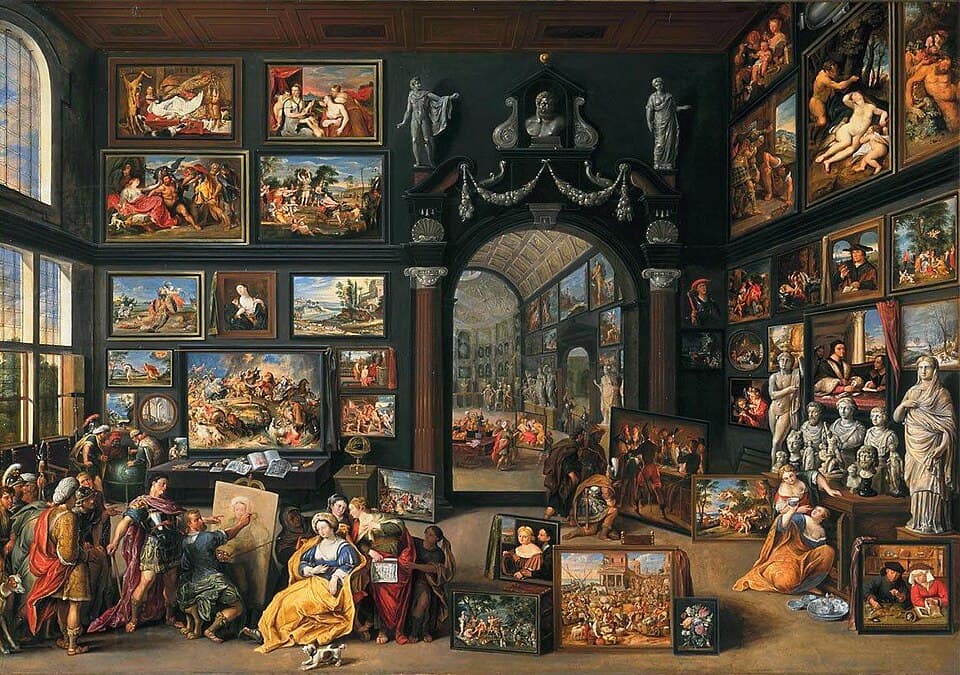
Two young visitors, on a school trip, pushed open the door of a mud-brick house, somewhere in a fertile valley. A woman waits for them, seated near a loom. She smiles: few children come to listen to her tell her story.
—Hello! What was the place where you lived like?
Welcome, my child. I lived in the Valley of Sorek, a valley of vineyards between the hills and the sea. It was called the Shephelah, those low rolling hills. Imagine mornings where women grind barley on a stone mill, where you go to draw water from the well. In the evening, small clay lamps are lit, and we eat bread, figs, goat cheese. Meat? Rare, only on feast days. It was a borderland: my people and the Philistines lived there, side by side, sometimes in peace, often in conflict.
A borderland, where we lived side by side, sometimes in peace.
—Were you a Philistine, like Samson's enemies?
Ah, that's a question many ask! And I'll tell you a secret: no one really knows. My story has been told for a very long time, but it never says exactly where I come from. All we know is that I lived in the Valley of Sorek. You see, it was a region where Hebrews and Philistines mingled. A bit like a village perched on an invisible line: one people on one side, a rival people on the other. So which side was I on? The story leaves me in the shadows. And sometimes, my child, the shadows tell more than the light.
—Why did the Philistine princes come to you?
Because Samson loved me, my child. And when you love, you let your guard down. Five Philistine princes — they were called seranim, the lords of the five great cities — came up to my house. Each promised me 1,100 pieces of silver if I discovered where Samson's strength came from. Do the math: five times eleven hundred, that's a mountain of silver, an enormous fortune for that time. Imagine sacks of metal so heavy you can barely carry them. They didn't want to face me, nor fight the hero. They wanted to buy a secret. And a secret, you see, sometimes costs more than a battle.
—And you, did you say yes just for the money?
You ask the stinging question, and that's good. Money weighs heavy, heavier than you think when you have little. Those shekels of silver were enough to live without fear for a long time. But I won't lie to you: the story mostly remembers me for that greed, that hand reaching for the coins. That's how I am told, and I bear that face. Think, you: does one really betray for gold, or for fear, or for a people? I'll let you guess. But remember this, my child.
A secret sometimes costs more than a battle.
—Is it true that Samson lied to you several times before speaking?
Three times, my child! Three times he mocked me, laughing. The first time, he told me he could be bound with seven fresh bowstrings, still damp. I tied him while he slept… he snapped them like threads. The second time, new ropes, never used: broken too! The third time, I wove his locks into my loom, the one that was there, in a corner of the house. No use, he got up and walked away with the loom! Each night was like a dangerous game: I set a trap, and he freed himself, smiling.
—That must have been annoying, right, that he escaped every time?
Annoying, and a bit frightening too. Imagine: you set a trap, hold your breath in the dark, and the other gets up as if nothing happened. Each failure showed me his strength, and that strength was completely beyond me. The new ropes snapped, the loom torn away… everything slipped off him. So I insisted, again and again, day after day. I kept telling him he was making a fool of me, that he didn't trust me. In the end, he got tired of hearing me. You see, sometimes it's not ropes that bind a man: it's repeated words.
—So the real secret was really his hair?
Not quite, my child, and it's important to understand. Samson was a nazir: from before his birth, he had made a vow to God, the Nazirite vow. This vow forbade him from cutting his hair, from drinking wine. His hair wasn't magical, no! It was the sign of his promise. His seven locks were like an invisible thread connecting him to God. By cutting them, I wasn't severing a muscle: I was making him break his sacred promise. And it was that broken promise, not the hairstyle, that made him as weak as any man.
His hair wasn't magical: it was the sign of a promise.
—How did you finally cut his hair?
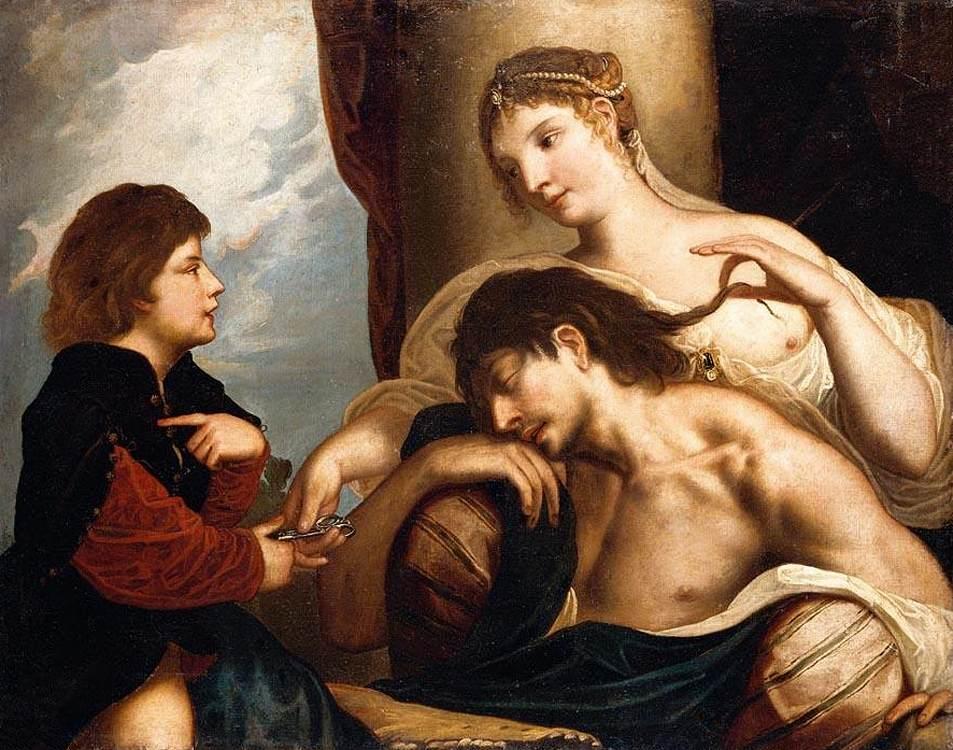
Gently, too gently. He finally opened his whole heart to me and told me the truth about his vow. That evening, I lulled him to sleep on my lap, like rocking someone you love. His head was heavy, his breath calm. I called a man, and with a razor, he cut his seven locks, one by one, without a sound. When Samson woke up, he thought he could free himself as before. But this time, he didn't know that God had left him. That is the saddest sentence in my whole story, my child: he did not know.
—What happened to Samson after that?
The worst, my child, and I bear responsibility. The Philistines seized him and took him to Gaza, a great city. There, they blinded him and chained him to turn the grain mill, like a poor prisoner. Imagine that hero, once so strong, pushing a heavy stone in circles in the dark, day after day. That is the image of his fall. Later, in the temple of their god Dagon, his strength returned with his regrown hair: he brought the whole temple crashing down on his enemies and himself. My betrayal was the first step of that long descent.
—How does it feel that you are remembered as a traitor?
It's a burden, you know. For centuries, they paint my night with the razor, they sing my story in operas, they act it out in great frescoes. Always, they show me at that moment: the one where I hand over the sleeping man. A single act has covered my whole life. So let me give you some advice, you who are young: you will sometimes be judged on a single moment, not on all your days. It's unfair, but that's how stories are told. Be careful with your choices, my child. Some acts can never be undone.
You will sometimes be judged on a single moment, not on all your days.
Read further
This imaginary interview was generated by artificial intelligence from sources documented in Delilah's profile. It dramatises what the figure might have said based on what we know about them, but does not constitute attested historical testimony. For primary sources and factual documentation, refer to the full profile.