
Samson was a judge of Israel in antiquity, renowned for his superhuman strength granted by God. His exploits against the Philistines and his tragic relationship with Delilah make him a major figure in the Hebrew Bible.
Frequently asked questions
Key Facts
- Born according to biblical tradition around 1117 BC, consecrated to God from birth
- Draws his exceptional strength from his long hair, a symbol of his divine covenant
- Fights the Philistines and wins many victories through his superhuman power
- Betrayed by Delilah, who hands him over to the Philistines after discovering the secret of his strength
- Dies around 1077 BC by destroying the Philistine temple, accomplishing his final act of vengeance
Works & Achievements
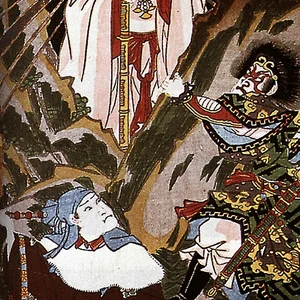
Samson tears off the gates of Gaza and carries them on his shoulders to the top of a mountain. This act demonstrates his superhuman strength and his dominance over the Philistine occupiers.
Samson captures 300 foxes, ties burning torches to their tails, and releases them into the Philistines' wheat fields. This strategy destroys the harvest and weakens the enemy economically.
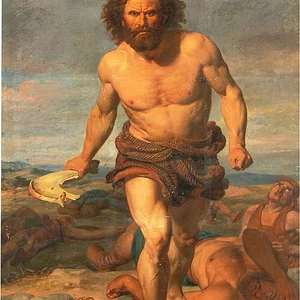
Samson kills 1,000 Philistines using a donkey's jawbone as a weapon. This battle marks a major turning point in Israelite resistance against the Philistine occupation.
Samson, blinded and imprisoned, topples the two pillars of the temple of Dagon during a Philistine feast, killing more than 3,000 people. This final act is his greatest exploit, and his death becomes a sacrifice for Israel.
Samson serves as a judge of Israel for 20 years, exercising judicial and military authority. He represents a period of intermittent resistance against Philistine domination.
Samson reveals the secret of his superhuman strength to Delilah, who betrays him to the Philistines. This episode illustrates the hero's vulnerability in the face of seduction and deception.
Anecdotes
Samson kills a thousand Philistines with a donkey's jawbone. According to the Book of Judges, during a battle against the Philistines who were oppressing Israel, Samson finds a fresh jawbone of a donkey and uses it as a weapon to strike down his enemies. This feat demonstrates how his superhuman strength allows him to defeat an entire army single-handedly, making him a liberator for his people.
Samson kills a young lion with his bare hands. Before his wedding, Samson encounters a lion that roars at him; he tears it apart as he would a young goat, without any weapon. Later, returning to the same spot, he discovers a swarm of bees and honey inside the lion's carcass, which inspires a riddle he poses to his opponents.
Samson tears off the gates of Gaza. Trapped in the city of Gaza by the Philistines, who are guarding the gates to capture him at dawn, Samson rises in the middle of the night, wrenches the city gates from their posts, and carries them on his back to the top of a hill. This spectacular act symbolizes his invincibility against the enemies of Israel.
Samson loses his strength when he loses his hair. After revealing to Delilah the secret of his strength — that he must never cut his hair because he is a Nazirite — she betrays him to the Philistines. While he sleeps, his hair is shaved off, and he discovers that his strength has left him, showing that his power was tied to his religious commitment to God.
Samson brings down the temple of the Philistines. Blinded and imprisoned, Samson is brought to the temple of Dagon to entertain the Philistines. He asks to be placed between the main pillars of the building, then prays to God one last time to restore his strength. He pushes against the pillars with all his might, causing the temple to collapse and killing more Philistines in his death than he had during his lifetime.
Primary Sources
The angel of the Lord appeared to the woman and said to her, 'You are barren and have no children, but you shall conceive and bear a son. Therefore be careful not to drink wine or strong drink, and not to eat anything unclean, for you shall conceive and bear a son. No razor shall come upon his head, for the child shall be a Nazirite to God from the womb.'
The Lord sent Jerubbaal and Barak and Jephthah and Samuel and delivered you from the hand of your enemies on every side, and you lived in safety.
But whoever is joined with all the living has hope, for a living dog is better than a dead lion. The living know that they will die, but the dead know nothing, and they have no more reward, for the memory of them is forgotten.
Key Places
A city of the tribe of Dan in Palestine, the birthplace and hometown of Samson. It is from this region that the Israelite judge carries out his exploits against the Philistines.
A major Philistine city where Samson performs one of his most famous feats by tearing off the city gates and carrying them away on his shoulders. It is also the site of his final captivity.
A coastal Philistine city where Samson kills thirty men to settle a bet. This city represents one of the main flashpoints of conflict between the Israelite judge and the Philistines.
The region where Samson meets Delilah, the Philistine woman who will betray him. This valley serves as the backdrop for his tragic downfall and the loss of his strength.
A Philistine temple in Gaza where Samson, blinded and in chains, performs his final act by bringing down the structure, killing the assembled Philistines and meeting his glorious death.
Typical Objects

An improvised weapon with which Samson is said to have killed a thousand Philistines, according to the biblical account. This object symbolizes his superhuman strength and his ingenuity in combat.

The mystical source of Samson's strength, according to his Nazirite vow. His uncut hair is the visible symbol of his covenant with God and his extraordinary power.

Used by Delilah to bind Samson in order to discover the secret of his strength. These ropes symbolize betrayal and represent a pivotal moment in the character's tragic story.

The instrument with which Samson is shaved while he sleeps, stripping him of his strength. This object marks the tragic turning point of his story and his downfall.

The massive city gates that Samson is said to have torn off in a feat of extraordinary strength. They symbolize his exploits against the Philistines and his status as a legendary warrior.

Shackles used to imprison the blinded Samson after his capture. They represent his captivity, his humiliation, and the loss of his freedom following his human weakness.

The Philistine building where Samson performs his final feat by bringing down the structure upon the crowd in an act of vengeance. This place symbolizes the ultimate confrontation between Samson and his enemies.

A substance used in the sacred rituals of the ancient Near East to consecrate the judges and warriors of Israel. It symbolizes the sacred bond between Samson and God.
School Curriculum
Vocabulary & Tags
Key Vocabulary
Tags
Mythologie
Daily Life
Morning
Samson wakes in his home at Zorah, in Danite territory. After ritual ablutions prescribed by Mosaic law, he takes a light meal of bread and fruit. As a judge of Israel, he may be called upon to settle disputes or organize the defense against Philistine incursions.
Afternoon
Samson spends his afternoons in various activities: physical training, border patrols against the Philistines, or meetings with the elders of Israel to discuss public affairs. His role as warrior and judge keeps him occupied with missions of defense and civil justice.
Evening
In the evening, Samson joins family and communal meals, exchanging news with the villagers. He may also rest at home, surrounded by family and close companions, before retiring after sundown in keeping with the customs of the time.
Food
Samson follows the typical Levantine diet of the 12th century BCE: barley bread, legumes, dried fruits, honey, cheese, and occasional meat at religious festivals. According to the biblical text, he observes the Nazirite vow, which forbids him from drinking wine or consuming certain unclean foods.
Clothing
Samson wears typical Levantine dress: a linen or wool tunic, a belt, and possibly a cloak. His long, uncut hair is a visible mark of his Nazirite dedication to God. As a high-ranking warrior, he may wear protective gear in combat.
Housing
Samson lives in Zorah, in a house typical of the Danite elite of the 12th century BCE: stone construction with an inner courtyard, shared living spaces, and storage areas. His standing as a judge affords him more comfortable quarters than a common farmer, reflecting his authority and social importance.
Historical Timeline
Period Vocabulary
Visual Style
Un style alliant l'art religieux médiéval et la peinture Renaissance, avec un éclairage dramatique en clair-obscur. Les teintes chaudes et dorées mettent en avant la force surhumaine de Samson dans un univers antique chargé de symbolisme biblique.
Sound Ambience
Une ambiance sonore épique mêlant les bruits de bataille antique, les instruments hébraïques traditionnels et une atmosphère mystique traduisant la force surhumaine légendaire de Samson face aux Philistins.
Liens externes & ressources
Références
Œuvres
Exploit de Gaza
vers 1100 av. J.-C.
Victoire des renards enflammés
vers 1105 av. J.-C.
Combat de Ramat-Léhi
vers 1110 av. J.-C.
Destruction du temple de Dagon
vers 1077 av. J.-C.
Jugement d'Israël
vers 1100-1077 av. J.-C.
Relation avec Dalila
vers 1080 av. J.-C.