Kids interview Dawn Fraser
by Charactorium · Dawn Fraser (1937 — ?) · Sports · 5 min read
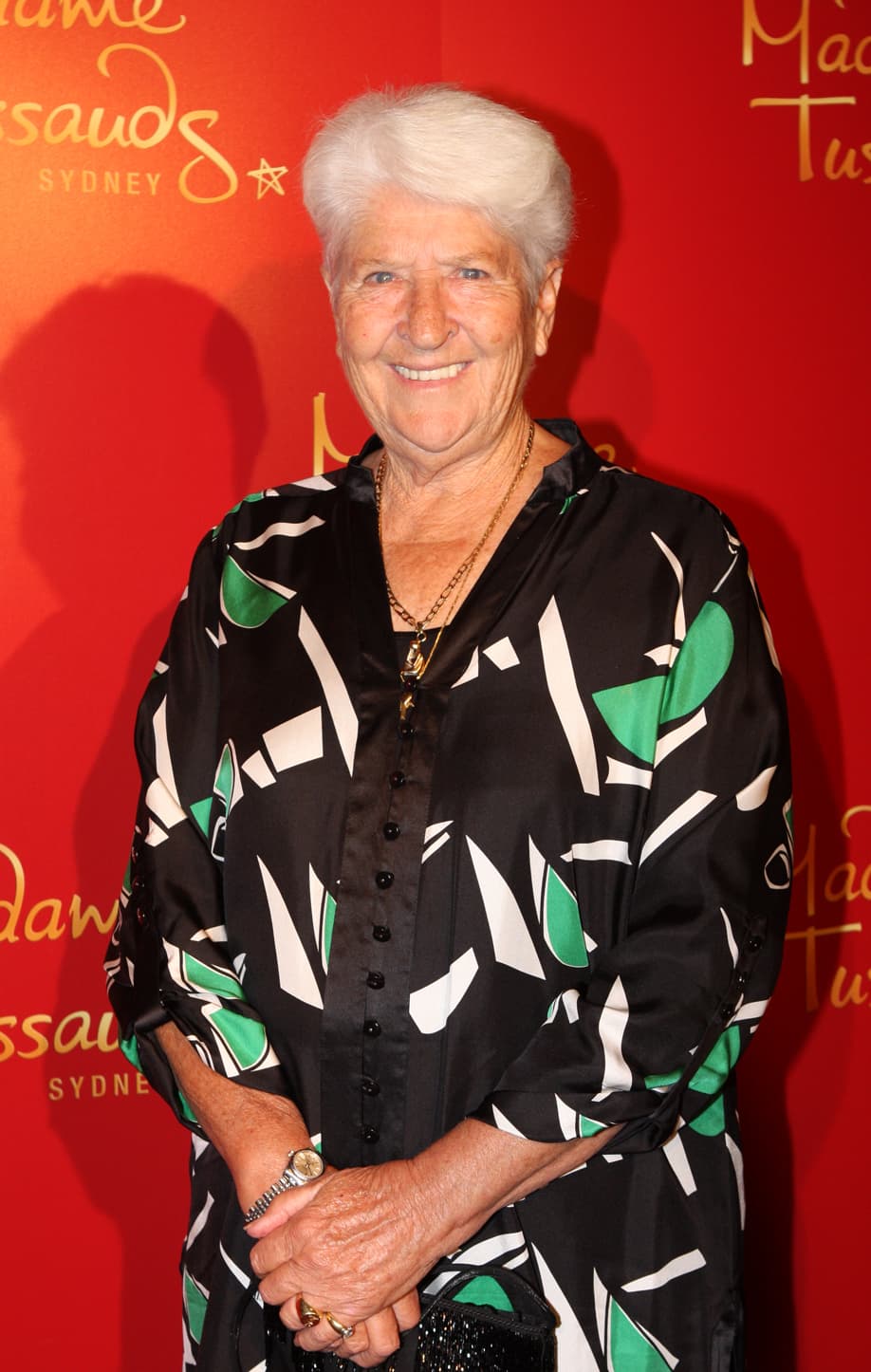
Two 12-year-old students visit an Olympic pool with their class field trip. At the edge of the big pool, a smiling old lady waits for them: it's Dawn Fraser, the swimmer with three gold medals. They sit near her, a little intimidated, and start asking their questions.
—Is it true that when you were little, you were sick and had trouble breathing?
Yes, my child. I was asthmatic. That means sometimes air couldn't get into my lungs properly, like when you run too long and your chest tightens. The doctor told my parents: put her in the water, it will strengthen her. So I swam. And you know what? What was supposed to heal me became my whole life. Imagine a remedy that turns you into a champion! Little by little, my lungs built muscles, and the water became my home.
What was supposed to heal me became my whole life.
—Where did you live, and what did it smell like at home when you were a child?
I grew up in Balmain, a neighborhood near Sydney Harbor. It was a working-class area, not rich. We were eight children in a small house! Imagine the noise at dinner, everyone talking at once. It smelled of cooking meat and bread, because we ate simply: meat, potatoes, whatever filled the belly. We didn't have much money, but we had the sea close by. And I would dash there whenever I could.
—How did you become a real champion? Did someone help you?
Yes, one man changed everything: my coach, Harry Gallagher. One day, he saw me swim and understood something I didn't know yet: that I was fast, very fast. So we got to work. You know, my days started before sunrise. I did laps, over and over, until my arms burned. In the afternoon, we started again: starts, timed races. No fancy machines like today. Just the water, a stopwatch, and desire. You learn by feeling your body, not by watching a screen.
—You won the same race three times at the Games? How is that possible?
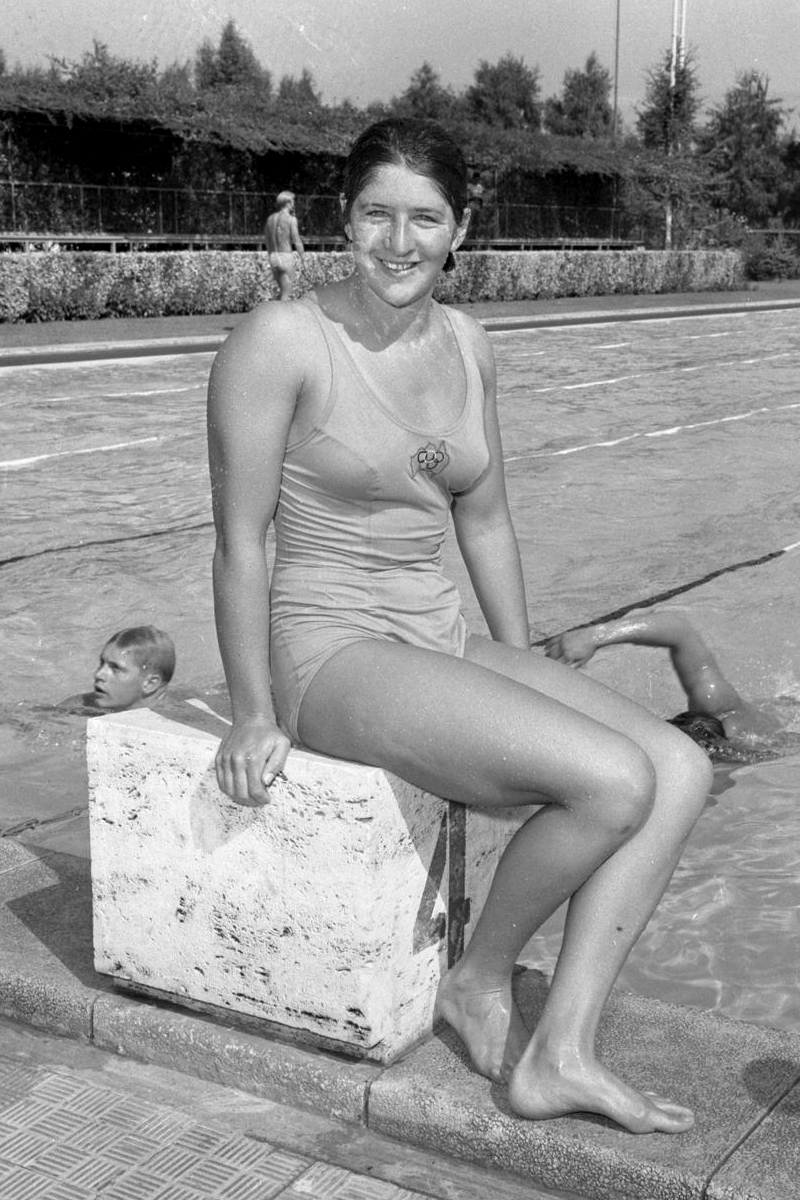
Three times in a row, yes: in Melbourne in 1956, Rome in 1960, and Tokyo in 1964. Always the 100-meter freestyle. Freestyle is the race where you choose your stroke; almost everyone does the crawl, the fastest. No one else has ever won this race three times. Can you imagine? Eight years staying the fastest in the world. In Melbourne, I even broke the world record while winning. The hardest part isn't becoming first once. It's staying first when everyone wants your spot.
The hardest part isn't winning once, it's staying first.
—What was it like, climbing to the top of the podium and hearing your anthem?
Ah, my child... it's a moment you never forget. You're there, drenched, your heart still pounding from the effort, and they put the gold medal around your neck. It's heavy, heavier than you think. Imagine an entire stadium standing for you, and your country's music ringing in the air. Me, a girl from Balmain, from the working-class neighborhood! I thought of my family, of all those laps before dawn. A medal isn't just metal. It's thousands of hours you hold in your hand.
A medal is thousands of hours you hold in your hand.
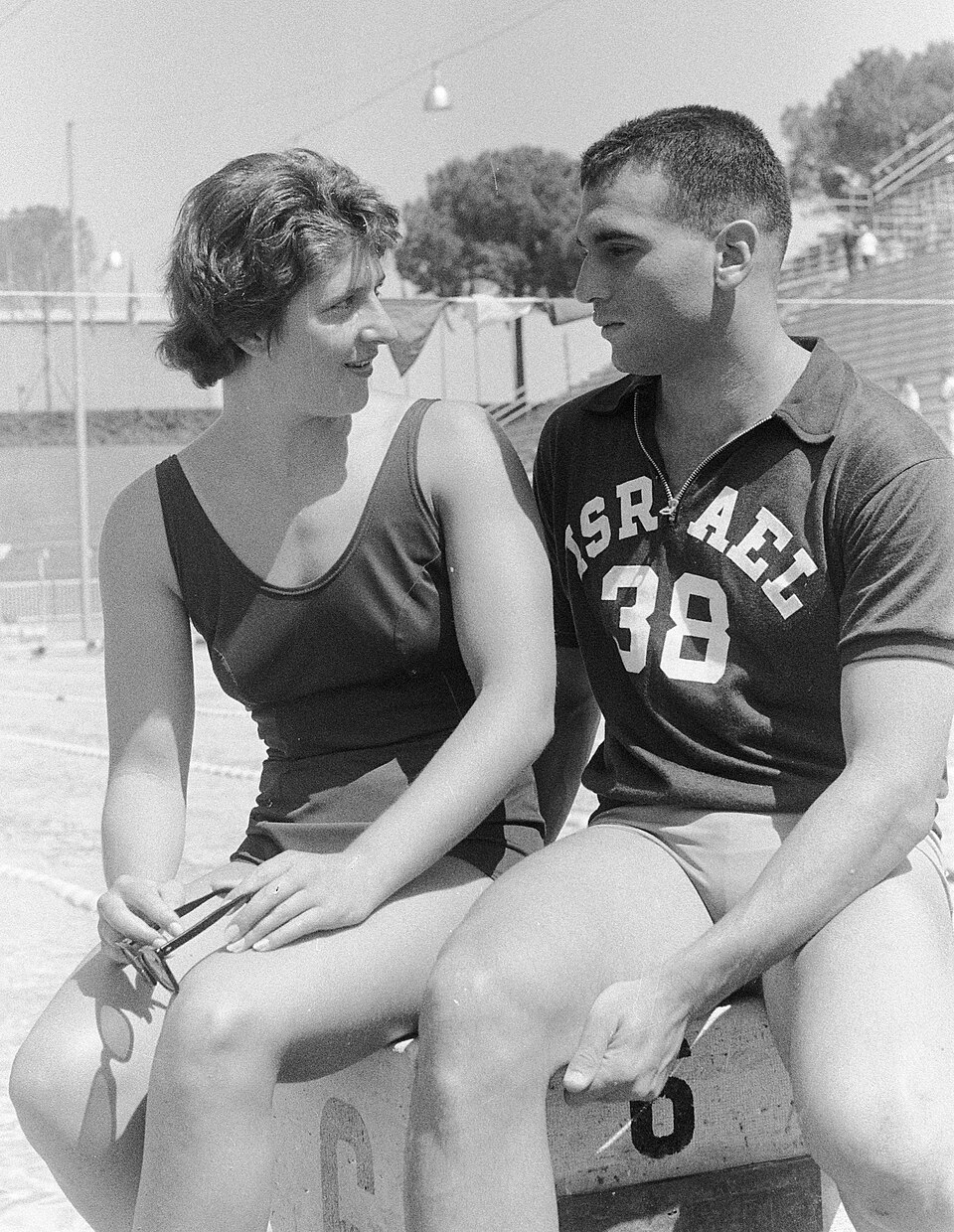
—What does it mean to be the first woman under a minute? Why is it important?
There was an invisible barrier, my child: swimming the 100 meters in less than sixty seconds. One minute. They said no woman would ever do it. In 1962, I did it. The first of all. You see the stopwatch hand turning? I had to touch the wall before it made a full circle. It was like breaking through a wall no one had cracked before. And when a woman proves something is possible, all the others think: me too, I can do it. That's the most beautiful thing. You don't open the door just for yourself.
You don't open the door just for yourself.
—I read that something terrible happened to you just before the Tokyo Games. What was it?
Yes... it's the hardest part of my story. In 1964, a few months before the Games, I had a serious car accident. And in that car was my mom. She didn't survive. I injured my neck, very badly. The doctors put me in a neck brace, a kind of stiff armor around my upper body. Imagine trying to swim with that, while your heart is broken with grief. There are pains that no brace can heal.
There are pains that no brace can heal.
—And despite all that, you still managed to win in Tokyo?
Yes. And I still don't quite know how. I had worn that brace for weeks, my neck hurt, and I was mourning my mother. But you know, when you've lost everything, sometimes only one thing remains: dive. So in Tokyo, on my starting block, I dove for her. And I won my third gold. That day, I understood that strength doesn't come only from muscles. It comes from what you carry in your heart. My mom was swimming with me, somewhere.
Strength doesn't come from muscles, it comes from what you carry in your heart.
—Is it true you stole a flag? Did you do something really naughty?
Ha! That story still follows me. Still in Tokyo, one night, with friends, we went near the Japanese emperor's palace. There was a beautiful Olympic flag... and let's say I wanted to take it as a souvenir. I got caught! It was just a prank, you know, a youthful mischief. But I had always had a strong character, I didn't like being bossed around. The serious sports officials, they didn't find it funny at all. Sometimes, a small prank costs much more than you think.
Sometimes, a small prank costs much more than you think.
—How did they punish you? Was it fair, in your opinion?
The swimming federation suspended me for ten years. Ten years! That means banned from all major competitions. For the flag incident, but also because I wasn't a good, obedient girl. In my time, they wanted champions who kept quiet. And I said what I thought. That punishment ended my career; I never swam at the Games again. Was it fair? I'll let you judge. But I'll tell you one thing: I'd rather have been myself than have been docile.
I'd rather have been myself than have been docile.
—Today, what would you like people to remember about you?
You know, in 2000, my country asked me to carry the flame at the Sydney Games. Me, the little undisciplined girl from Balmain! I had tears in my eyes. What I'd like you to remember? That I came from nothing, sick and poor, and that hard work carried me to the top. But also that I kept my character, even when it cost me. Be strong in the water, and strong in your head. Swim to win, but above all, swim while staying yourself. That's my real medal.
Swim to win, but above all, swim while staying yourself.
This imaginary interview was generated by artificial intelligence from sources documented in Dawn Fraser's profile. It dramatises what the figure might have said based on what we know about them, but does not constitute attested historical testimony. For primary sources and factual documentation, refer to the full profile.