Imaginary interview with Diana Nyad
by Charactorium · Diana Nyad (1949 — ?) · Sports · 6 min read
Key West, a September morning. The salt has long dried on her skin, but Diana Nyad still has the look of someone who has just emerged from the ocean. Seated facing the strait that still separates her from Cuba on the horizon, she agrees to revisit the fifty-three hours that made her famous — and the thirty years of silence that preceded them.
—How did you become, at twenty-five, the swimmer all of America was watching?
In 1975, I swam around Manhattan Island. Forty-five kilometers in gray, oily water, churned by ferry wakes — you can't imagine how the river pushes and pulls a body between the bridges. I finished in under eight hours, exhausted, and suddenly the New York papers knew my name. What I liked wasn't the glory, it was the geography: swimming around something, circling an island like closing a sentence. I grew up in Fort Lauderdale, Florida, where they put me in the water very early. Manhattan was proof that a pool kid could take on an entire city and go around it with nothing but arm strength.
Swimming around something, circling an island like closing a sentence.
—Four years later, at Bimini, you set a record that stood unmatched for a long time. What did it mean to you?
In 1979, I connected Bimini, in the Bahamas, to Florida: about one hundred sixty-five kilometers in open water, without a shark cage. It was then the longest swim ever done without that metal frame around the body, and for decades no one went farther. Swimming "without a cage" — you have to understand: it means accepting that nothing separates you from what lives below, except a support boat and some devices to keep sharks away. You move forward in a blue that has no bottom. That record gave me a title, a pride — and, without my knowing, it planted the idea that would haunt me thirty years later: what about Cuba? That crossing remained open like a door I had refused to go through.
You move forward in a blue that has no bottom.
—After that record, you left competition for over thirty years. What did you do in that silence?
I got out of the water in 1979 and didn't go back until I was sixty. In between, I did journalism, columns, sports commentary on American TV and radio. I learned to talk about other people's feats, microphone in hand, far from the salt. But you don't close a door left ajar at Bimini so easily. In my sixties, my mother's death and the weight of age brought me back to that obsession: Cuba. People thought the idea was absurd — resuming endurance training past sixty. To me, it was the only proof that mattered: that you're never too old to pursue the dream you put off.
You don't close a door left ajar at Bimini so easily.
—Resuming at that age — was it defying your own body?
Of course. At twenty, you swim with pride; at sixty-one, in 2011, you swim with patience and a lot of pain. I had to rebuild my shoulders, endurance, cold tolerance — that endurance that isn't a gift but a discipline wrested session after session. My mornings started at dawn, long hours in the ocean under the coaches' watch; afternoons, strength training and stretching. My sixty-year-old body protested, but it had an advantage over my twenty-year-old self: it knew why it was suffering. People asked if I wasn't ashamed to fail so late. I answered that the real failure would have been not to try at all, to let the dream die quietly in an armchair.
At twenty, you swim with pride; at sixty, with patience.
—Four Cuban attempts failed before the fifth. How do you keep going after so many setbacks?
The first attempt dates back to 1978, already, inside a cage — a failure. Then 2011, 2012, more failures: storms, Gulf Stream currents sweeping you offshore, jellyfish. Each time, they pulled you out half-conscious and the whole world felt sorry for you. But I wasn't looking for pity, I was looking for the way. That's where my stubbornness was born, what I ended up calling "Find a way." Each failure wasn't a wall, it was data: that current, that night, that sting. My team and I dissected every defeat like engineers. Defeated four times, we weren't four times more discouraged; we were four times better informed.
Each failure wasn't a wall, it was data.
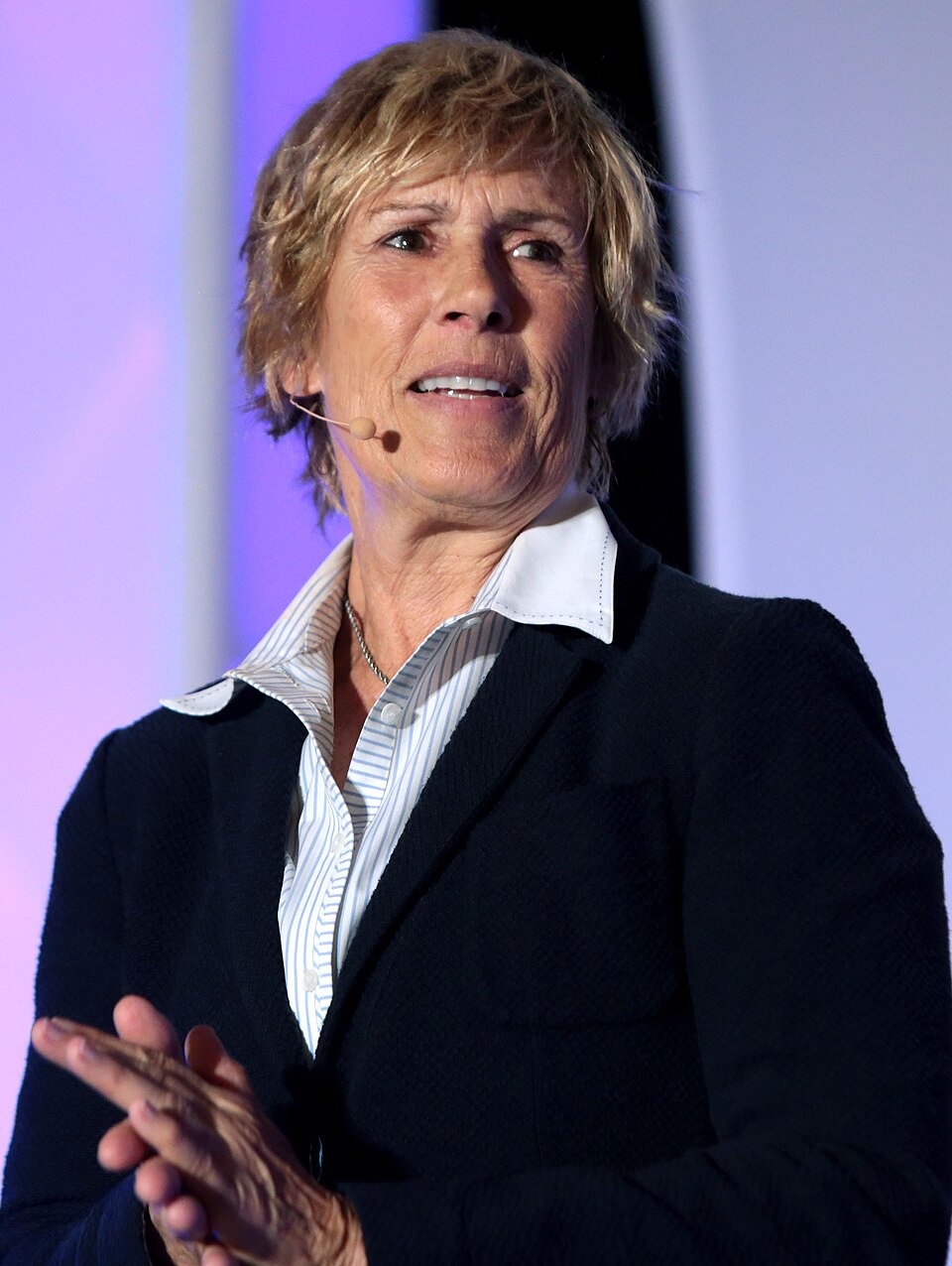
—Among those obstacles, the box jellyfish nearly stopped everything. What did they represent?
The box jellyfish is one of the most venomous animals on the planet, and its tentacles are invisible in dark water. During my attempts, they burned my face, my neck, with a pain that cuts your breath and can kill you. It's an enemy you don't see coming, and courage is useless against it. For the decisive crossing, my team designed a whole kit: a silicone protective mask that hugged the face and an anti-jellyfish suit covering every inch of skin. Swimming among those creatures isn't a heroic duel; it's an engineering and biology problem solved on land, before you even enter the water.
It's an enemy you don't see coming, and courage is useless against it.
—That silicone mask that protected you also made you suffer. How do you live with such an object?
That's the paradox of this gear: what saved me tortured me. The silicone mask kept the venom out, but hour after hour it cut into my lips and gums, filling my mouth with salt water and constant discomfort. I spat blood, swallowed wrong, my tongue swelled. I had to choose between the jellyfish's poison and this slow injury, and I chose the injury. That's the unglamorous truth of feats: they play out in tiny, repeated discomfort, in a split lip you ignore because the alternative is deadly. The public sees a triumphant swimmer; they don't see the shredded mouth under the mask.
What saved me tortured me.
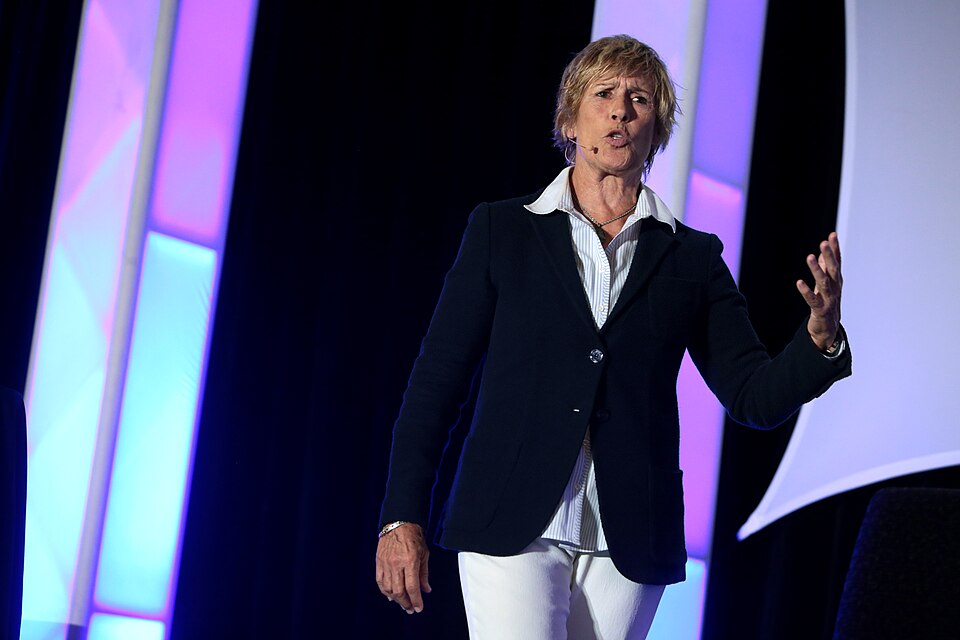
—Fifty-three hours without sleep, without touching land: how does the body hold up?
You don't hold up alone, that's the first thing. For over two days and two nights, I never set foot anywhere, never grabbed the support boat — the rule is absolute. The team fed me in the water, while swimming: energy drinks, gels, liquid foods passed on a pole so I wouldn't have to stop. The body, at that point, no longer obeys will but logistics: every calorie, every sip is calculated on land by doctors and navigators. I hallucinated, saw lights that weren't there. And yet I moved forward, carried by an invisible organization as essential as my arms.
The body, at that point, no longer obeys will but logistics.
—They say you sang to keep going. What occupied your mind during those endless hours?
The ocean at night is a terribly silent and terribly long place. To keep from panicking, I sang — internally, hundreds of songs I knew by heart, counting strokes to the rhythm. It's a mental discipline as much as the rest: occupy the mind so it doesn't turn against you. When I finally got out at Key West, exhausted, I wanted the crowd to remember three things, and I said them: "I have three messages. One is, we should never, ever give up. Two is, you're never too old to chase your dreams. Three is, it looks like a solitary sport, but it takes a team." That last point especially: it looks like a solitary sport, but nothing would have been possible without my team.
The ocean at night is a terribly silent and terribly long place.
—What remains of all that, once the salt has dried and the cameras have left?
There remains a phrase and a conviction. The phrase is the one I shouted to the crowd at Key West as I came out of the water, and which I made the title of my memoirs in 2015, Find a Way: find a way. The conviction is that for a long time people took me for a slightly crazy adventurer, whereas I see myself above all as a methodical stubborn person. It took me five attempts and thirty-five years to connect Cuba to Florida; success didn't come from superhuman talent, but from the persistence and work of an entire team. If people remember one thing about me, let it be this: dreams are not caught by miracle, but stroke after stroke, until you find the passage.
Dreams are not caught by miracle, but stroke after stroke.
This imaginary interview was generated by artificial intelligence from sources documented in Diana Nyad's profile. It dramatises what the figure might have said based on what we know about them, but does not constitute attested historical testimony. For primary sources and factual documentation, refer to the full profile.