Imaginary interview with Eleonora Duse
by Charactorium · Eleonora Duse (1858 — 1924) · Performing Arts · 6 min read
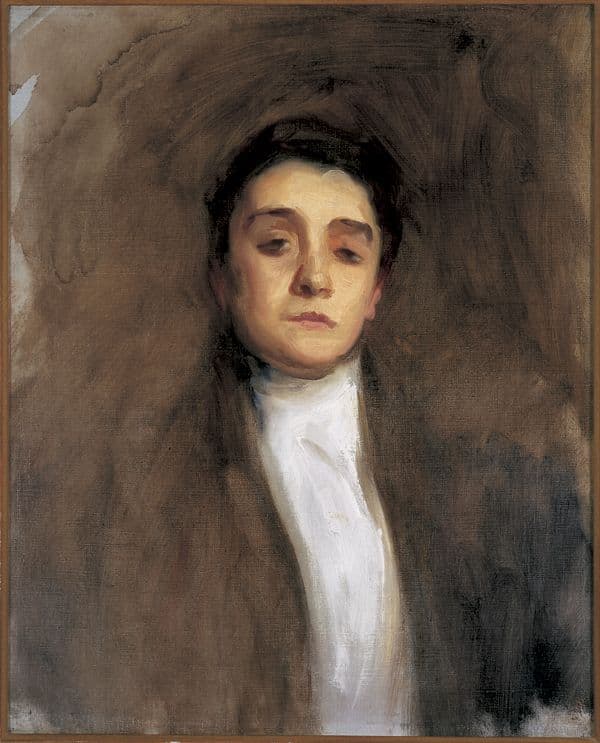
Autumn 1922. In a hotel room between two cities, a touring trunk half-open against the wall, La Duse receives without makeup, her gray hair simply pulled back. Her voice is low, almost a confidence, and each silence weighs as much as the words.
—They say you were the only one to go on stage without makeup. How did you come to refuse face paint?
Look at my face. These wrinkles, this gray hair — why hide them under a layer of white and carmine? My colleagues sculpted themselves a mask to withstand the footlights, those low lights that flatten features; I wanted the blood to speak. They wrote in The Times of London that with me, you forgot there was a stage, wings, an audience. The secret is not in a pot of ceruse. When Marguerite Gautier dies, I do not play death: I let fear rise in me, and my face pales on its own. Critics thought it was a magic trick. It was merely declamation that I had thrown out the window, that codified way of reciting while waving one's arms. I do not recite. I breathe the character.
I do not play death: I let fear rise in me, and my face pales on its own.
—Your costume itself seemed to partake in this rejection of artifice. What were you seeking through these so sober outfits?
A dress should not dazzle, it should disappear. Where others were weighed down with embroidery and jewels, I wore dark, flowing fabrics, designed to erase the boundary between the woman I am and the one I embody. A tight corset traps your breath; yet it is from breath that true emotion is born. This austerity I also lived in life: dark dresses, no ornament, the body left free. The audience of the Belle Époque came to the theater for flash, diamonds, the spectacle of luxury. I presented them with a woman stripped of all affectation, and it was precisely that which unsettled them. You do not look at a jewel: you look at a soul.
A dress should not dazzle, it should disappear.
—London, 1895: you and Sarah Bernhardt played the same play the same week. Do you remember that strange duel?
Two Dame aux camélias in the same city, a few streets apart — audiences crossed London by carriage to compare us like two racehorses. I never liked that parade. Sarah was magnificent, sovereign, she painted herself to reign under the lights; she was a queen addressing the house. I turned my back on the audience if necessary, to speak only to the character. George Bernard Shaw settled it in his own way: she played for the audience, he said, and I for the role. He wrote that my technique was nothing but a total abandonment of technique, that I did not try to move by feigning emotion. That phrase followed me all my life. It was not a rivalry, really: two religions of theater, incompatible.
She was a queen addressing the house; I spoke only to the character.
—Did this comparison with Bernhardt weigh on you, or nourish you?
Both, like any useful wound. I was called "the anti-Bernhardt," as if I existed only by contrast. That is unfair: I was not born to oppose anyone, I was born in a train car near Vigevano, to a touring company, and I acted before I could read. But I admit that this duel of 1895 served my cause more than a thousand performances. It posed a question before all of Europe: must one, on stage, show or be? Sarah showed, splendidly. I tried to be, humbly. The audience understood that a third path was opening, that of naturalism, where the actress no longer exhibits herself but effaces herself to let a being of flesh live. I carried that path like a trunk too heavy, from city to city.
—Gabriele D'Annunzio wrote plays for you, then exposed you in a novel. How does one bear such a betrayal?
He wrote La Gioconda for my hands — he said my hands could express everything without the lips having to speak. I played Silvia Settala, torn between art and love, not knowing I was describing my own existence. Then, in 1900, he published The Flame, that novel where he depicted me as an aging, abandoned woman, thrown to the wolves of all Italy. Imagine that a man you love opens your body in the public square to turn it into literature. Our correspondence — hundreds of letters — still bears the trace of my doubts and my pain. And yet I continued to defend his work, to finance his plays. They thought me mad. But the artist in him was worth more than the man, and I never knew how to separate the two.
A man you love opens your body in the public square to turn it into literature.
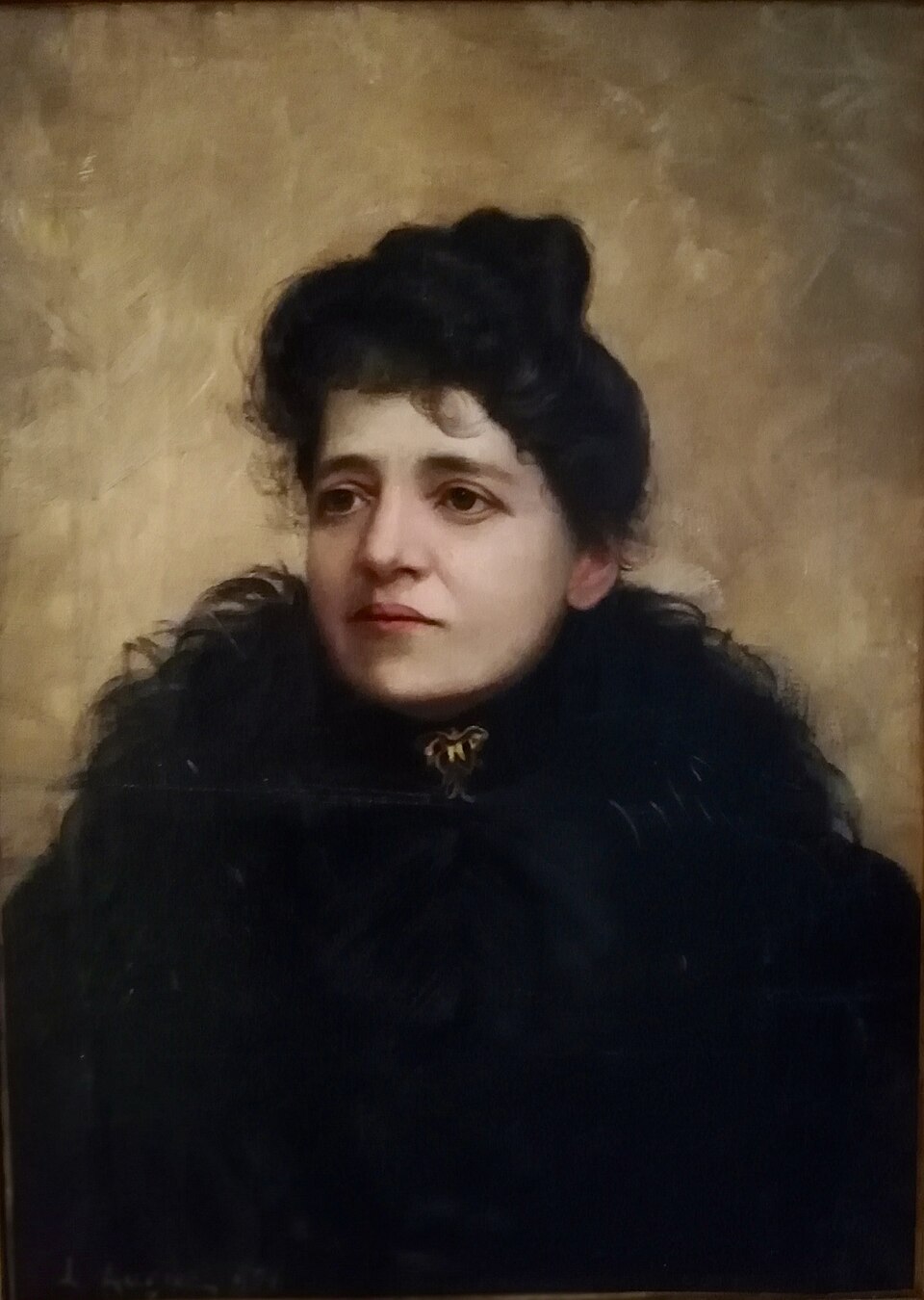
—Why did you continue to serve his theater after such humiliation?
Because the work survives the man, and my faith was never in D'Annunzio but in the theater itself. He had written Francesca da Rimini, La Gioconda for me; these texts existed, they needed a voice, and that voice was mine. To disown him would have been to disown a part of my art out of mere feminine spite. I do not have that luxury. I grew up in a touring company where you played anyway, sick, hungry, humiliated — the curtain rises, period. Much has been said about my generosity, mistaken for weakness. It was the opposite: refusing to let a mediocre man ruin beautiful plays was the only revenge worthy of me.
—You were the first great actress to perform Ibsen, then considered scandalous. What drew you to that repertoire?
Truth, always truth. When I played Nora in A Doll's House in 1891, the bourgeois audience was scandalized: to see a woman slam the door on her home, refuse her husband, her children, her condition — it was a bomb. Then Hedda Gabler, that woman eaten by frustration and repressed violence, whom I embodied without a flourish, almost motionless. This Scandinavian repertoire, icy, disturbing, no one dared to bring it to the great stages. I did it because these heroines finally spoke the truth of women: their confinement, their revolt. My repertoire was not that of reassuring melodrama. It was the one that unsettles, that asks questions from which the audience emerged shaken. I was criticized for choosing unsympathetic roles. I replied that I did not seek to please, but to reveal.
These heroines finally spoke the truth of women: their confinement, their revolt.
—How did you prepare these deeply interior roles, far from the grand gestures of melodrama?
Not in front of a mirror, believe me. I spent my afternoons annotating manuscripts — densely, line by line: the secret rhythm, the silences, what lies silent beneath the words. These manuscripts covered with my writing now rest at the National Library of Rome. I hated directive rehearsals, where a man commands a gesture to the second. I sought the truth of the character through inner improvisation, in dialogue with my partners. And in the evening, in my dressing room, I refused all visitors. Where Sarah spent an hour applying makeup, I sat in silence on my chaise longue, preparing from within. The silence before entering the stage was as important as the acting. It was in that void that Rebecca West or Ellida came to find me.
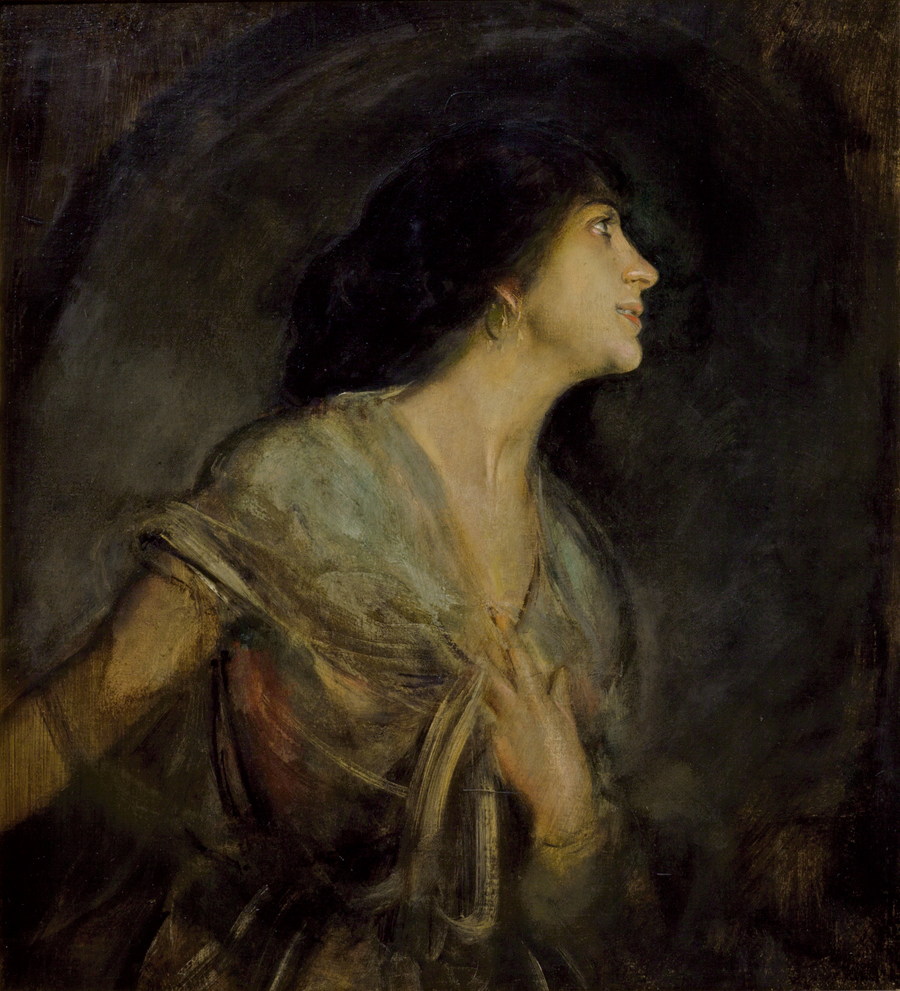
—In 1909, at fifty-one, you left everything. What drove you to that long silence?
Exhaustion, and disgust. Twenty years of trains, trunks, hotel rooms — this nomadic life burns a body. My health was eroded by bronchitis, my lungs needed air. I had given all I could give and the theater was beginning to seem like a machine for making noise. I retired to Asolo, in the Veneto, a simple house surrounded by gardens, where silence replaced applause. Twelve years almost without a stage. I read, I walked, I nursed my breath. They thought I was finished, and perhaps I believed it too. This withdrawal was not a diva's whim: it was the only way to stay alive, to find the essential after having appeared so much.
I had appeared so much; I needed silence to stay alive.
—Then you returned to the stage in 1921. What called you back under the lights?
Ruination, let's say it plainly. The Great War had swallowed my savings invested in Europe; at over sixty, I found myself with nothing. So I reopened the trunk. In 1921, in Bologna, I took up Ibsen's The Lady from the Sea again — Ellida, haunted by a call from the open sea. Twelve years of absence, and the audience rose, in tears. I wrote to my daughter Enrichetta that I wanted to die on stage or while traveling, not in a bed; that theater was my only home and movement my only health. Destiny listened to the letter. But I tell you: this return was not a decline. Returning to the stage ruined, at my age, without makeup — it was my purest profession of faith.
—You speak of dying while traveling as a wish. Is there not something frightening about that?
Frightening? No — fitting. A motionless bed, white sheets, a muffled agony: that is what terrifies me. I have spent my life on trains and steamships, the touring trunk my only home, from New York to Buenos Aires, from Vienna to those American cities whose names I still mangle. Movement is my health, I told you, and I mean it to the point of vertigo. An actress does not stop, she falls in stride, like a soldier. If I must fade at the end of a tour, in an unknown city, between two performances I refused to cancel despite the fever — then I will have had the death I deserved. The curtain always falls. The important thing is to fall with it, standing, and not lying in wait.
An actress does not stop, she falls in stride, like a soldier.
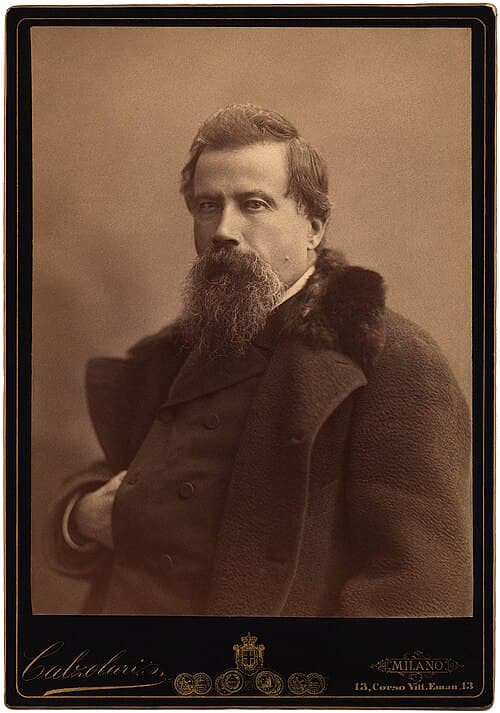
This imaginary interview was generated by artificial intelligence from sources documented in Eleonora Duse's profile. It dramatises what the figure might have said based on what we know about them, but does not constitute attested historical testimony. For primary sources and factual documentation, refer to the full profile.