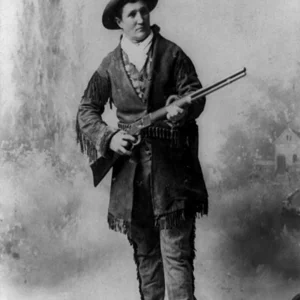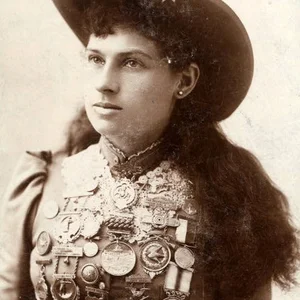

Annie Oakley (1860-1926) was an American sharpshooter who became the star of Buffalo Bill's Wild West Show. Nicknamed “Little Sure Shot,” she embodied the mythologized figure of the conquest of the West while pushing back the limits placed on the women of her time.
Annie Oakley(1860 — 1926)
Annie Oakley
États-Unis
6 min read
Frequently asked questions
Famous Quotes
« Aim at a high mark and you will hit it.»
Key Facts
- Born in 1860 in Ohio, she learned to shoot at a very young age to help her poor family by hunting game
- In 1875, she defeated the professional marksman Frank Butler in a shooting contest, and later married him
- From 1885 onward, she became the star of Buffalo Bill's Wild West Show for nearly 17 years
- In 1887, she performed before Queen Victoria during the show's European tour
- She died in 1926 and remains an iconic figure of the American West and of women's emancipation
Works & Achievements
For nearly seventeen years, she was the leading female attraction of the most famous Wild West show, helping to forge the American myth of the frontier.
She achieved feats that became legendary, such as hitting 4,472 glass targets out of 5,000 in a single day, proving that a woman could dominate a sport reserved for men.
Her demonstrations before Queen Victoria and several European monarchs made her an unwitting ambassador of American popular culture.
On the eve of the Spanish-American War, she offered to raise a corps of fifty women sharpshooters, a pioneering gesture in support of women's role in the military.
After a false accusation of theft and drug addiction, she filed and won most of some fifty lawsuits, defending her reputation and the honor of women.
Convinced that every woman should know how to defend herself, she is said to have introduced several thousand women to the handling of firearms.
Anecdotes
Around the age of fifteen, Annie faced the professional marksman Frank Butler in a shooting match; he had bet that no local could beat him. She won by a single target: humiliated but smitten, Butler courted her and married her a few years later. He then became her assistant and manager for the rest of her career.
In 1884, the Sioux chief Sitting Bull was so impressed by her accuracy that he asked to symbolically adopt her and nicknamed her “Watanya Cicilla,” which the organizers translated as “Little Sure Shot.” This name followed her throughout her life on the posters of the Wild West Show.
Among her acts, Annie would shoot a cigarette held between her husband's lips or snuff out a candle's flame with a bullet. A persistent legend claims that she shot the ash off a cigarette held by the future Kaiser Wilhelm II during a tour of Germany in 1889.
In the United States, the expression “an Annie Oakley” long referred to a free complimentary ticket: these tickets were punched with several holes, recalling the playing cards she riddled with bullets in mid-air during her demonstrations.
In 1901, a serious railway accident injured her spine and put an end to her career for a time. It is said that her hair turned white within a few hours from the shock; she underwent several operations but returned to the stage and continued to shoot with precision well into old age.
Primary Sources
I propose to place at the government's disposal a company of fifty lady sharpshooters, who would provide their own arms and ammunition in case of war with Spain.
I learned to shoot at a very young age, and hunting allowed me to feed my family and pay off the mortgage on my mother's farm.
Miss Annie Oakley, the marvelous rifle shot, whose skill astonishes the sovereigns of Europe as well as the crowds of America.
The published article, claiming that Annie Oakley had been arrested for theft in order to obtain cocaine, is entirely false and damages her reputation.
Key Places
Rural region where Annie Oakley was born into a poor Quaker family; it was while hunting to feed her family that she developed her sharpshooting skill.
City where the young Annie won a shooting contest against Frank Butler around 1875, a meeting that shaped her career and her life.
The Wild West Show performed here in 1887 for Queen Victoria's Golden Jubilee, cementing Annie Oakley's international fame.
Annie Oakley performed here during the 1889 World's Fair, before the crowds who had come to admire the brand-new Eiffel Tower.
Town in her home region where Annie Oakley returned and died in 1926; a local museum is dedicated to her today.
Typical Objects
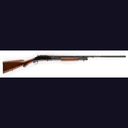
Annie Oakley's weapon of choice for her acts shooting at moving targets such as glass balls or clay pigeons. She owned several of them, often finely crafted.
📷 Domaine public · Wikimedia Commons ↗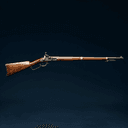
A long-barreled weapon used for highly precise shots, such as hitting a coin tossed in the air or slicing a playing card edge-on.
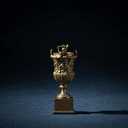
Awards won at shooting competitions across America and Europe, testifying to her reputation as the finest markswoman of her time.
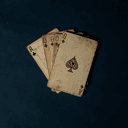
Cards riddled with bullets in midair during her demonstrations, which became such a symbol of her skill that they inspired the expression “an Annie Oakley” for a free ticket.
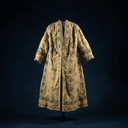
Outfits that Annie sewed herself, combining a long skirt, gaiters, and a hat — both practical for shooting and in keeping with the modesty expected of a woman of the era.
Color lithographed posters touting “Little Sure Shot,” essential tools of the emerging mass entertainment industry and of the staging of the West as spectacle.
School Curriculum
Vocabulary & Tags
Key Vocabulary
Tags
Daily Life
Morning
While on tour, the morning began early with the meticulous upkeep of her firearms: cleaning the barrels, checking the ammunition, and loading the cartridges. Annie insisted on preparing her own gear, since the slightest malfunction could ruin an act.
Afternoon
The afternoon was devoted to rehearsals and often to an early performance, as the Wild West Show sometimes gave two shows a day. Between acts, she sewed or mended her costumes inside the tent.
Evening
In the evening, after the show, came the dismantling of the traveling camp and long train rides to the next town. Annie made the most of these quiet moments to read, write letters, or do embroidery.
Food
Raised in the rural poverty of Ohio, she had grown up hunting small game — rabbits, quail, partridge — to feed her family. As a famous adult, she kept simple, frugal tastes, true to her Quaker upbringing.
Clothing
She wore outfits she made herself: skirts reaching down to mid-calf, gaiters, blouses, and large hats adorned with a star. This attire combined the freedom of movement needed for shooting with the decency expected of a respectable woman of the time.
Housing
Much of her life as a performer unfolded in the tents and wagons of the traveling show, which formed a true nomadic town. Between seasons, she returned to a more permanent home, and she ended her days in her native region of Ohio.
Historical Timeline
Period Vocabulary
Liens externes & ressources
Références
Œuvres
Vedette du Buffalo Bill's Wild West Show
1885-1901
Records et concours de tir
années 1880-1900
Représentations devant les têtes couronnées d'Europe
1887-1889
Lettre offrant une compagnie de femmes tireuses au président McKinley
1898
Procès en diffamation contre la presse Hearst
1903-1910
Enseignement du tir aux femmes
fin XIXe-début XXe siècle