Imaginary interview with Elsa Triolet
by Charactorium · Elsa Triolet (1896 — 1970) · Literature · Culture · Politics · 6 min read
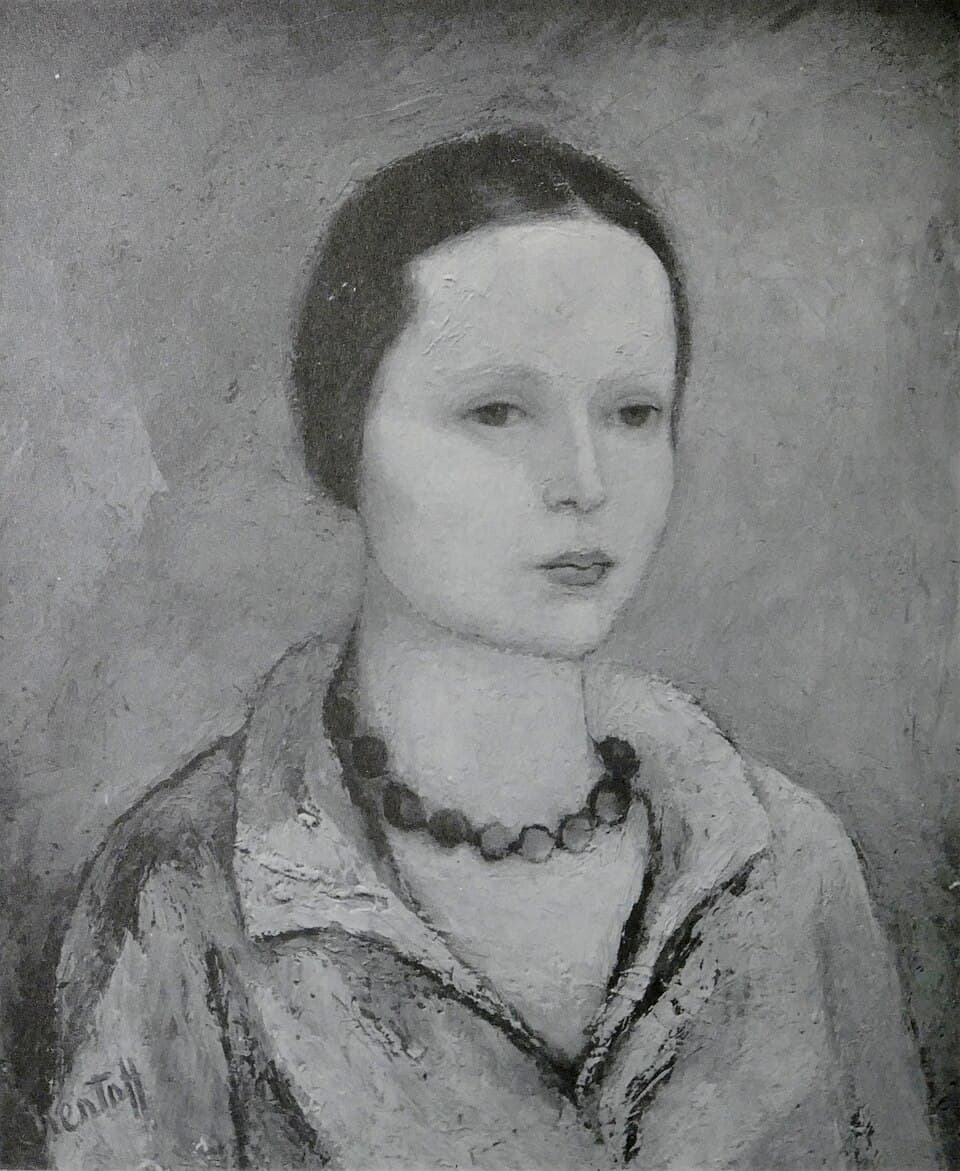
June 1968, at the Moulin de Villeneuve, in Saint-Arnoult-en-Yvelines. Elsa Triolet receives in the low room where the waterwheel still hums with its watery purr. On the table, a portable typewriter, typescripts covered in corrections, and tea steaming despite the heat.
—You were born in Moscow in 1896. How does this Russian childhood continue to inhabit you?
I was baptized Ella Kagan, into a Jewish family of the intellectual bourgeoisie, and I still keep the photographs of that house in Moscow where my sister Lili and I grew up surrounded by poets. You see, I drink tea at all hours, as we did there — it's a habit that doesn't uproot. When I left Soviet Russia in 1918, my only paper was a Nansen passport, that document the League of Nations gave to us stateless people. One thinks one carries little when emigrating. In truth, one carries everything: a language, smells, a sister who loved Mayakovsky. I never denied that, even when I chose France.
One thinks one carries little when emigrating. In truth, one carries everything.
—In 1938, you published your first novel written directly in French. Why this shift in language?
Bonsoir Thérèse. My first work, L'Âme, I had written in Russian, in 1927, as one writes in sleep, in the language of one's mother. But I was living in France, I wanted to live there, and it seemed to me that writing in a language is much more than borrowing a tool. I put in the preface this sentence I cherish: “The language of a country is its very soul, and I wanted to conquer that soul.” Conquer, yes — for it was not my mother tongue, and I had to take it, word by word, struggling. Choosing French was choosing my country, my spiritual homeland. An exile that becomes an adoption.
Writing in a language is much more than borrowing a tool.
—You met Louis Aragon in November 1928. What remains, forty years later, of that evening?
November 1928, a Parisian evening, around Montparnasse. I did not yet know that I would never leave him. We married in 1939, on the eve of disaster, and since then we have shared everything: the apartments in Paris, the precarious lodgings in the free zone, and finally this Moulin de Villeneuve where we are now. He dedicated Les Yeux d'Elsa to me in 1942, and I am often asked if it doesn't weigh heavily to have become a verse. I reply that we influenced each other, aloud, in the evening, over manuscripts in progress. Two writings that reread each other: that is what our couple is.
I did not yet know that I would never leave him.
—Under the Occupation, you wrote and published clandestinely. What did the pseudonym Laurent Daniel represent?
In 1943, one had to write quickly and discreetly, on this little portable typewriter I carried everywhere. I signed Les Amants d'Avignon with the name Laurent Daniel, and the text appeared with Éditions de Minuit, that clandestine network born to defy censorship. My heroine, Juliette, I placed on a train, a suitcase on her knees, carrying false papers for the Resistance. “She was not afraid, or rather she had learned to no longer be afraid.” That was us — fear tamed. We also collaborated on the clandestine Lettres françaises, those mimeographed sheets passed from hand to hand. A book printed in secret was already an act of refusal.
Fear tamed: that was us.
—How do you look back today on those terrible years of the Occupation?
I wrote to Aragon once: “We are what we have done. Those terrible years made us, you and me, what we are.” I regret nothing, not even the fear, not even the danger, because we were on the right side. We had taken refuge in the free zone, around the Drôme and Avignon, and it was there, in the clandestine, that I drew the material for Les Amants d'Avignon. We lived on ration tickets, we wrote on typescripts that sometimes had to be hidden. But one thing remains: in an occupied country, holding a free pen is already resisting. The rest — glory, prizes — came later, almost as an extra.
In an occupied country, holding a free pen is already resisting.
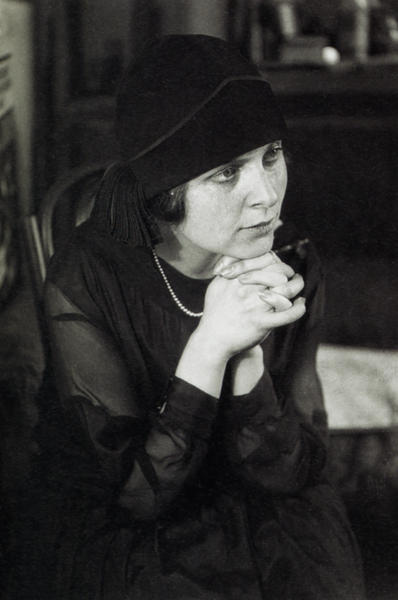
—In 1945, you became the first woman to receive the Goncourt Prize. What did you feel that day?
The 1945 Goncourt Prize, for Le premier accroc coûte deux cents francs, that collection where I had gathered my Occupation stories, including Les Amants d'Avignon. Consider that in over forty years, this all-male jury had never crowned a woman. I said, upon receiving this prize, that I accepted it “in the name of all women who write and have not yet been read, of all those who will write and perhaps will not be read enough.” It was not modesty, nor pride. It was a statement: for a long time, people had looked elsewhere when a woman took up the pen. That day, a door cracked open — I knew how fragile that door was.
For a long time, people had looked elsewhere when a woman took up the pen.
—Do you think that Goncourt really changed things for women writers?
A prize does not abolish centuries of silence, believe me. But a symbol counts. When Le premier accroc coûte deux cents francs received this award, born in 1903, the most prestigious in our letters, young girls who dreamed of writing saw that a place existed. I never thought myself better than others — I had simply, by dint of correcting my sentences by hand, learned the weight of rhythm, that lesson I owed to Russian poetry. What I wish is that after me, one no longer has to specify “the first woman.” That the word woman writer ceases to be an exception that is underlined, to become an obvious fact we forget to name.
That the word woman writer ceases to be an exception that is underlined.
—You translated Mayakovsky and Chekhov. What role did you see for yourself between these two worlds?
That of a conveyor, if you will. Between 1940 and 1960, I carried into French texts by Mayakovsky — the great love of my sister Lili — and by Anton Chekhov. I still keep original editions of the poet, volumes I leaf through as one opens a family album. Translating is not betraying: it is making French ears hear a music from the Neva. One had to render Mayakovsky's brutality, his ruptures, without dulling them in the politeness of our language. Having myself crossed that border, from Russian to French, I knew where the fords lay. Making Russian literature known was my way of never cutting the thread with my origins.
Translating is not betraying: it is making heard a music from the Neva.
—You spoke of writing quickly and discreetly. What did your working mornings actually look like under the Occupation?
I rose before dawn — the morning has always been my most fruitful hour. I would sit before my portable typewriter and write while the world still slept, before visits, meetings, clandestine tasks broke the thread. Under the Occupation, that morning solitude became a dangerous privilege: sometimes, in the afternoon, one would pass on a forbidden text, a sheet of Lettres françaises. I always worked on my sentences with an almost manic rigor, covering my typescripts with handwritten corrections, attentive to rhythm, to breathing. One thinks one writes with ideas. One writes with hours stolen from sleep and fear.
One writes with hours stolen from sleep and fear.
—After so many years in French, in which language do you still dream?
A formidable question. One writes in a conquered language, but one dreams, sometimes, in the language drunk with childhood tea. I made French my homeland — Bonsoir Thérèse in 1938 was my birth act in this language — and yet, at night, I sometimes hear Russian verses, those of Mayakovsky perhaps, returning unbidden. I think an exiled writer always lives in this in-between: neither entirely from here, nor entirely from there. It is not a tear, it is a richness. I have two souls, one of which writes and the other listens. And it is perhaps this sharing that gives my sentences their particular accent.
I have two souls, one of which writes and the other listens.
—This mill in Saint-Arnoult where we are, what does it represent at the end of your shared life with Aragon?
We moved here permanently in the sixties, after so many makeshift lodgings. This Moulin de Villeneuve, with its library and garden, is the culmination of a life together — the opposite of the precarious rentals of the war. In the evening, we still receive: writers, activists, we read aloud manuscripts in progress, we discuss late into the night. The wheel turns outside, the water never falls silent, and I like that murmur that accompanies writing. I am finishing my last books here. I sometimes think that this place will outlive me, that people might come here one day to walk in our footsteps. A writer always ends up inhabiting the walls where he worked.
The wheel turns outside, the water never falls silent.
Read further
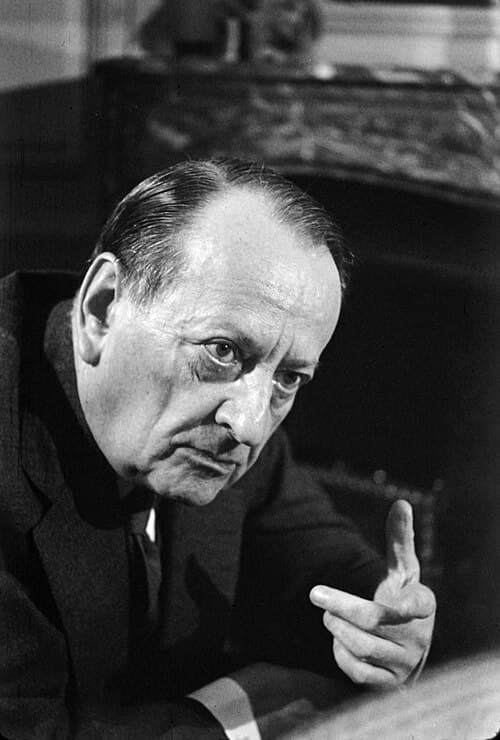
This imaginary interview was generated by artificial intelligence from sources documented in Elsa Triolet's profile. It dramatises what the figure might have said based on what we know about them, but does not constitute attested historical testimony. For primary sources and factual documentation, refer to the full profile.