
Born around 1772 in Guadeloupe to an enslaved African mother, Solitude joined the mixed-race insurgents during the armed resistance against the restoration of slavery decreed by Bonaparte in 1802. Pregnant, she fought until her capture and was hanged the day after giving birth, on November 29, 1802. Her story, passed down through Creole and Caribbean oral tradition, has made her an emblematic figure of resistance against colonial oppression.
Solitude(1772 — 1802)
Solitude
France
8 min read
Frequently asked questions
Key Facts
- Born around 1772 in Guadeloupe, daughter of an enslaved African woman; oral tradition holds that her father was a white man
- The abolition of slavery by the National Convention in 1794 briefly granted her freedom
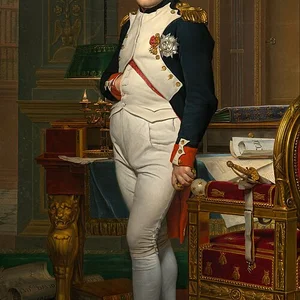
- In 1802, Bonaparte restored slavery in the French colonies through the law of May 20, 1802
- Solitude joined the insurgents led by Louis Delgrès and fought at Baimbridge (Guadeloupe)
- Pregnant at the time of her capture, she was executed by hanging on November 29, 1802, the day after giving birth
Works & Achievements
A major collective and political act of resistance in which Solitude played an active role. This uprising represents one of the first organized refusals of Bonaparte's reinstatement of slavery in the French Antilles.
This novel, rooted in Creole oral tradition and historical research, brought Solitude's story to the world. It helped establish her name in international collective memory and earned its author worldwide literary recognition.
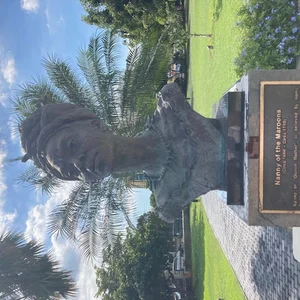
A work by Guadeloupean sculptor Josué Dorel, unveiled during the commemoration of the 150th anniversary of the final abolition of slavery. It depicts a pregnant Solitude standing tall and proud, and has become a place of remembrance and pilgrimage.
In 2021, during national commemorations, Solitude was recognized as a figure of the French Republic, honored in official ceremonies — reflecting the growing place of Caribbean resistance fighters in France's national memory.
Anecdotes
Solitude was born around 1772 to an African mother who was raped aboard the slave ship transporting her to Guadeloupe. This founding act of violence deeply shaped her identity: neither fully African nor recognized by colonial society, she grew up in the in-between world of Caribbean slavery.
When Bonaparte restored slavery through the law of May 20, 1802, Solitude refused to return to servitude. She joined the insurgents rallying around Louis Delgrès in the highlands of Basse-Terre, taking up arms despite being heavily pregnant. Her courage left a lasting impression on those who witnessed it.
After Louis Delgrès's heroic death at Matouba on May 28, 1802, the remaining resistance fighters continued the struggle in the hills of Guadeloupe. Solitude was among those who held out for months before being captured by the troops of General Richepance, tasked with pacifying the island.
Taken prisoner while on the verge of giving birth, the colonial authorities waited for her child to be born before carrying out her execution — so as not to lose this 'property,' since the newborn was itself considered the master's possession. She was hanged on November 29, 1802, the day after her child was born.
Solitude's story, passed down through generations by Creole oral tradition, was brought to a wider audience in 1972 through the novel by Guadeloupean writer André Schwarz-Bart. In 1999, a statue was erected in her honor in Pointe-à-Pitre, making her a national figure and a universal symbol of resistance against oppression.
Primary Sources
It is in the finest days of a century forever celebrated for the triumph of enlightenment and philosophy, that a class of unfortunate men [...] sees broken the iron scepter under which it has groaned for two centuries.
The last rebels have been arrested in the hills. The ringleaders were tried and executed in accordance with the orders of the First Consul. Order has been restored across the entire colony.
It was said that she was pregnant and carried her belly like a shield. She would say that a child born free is worth more than a whole life spent in chains.
In the colonies returned to France pursuant to the Treaty of Amiens, slavery shall be maintained in accordance with the laws and regulations predating 1789.
Key Places
The heart of the 1802 insurrection, the town of Basse-Terre and its surroundings were the site of fierce fighting between the insurgents led by Delgrès and Solitude and the French forces of General Richepance.
The site of the ultimate sacrifice of Louis Delgrès and 300 insurgents on May 28, 1802: rather than surrender, they blew up the powder magazine. This landmark of resistance is today a major memorial site.
The main city of Guadeloupe, where Solitude was executed on November 29, 1802. A statue has stood there in her honor since 1999, on Place de la Victoire, commemorating her sacrifice.
These hills and dense forests in the interior of Guadeloupe served as refuge for Maroon slaves and the insurgents of 1802. Solitude led her resistance there following the defeat at Matouba.
Typical Objects

A ubiquitous tool on sugar plantations, the machete was used to cut sugarcane. In the hands of insurgents like Solitude, it also became a weapon of resistance during battles in the mornes.

Symbols of the bondage imposed on enslaved people, iron shackles and chains were a daily reality for captives. Solitude's refusal to wear them again defined her entire life's trajectory.

An African percussion instrument at the heart of Guadeloupean Creole culture, the ka served both as a means of communication between communities and as a tool of cultural resistance. Its rhythm accompanied ceremonies and gatherings of insurgents.

Enslaved people on plantations worked from sunrise to sunset with hoes and rudimentary tools. Solitude, like all enslaved women, knew this exhausting labor intimately.

In the forests and hills of Guadeloupe, maroons used local plants to treat themselves far from the plantations. This knowledge of Creole medicinal plants was essential to the survival of those who resisted.

Passed down through oral tradition, this symbolic object evokes the oaths sworn by insurgents to resist unto death rather than return to slavery.
School Curriculum
Vocabulary & Tags
Key Vocabulary
Tags
Daily Life
Morning
On the plantation, the day began before dawn at the sound of a bell or the overseer's whip. Enslaved women joined the sugarcane fields as early as 5 a.m., hoe or machete in hand, under the watchful eye of foremen. Mothers often had to leave their infants behind in the slave cabins.
Afternoon
Cane work was exhausting under the tropical sun: cutting, clearing brush, carrying heavy stalks to the mill. A short break was granted at noon to eat a few pieces of cassava or some green banana — the only food left to the enslaved. During the insurrection, afternoons were devoted to moving through the mornes, keeping watch, and making military preparations.
Evening
In the evenings, in their wooden and thatched cabins, the enslaved briefly gathered among themselves, passing on their culture through songs, storytelling (veillées), and the rhythms of the ka drum. During the armed resistance of 1802, evenings were spent in clandestine forest meetings, maintaining rudimentary weapons, and holding strategic discussions.
Food
The enslaved were deliberately kept underfed: cassava, yam, plantain, a few vegetables from a small Creole garden, and occasionally dried fish. Insurgents hiding in the mornes survived on wild fruits, roots, game, and provisions stolen from plantations or brought by sympathizers.
Clothing
Enslaved people received two sets of work clothes each year, made from rough white cotton or coarse woolen cloth. Women wore a long skirt, a blouse, and a tignon — a madras headscarf tied around the head that became a powerful symbol of identity for Afro-Creole women. During the resistance, clothing was torn, caked with mud and blood.
Housing
The enslaved lived in cabins of wood, bamboo, and sugarcane leaves, crowded together in the plantation "quarters," with no privacy. These makeshift dwellings offered no protection against the tropical humidity. In the mornes, the insurgents built temporary shelters in the forest, always ready to move on to escape colonial troops.
Historical Timeline
Period Vocabulary
Visual Style
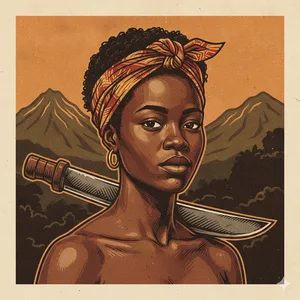
Illustration historique évoquant la Guadeloupe coloniale de 1800 : une femme métisse d'une dignité farouche, dans un cadre tropical luxuriant mêlant violence de l'oppression et beauté sauvage des mornes.
Sound Ambience
Paysage sonore de la Guadeloupe tropicale de 1802 : la forêt dense des mornes, les tambours ka africains, les rumeurs de résistance et le fracas lointain des combats de l'insurrection.
Liens externes & ressources
Références
Œuvres
Résistance armée contre le rétablissement de l'esclavage en Guadeloupe
1802
La Mulâtresse Solitude (roman d'André Schwarz-Bart)
1972
Statue de Solitude, Place de la Victoire, Pointe-à-Pitre
1999
Entrée au Panthéon (Panthéonisation symbolique et commémoration nationale)
2021