Imaginary interview with Emma Goldman
by Charactorium · Emma Goldman (1869 — 1940) · Literature · Politics · Philosophy · 5 min read
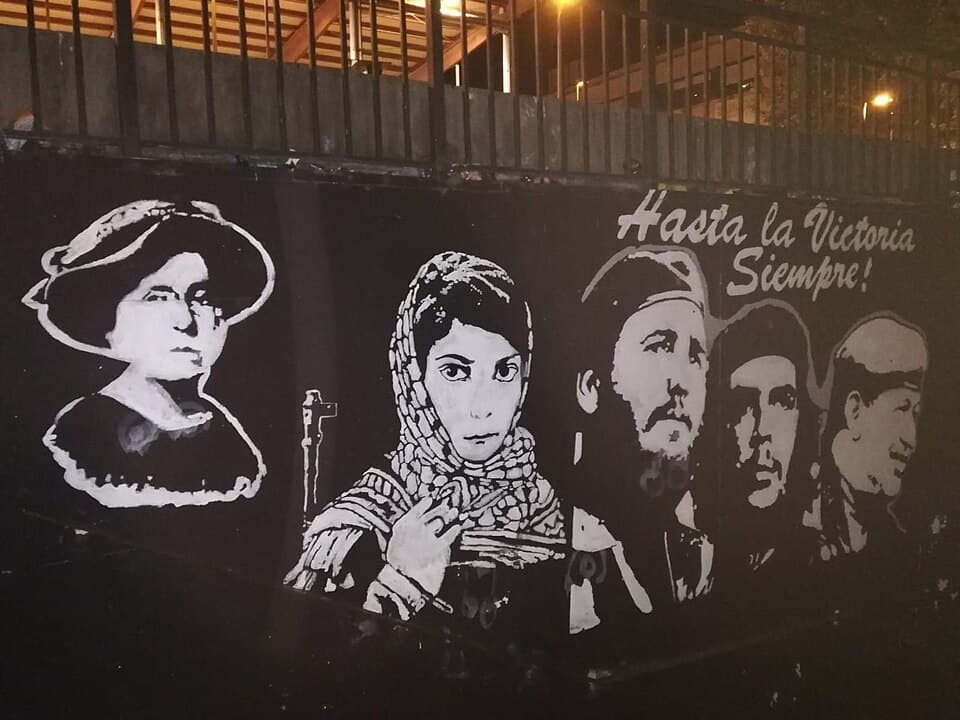
New York, one evening in the winter of 1917. In a cluttered apartment on the Lower East Side, between stacks of proofs from Mother Earth and the smell of pickled herring, a woman in round glasses packs her pamphlets before a lecture. Emma Goldman agrees to speak, on condition that she not be asked to be polite.
—How was this magazine, Mother Earth, which you have directed for over ten years, born?
In 1906, I understood that an idea without ink remains a whisper. I rented a press, gathered a few hungry comrades, and Mother Earth has come out every month since, funded by my tours: I fill my suitcase with pamphlets, I get on the train, I speak before workers, and I come back with enough to pay for paper. We write about anarchism, yes, but also about birth control, which the Comstock laws formally forbid sending through the mail. So I defy the law with every issue. A printing press, you see, is not a piece of furniture: it is a weapon as sharp as a paving stone, and infinitely more durable. The stone breaks a window; the word breaks a certainty.
The stone breaks a window; the word breaks a certainty.
—Why risk prison for a few pages on contraception?
Because a woman who cannot decide the number of her children is free in nothing else. In 1916, I was arrested for simply explaining, before a packed hall, what every bourgeois doctor whispers to his rich female clients. The Comstock laws declare obscene the information that the poor demand and the rich already possess. In the tenements of the Lower East Side, I saw mothers of thirty with faces of sixty, exhausted by one pregnancy too many. Spreading those pages was my duty as a lecturer as much as an anarchist. They can lock me up; they cannot lock up a pamphlet once it has left my suitcase and circulates from hand to hand.
—Do you remember the 1893 speech that landed you behind bars?
How could I forget? The crisis had thrown thousands of men onto the street, without bread, without work. I climbed onto a makeshift platform and I told that hungry crowd that bread was a right: let them ask, and if it is refused, let them take it. I was accused of incitement to riot, sentenced to a year on Blackwell's Island. I entered as an activist; I came out as a nurse. For in that prison, I learned to care for the sick, I washed the bodies of the most despised women in the city, prostitutes, drunkards, beggars. They taught me more about society than all the treatises. They thought they would break me: they tempered me.
They thought they would break me: they tempered me.
—What did that year of confinement ultimately leave you with?
A trade and a conviction. The trade, nursing, later fed me when the courts closed the halls where I was to speak. The conviction is that prison does not correct, it manufactures what it claims to punish. On Blackwell's Island, I saw sixteen-year-old girls thrown there for vagrancy, and I understood that the law is but a cartwheel, fixed, immobile, which crushes all who do not walk in step. A great idea, in its beginnings, can never fit within the law. Since then, every bar I have touched has only confirmed what I learned there while dressing wounds.
—The press nicknamed you “the most dangerous woman in America.” Where does this reputation come from?
From 1901, no doubt, when Leon Czolgosz killed President McKinley. I had met him once, that lost boy who loitered around our meetings. The police wanted me to be his inspiration, his mastermind. I refused to disown him publicly, not that I approved of his act, but because I do not spit on a man the whole world is already lynching. The newspapers went wild: here is the witch, the muse of assassins. They gave me publicity I could never have afforded. Being dangerous, in their mouths, only means refusing to lie on command. If telling the truth to the powerful makes me dangerous, then I wear the title like a medal.
Being dangerous, in their mouths, only means refusing to lie on command.
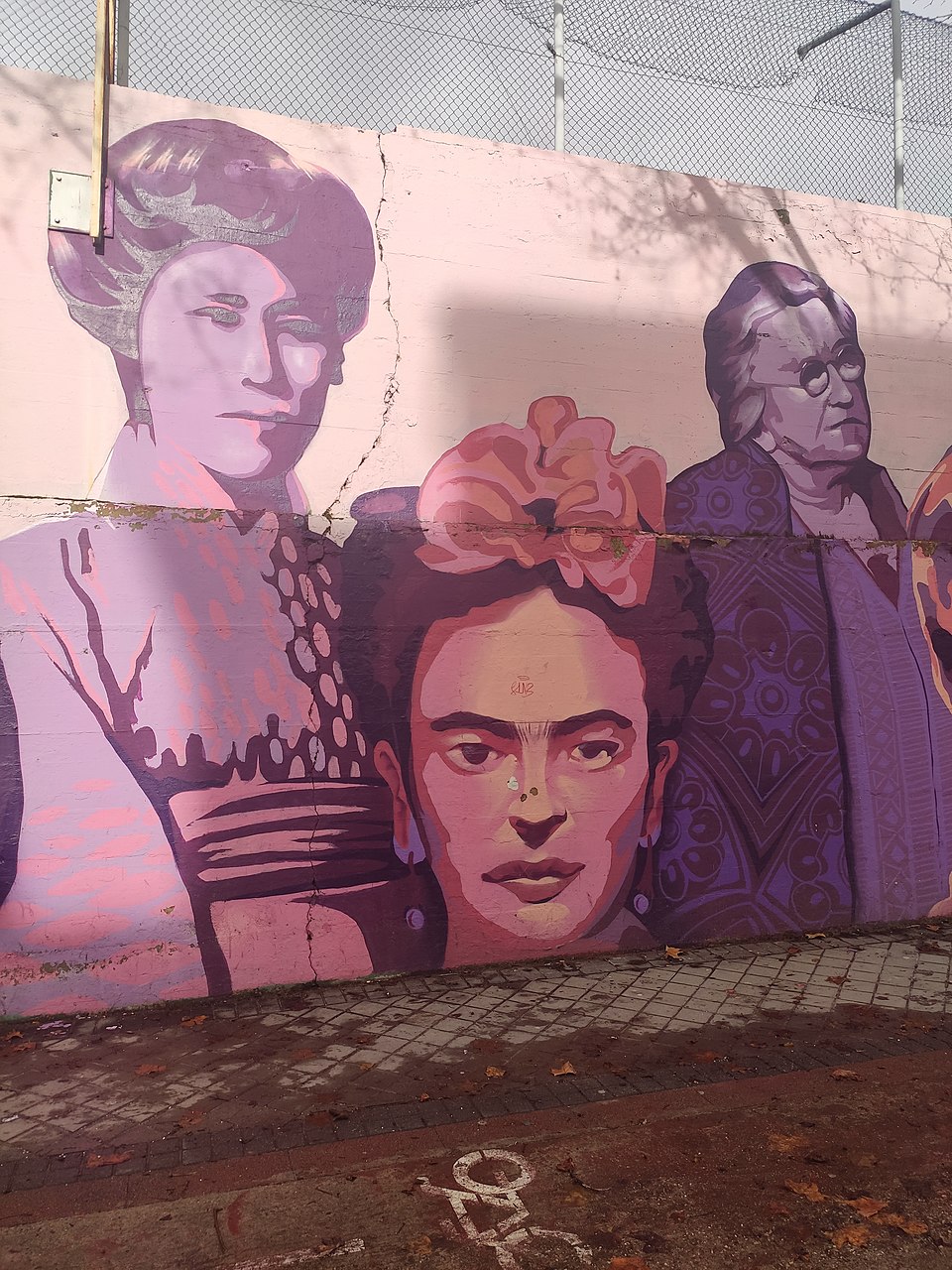
—In 1919, America finally deported you. How did you experience that forced departure?
As a theft, and as a farce. They boarded us at night, two hundred and forty-nine of us, onto an old ship the press christened the Soviet ark, the ark of the Reds. The Red Scare was in full swing: the country trembled before the ghost of a revolution, and it expelled its agitators like ballast. I had spent thirty-three years on that soil, I had buried my illusions and my comrades there, and they sent me back like an undesirable foreigner. Alexander Berkman was at my side, as always. I watched the lights of New York recede and I told myself that a government so afraid of words must know itself to be very fragile.
—You arrived in Soviet Russia full of hope. What did you find there?
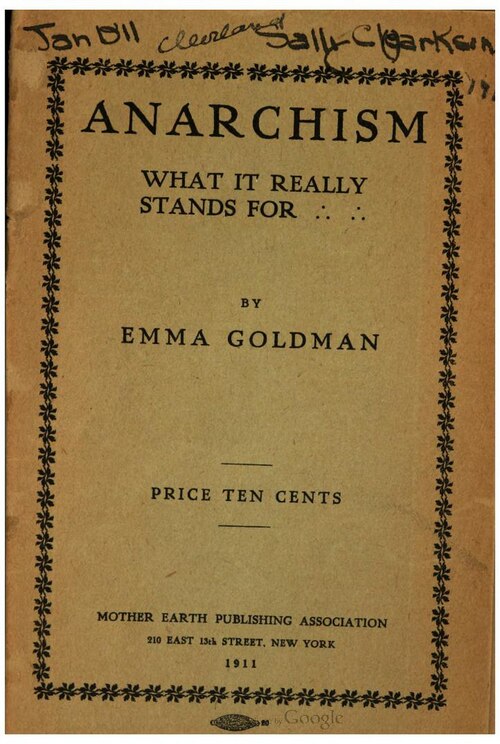
A revolution turned jailer. I had left Petrograd in exaltation: finally a land where anarchy would flourish, I thought. I found the Cheka, prisons full of revolutionaries, speech silenced in the name of the people. The final blow was Kronstadt, in 1921, when the Bolsheviks crushed under machine-gun fire those sailors who, yesterday, had made the revolution. I understood that this regime devoured its own children. I drew a book from it, My Disillusionment in Russia, where I wrote my anger rather than my spirit. I was blamed for weakening the cause. But a revolution that shoots freedom is no longer a revolution: it is a throne repainted red.
A revolution that shoots freedom is no longer a revolution: it is a throne repainted red.
—Many of your comrades reproached you for that book. Do you regret it?
Not a single line. It was easier to keep silent, to let the paradise in the East be believed while Lenin built a state more voracious than any tsar. But I never served an idol, even a Marxist one. Bolshevism promises freedom for tomorrow on condition of obeying today, and that tomorrow never comes. I saw in Petrograd anarchists rotting in the jails of their former brothers-in-arms. Should I have lied so as not to hinder propaganda? My Disillusionment in Russia did not betray the revolution: it named the traitors. One does not liberate men by forging them more beautiful chains.
—You defend women's emancipation far beyond the right to vote. What do you mean by that?
The ballot does not heal an enslaved soul. Too many suffragettes demand the right to vote while keeping their corset, literally and figuratively. I refused the corset, the ornaments, all that clutter that disguises submission as coquetry. True emancipation begins in bed and in the mind, not in the voting booth. I wrote that the most vital right is the right to love and be loved: the most vital right is the right to love and be loved. A woman who must choose between being loved and staying free is not yet liberated. That is what I carry from city to city, my suitcase full of these truths that polite society finds indecent.
The most vital right is the right to love and be loved.
—As early as 1909, you spoke publicly about homosexual rights. Why this audacity?
Because freedom is not cut into respectable slices. If I defend the right to love, I will not immediately add: except those, except those. In the United States, men are imprisoned for their affection, just as women are imprisoned for their knowledge of contraception: always the State and the Church sticking their noses into bedrooms. I received heartbreaking letters from people the world treated as monsters, and I spoke about them in lectures, which scandalized even my own comrades. So be it. Anarchism, for me, is demanding for everyone the right to beautiful and radiant things. An emancipation that excludes is one more hypocrisy.
This imaginary interview was generated by artificial intelligence from sources documented in Emma Goldman's profile. It dramatises what the figure might have said based on what we know about them, but does not constitute attested historical testimony. For primary sources and factual documentation, refer to the full profile.