Imaginary interview with Forough Farrokhzad
by Charactorium · Forough Farrokhzad (1935 — 1967) · Literature · Performing Arts · 6 min read
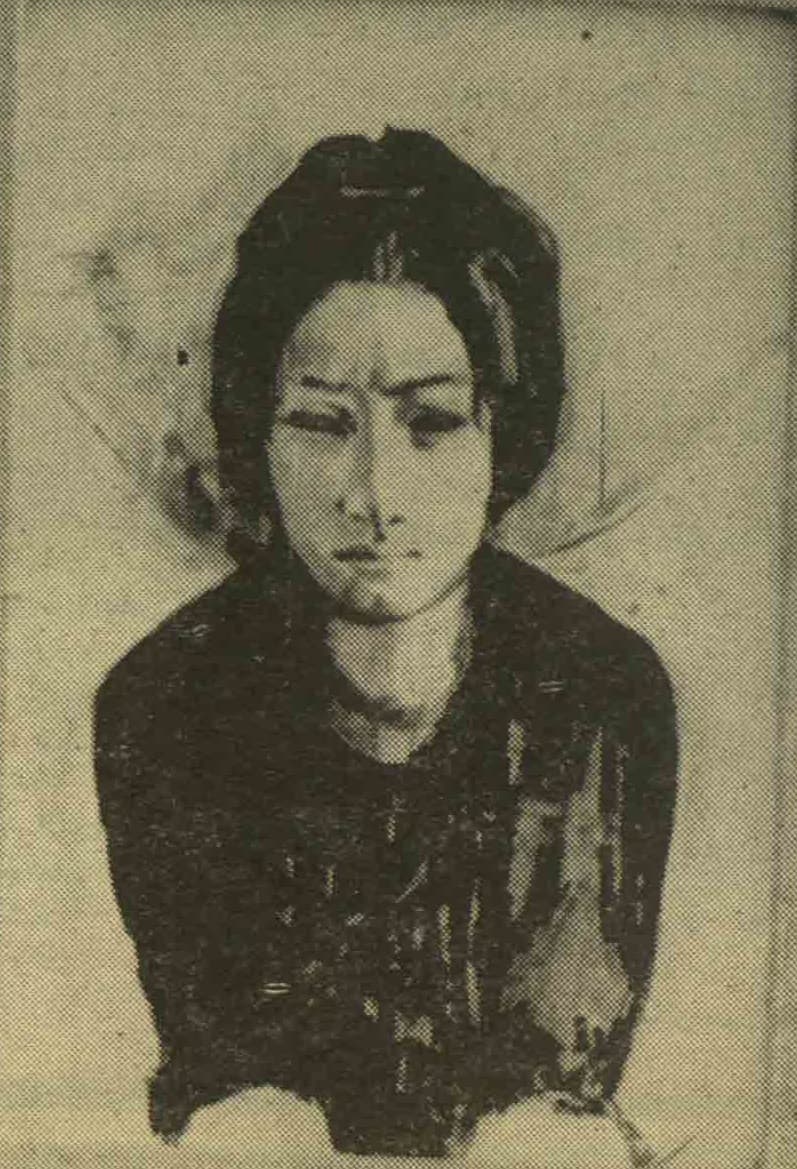
Tehran, an autumn afternoon in the mid-1960s. In an apartment where notebooks of verse and the smell of black tea linger, Forough Farrokhzad receives, a cigarette in hand, having just returned from the studio where she was editing a film. The light fades over the roofs of the capital; she speaks softly, with that quiet gravity of someone who has already lived several lives in thirty years.
—How did your first collection change your life?
In 1955, I published Asir, The Captive. I didn't yet know that a book could feel like a slap. For the first time, a woman said 'I,' said desire, confinement, that body one wants to hold and never holds. I was read, insulted, pitied. In circles where the ghazal was still recited like a prayer, my verses were deemed indecent. But I couldn't lie: writing, for me, was tearing down the curtain. The scandal didn't silence me; it made me famous — and terribly alone. That day I understood that a woman who speaks the truth always pays a high price.
Writing, for me, was tearing down the curtain.
—What would you say about that marriage contracted at sixteen?
I was sixteen when I married Parviz Shapour, a caricaturist, a witty man. From that union came Kamyar, my son. Then I wanted to live, truly live, write, be free — and I divorced. What no one tells you is what that word costs in our country: the law gives the child to the father. Kamyar was taken from me. I hardly saw him anymore. There is no wound like that one; it doesn't heal, it follows you into every poem. I dedicated Divar, The Wall, to that man I was leaving, like leaving a letter on a closed door. But the real wall was the absence of my son.
There is no wound like that one; it follows you into every poem.
—How does that separation nourish your writing?
A child taken from you is not a sorrow you put in a drawer. It becomes the very substance of the verse. When I write about solitude, about time that takes and gives back, it's never an abstraction: it's Kamyar I seek between the lines. I am sometimes reproached for being too naked in my poems, too raw. But how do you expect me to make lace from a wound? Iranian society punished me for choosing my freedom over my home; I turned that punishment into language. Perhaps that's what it means to be a poet: to refuse that pain be useless, to force it to become song.
How do you expect me to make lace from a wound?
—Do you remember your arrival at the Tabriz leper colony?
In 1962, I went to Tabriz, to a leper colony, with a 35 mm camera. I was warned: it is a place of ugliness, of rotting flesh, of faces one dares not look at. I saw something entirely different. I saw children playing, old people praying, weddings, broken bread. I filmed Khaneh Siah Ast, The House Is Black. In the film, a voice says that the world is not devoid of ugliness, but it would be even greater if man closed his eyes. That's why I didn't close my eyes. Cinema, for me, was only poetry continued with light and shadows.
Cinema was only poetry continued with light and shadows.
—How did that child, Hossein, enter your life?
While I was editing The House Is Black at the editing table, I couldn't forget those I had filmed. There, in the colony, was Hossein, the son of a leper couple. He seemed already to carry on his little face all the weight of that place. I adopted him, brought him home, raised him as my own. Those who knew my story saw it as revenge for the motherhood that had been stolen from me. Perhaps. But I believe above all that one does not leave a leper colony unscathed: one returns either blind or more alive. I returned with a son.
One does not leave a leper colony unscathed: either blind or more alive.
—Why do you insist so much on this new poetry rather than classical forms?
Persian poetry is a magnificent ocean, but I was taught to swim in it only with chains: the ghazal, its couplets, its immutable meter, its cupbearers and roses. One could spend a lifetime polishing those jewels. I belong to She'r-e now, the new poetry: I wanted a language that breathes as I breathe, that stumbles, trembles, speaks of the body and the city. In Tavallodi Digar, Another Birth, in 1964, I felt I finally achieved it — a new rhythm, almost a second life. They said I was ruining tradition. I replied that I was giving it back its blood.
I wanted a language that breathes as I breathe, that stumbles, trembles.
—How does one live as an independent woman in the Tehran of your time?
They say I am mostakil, independent, as if it were a disease or a feat. I live alone, in an apartment in Tehran where I write in the mornings and receive friends in the evenings. I wear dresses, my hair is unveiled, I drive, I work, I frequent the roshanfekr, the avant-garde intellectuals. None of this should surprise — and yet everything shocks. The country of the Pahlavis pushes you toward modernity with one hand and watches you with the other; the bazaar whispers, family turns away. Being a free woman here is not a status, it's a daily struggle, fought without witnesses.
Being a free woman here is not a status, it's a daily struggle.
—What is your view on the great upheavals Iran is undergoing?
I was born in 1935, the year Reza Shah was already preparing his reforms. A year later, the kashf-e hijab was decreed: the veil was torn from women by law, just as one day it might be imposed by the opposite law. In 1963, the White Revolution gave us the right to vote. They ask if I rejoice. Of course. But I distrust freedoms distributed from above without our having been allowed to want them. A woman unveiled by decree is no freer than a woman veiled by decree. True freedom, the one that matters, is not received: it is written, lived, paid for.
A woman unveiled by decree is no freer than a woman veiled by decree.
—What did your travels in Europe seek?
In the early sixties, I went to Italy, Germany. There I learned cinema, editing, that patient science of creating meaning by splicing two images together. I returned with reels in my head and a new unease in my verses. For traveling is not about bringing back techniques like souvenirs: it's about coming home a stranger. I looked at Tehran differently, its walls, its silences, its modesty. What I learned there nourished my poems and my films alike — both began to speak the same language, made of cuts, fades, and images that bleed.
Traveling is not about bringing back techniques: it's about coming home a stranger.
—What does the studio where you learned your craft as a filmmaker represent for you?
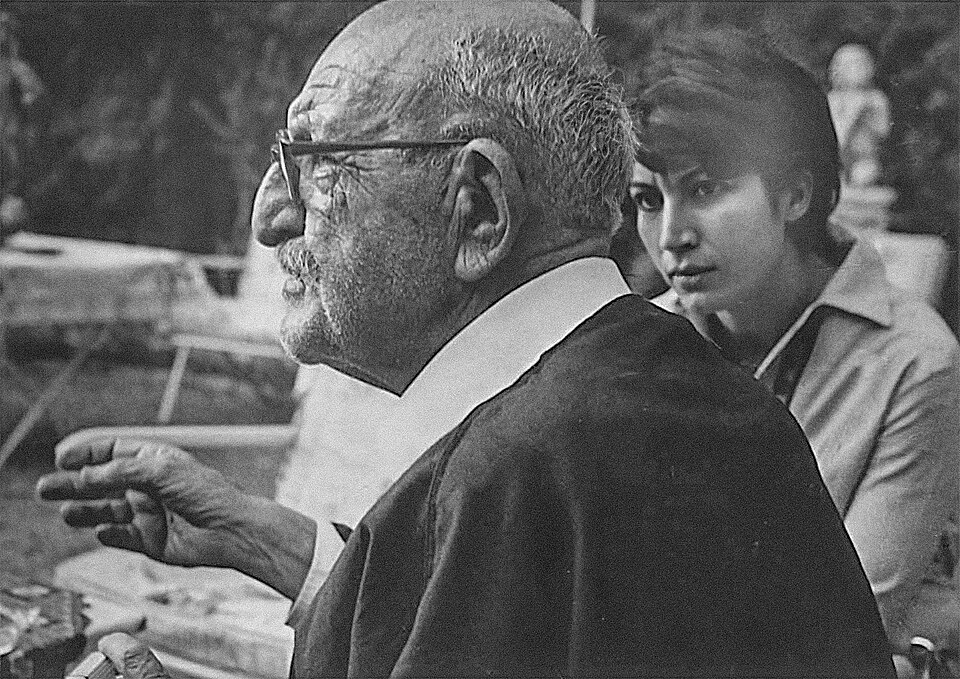
At Golestan Studio, I did not enter as a flattered guest, but as a worker of the gaze. I spent entire afternoons at the editing table, cutting, splicing, listening to the grain of a tape recorder where voices were kept. It was there, alongside Ebrahim Golestan, that I understood that a film is composed like a poem: by rhythm, by the void between two images as much as by the images themselves. People think a woman who writes cannot handle film. Yet my hands knew both, and my two professions were but one gesture: to speak the world as I had been forbidden to speak it.
A film is composed like a poem: by the void between two images as much as by the images.
—If you imagined being read a century from now, what would you want to remain?
What a strange question. I don't know if I will be read; poets believe in their immortality in the evening and cease to believe in the morning. But if, by some impossibility, a young girl opened Tavallodi Digar in a hundred years, I would want her to find not an icon, not a martyr, but a woman who dared to say 'I' when she was told to be silent. Let her feel that my entire existence, as I wrote, was a dark verse repeating the other until the dawn of blossoms. The rest — the scandals, the griefs, my solitude — will have been only the price of the ticket. What remains is the voice.
I would want her to find a woman who dared to say 'I' when she was told to be silent.
This imaginary interview was generated by artificial intelligence from sources documented in Forough Farrokhzad's profile. It dramatises what the figure might have said based on what we know about them, but does not constitute attested historical testimony. For primary sources and factual documentation, refer to the full profile.