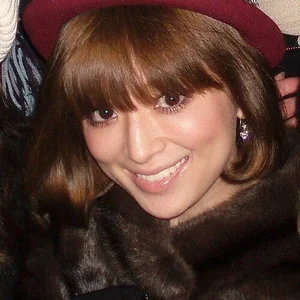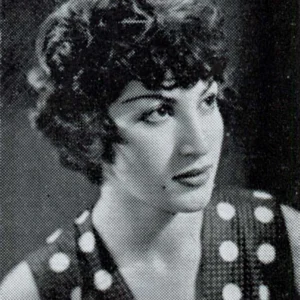

Iranian poet and filmmaker, a major figure of modern Persian poetry. Through intimate and bold writing about desire and the condition of women, she upended the literary conventions of her country. Her death in a car accident at the age of 32 made her an icon.
Forough Farrokhzad(1935 — 1967)
Forough Farrokhzad
Iran pahlavi
6 min read
Frequently asked questions
Famous Quotes
« I will never regret the thought that I am a human being like any other.»
Key Facts
- Born in 1935 in Tehran, she published her first collection, The Captive (Asir), in 1955.
- Her collections The Wall (Divar, 1956) and Rebellion (Osyan, 1958) shocked society with their frankness about female desire.
- In 1962, she directed the short documentary The House Is Black (Khaneh siah ast), filmed in a leper colony and considered a foundational work of Iranian cinema.
- Her collection Another Birth (Tavallodi digar, 1964) established her as a major voice in modern Persian poetry.
- She died on 13 February 1967 in Tehran in a car accident, at the age of 32.
Works & Achievements
Forough's first collection, which openly expresses a woman's desire and the confinement of marriage. It caused a scandal and made her famous.
Her second collection, dedicated to her ex-husband, in which the poet's revolt and quest for freedom take shape.
A third collection marking a turning point: Forough questions God, the human condition, and her own place in the world.
A short documentary filmed in a leper colony in Tabriz, regarded as a founding work of modern Iranian cinema.
A collection of her maturity, often considered her masterpiece, which revolutionized the language and rhythm of Persian poetry.
A collection published after her death, a grave and visionary poetic summation on time, death, and solitude.
Anecdotes
At sixteen, Forough married the caricaturist Parviz Shapour and gave birth to a son, Kamyar. When she divorced a few years later to live off her poetry, Iranian law of the time granted custody of the child to the father: she lost custody of her son and could barely see him again, a wound that haunts her entire body of work.
In 1962, Forough shot a documentary in a leper colony in Tabriz, *The House Is Black*. During filming, she grew fond of the colony's inhabitants and ended up adopting Hossein, the son of a couple with leprosy, whom she raised as her own.
Her first collection, *The Captive* (1955), shocked Iranian society: for the first time, a woman wrote openly about desire and female intimacy in the first person. Criticized and sometimes insulted, she nonetheless became one of the most widely read voices of modern Persian poetry.
On 13 February 1967, while driving her Jeep in Tehran, Forough swerved to avoid a school bus and crashed into a wall. She died at the age of 32. Her sudden death, at the height of her fame, instantly turned the poet into an icon for generations of readers.
Forough stayed in Europe in the early 1960s, notably in Italy and Germany, where she learned the techniques of filmmaking and editing. From these travels she brought back an openness that nourished both her poetry and her work as a director.
Primary Sources
My whole being is a dark verse that, repeating you within itself, will carry you to the dawn of eternal blossomings and growth.
The world is not devoid of ugliness; the elements of ugliness in it would be even more numerous if man closed his eyes to them.
And this is my share: my share is a sky that the drawing of a curtain takes away from me.
I want you, and I know that never will I be able to hold you in my arms as my heart desires.
Key Places
Capital of Iran where Forough was born, wrote most of her work, and died in a car accident in 1967.
City in northwestern Iran whose leper colony serves as the setting for her documentary “The House Is Black” in 1962.
Place where Forough is buried, which has become a site of pilgrimage for her admirers.
Ebrahim Golestan's production house where Forough worked as an editor and director and perfected her art of filmmaking.
Regions where Forough traveled in the early 1960s to learn filmmaking and open herself to Western artistic modernity.
Typical Objects
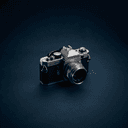
The tool with which Forough films “The House Is Black” in the Tabriz leper colony. For her, cinema becomes an extension of her poetic writing.
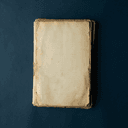
The notebook in which Forough sets down her verses in modern Persian, freed from classical rules. Her drafts reveal an intimate and carefully crafted writing.
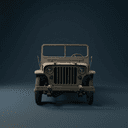
The off-road vehicle that Forough drives in Tehran and at the wheel of which she meets her death in 1967. It symbolizes her independence as a modern woman.
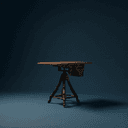
Equipment she learns to use during her stays in Europe and at the Golestan studio. The editing of “The House Is Black” adds to its emotional power.

A device used at the time to record voices and poetry readings. This is how the voice of Forough reciting her own texts has come down to us.
School Curriculum
Vocabulary & Tags
Key Vocabulary
Tags
Daily Life
Morning
In the morning, Forough writes or rereads her verses, often in the solitude of her Tehran apartment. She keeps up a correspondence and reads a great deal, in Persian as well as foreign languages.
Afternoon
In the afternoon, she goes to the film studio where she works on editing and directing. She talks with the artists and intellectuals of the Iranian avant-garde.
Evening
In the evening, she frequents the literary circles and friends of Tehran's cultural scene. Discussions about poetry, cinema, and modernity carry on late into the night.
Food
She shares the urban Iranian diet of her time: rice (polo), stews (khoresht), flatbread, fresh herbs, yogurt, and black tea served in abundance. Meals are moments of conviviality.
Clothing
Forough wears modern, Westernized outfits, common in the Tehran of the urban elite under the Pahlavis: dresses, skirts, and blouses, hair unveiled, going against conservative codes.
Housing
She lives in apartments in the capital, in an Iran undergoing rapid urbanization. Her home, at once a place of writing and of retreat, reflects the life of an independent woman.
Historical Timeline
Period Vocabulary
Liens externes & ressources
Références
Œuvres
Asir (La Captive)
1955
Divar (Le Mur)
1956
Esyan (La Rébellion)
1958
Tavallodi Digar (Une autre naissance)
1964
Iman Biyavarim be Aghaz-e Fasl-e Sard (Croyons au début de la saison froide)
1974