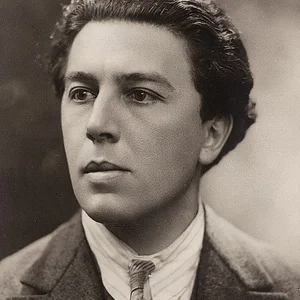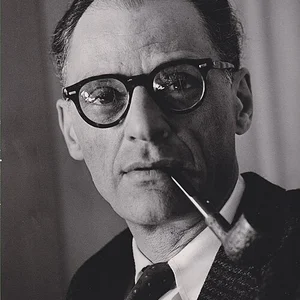

Arthur Miller (1915-2005) was a major American playwright of the 20th century. The author of *Death of a Salesman* and *The Crucible*, he turned theater into a critical mirror of American society and its excesses.
Arthur Miller(1915 — 2005)
Arthur Miller
États-Unis
6 min read
Frequently asked questions
Key Facts
- Born in 1915 in New York into a Jewish family of Austro-Hungarian origin, marked by the family's financial ruin during the 1929 crash
- Premiered *Death of a Salesman* in 1949, which won the Pulitzer Prize and became a major Broadway success
- Wrote *The Crucible* in 1953, an allegory of the Salem witch trials that denounced McCarthyism
- Summoned in 1956 before the House Un-American Activities Committee, he refused to name his peers and was convicted of contempt (a ruling overturned in 1958)
- Married the actress Marilyn Monroe in 1956 (divorced in 1961); died in 2005 in Connecticut
Works & Achievements
A drama about an industrialist who sold defective parts to the military; Miller's first major success, laying out his moral critique of society.
A masterpiece about the collapse of Willy Loman and the bankruptcy of the American Dream; Pulitzer Prize winner and Miller's most famous play.
A play about the 1692 trials, read as a denunciation of McCarthyism; it has become a worldwide classic of politically engaged theater.
The tragedy of an Italian-American longshoreman in Brooklyn consumed by passion and betrayal, in the vein of ancient Greek tragedy.
A screenplay written for Marilyn Monroe and brought to the screen with Clark Gable; Miller explores the loneliness of outcasts in the American West.
A largely autobiographical play touching on his marriages, McCarthyism, and guilt; an intimate and controversial work.
An autobiography in which Miller looks back on his life, his theater, and his era, a valuable source on 20th-century America.
Anecdotes
To write in peace and quiet, Arthur Miller built with his own hands a tiny wooden cabin (barely 10 feet by 13) near his house in Connecticut. It was there that, according to his autobiography, he wrote the first act of *Death of a Salesman* in less than a day, carried along by the energy of inspiration.
With *The Crucible* (1953), Miller tells the story of the 1692 witch hunt in Massachusetts. But everyone understood that he was really targeting the McCarthyism of his own era: those tribunals that, at the height of the Cold War, accused Americans of being hidden communists.
In 1956, Miller was summoned before the House Un-American Activities Committee of Congress. He was asked to name writers suspected of communism. He refused to give up a single name, was convicted of contempt of Congress in 1957, but that conviction was overturned on appeal in 1958.
That same year, 1956, the playwright married film star Marilyn Monroe. Their marriage, heavily covered by the press, lasted about five years. Miller wrote the screenplay of the film *The Misfits* (1961) for her, shot just before their divorce.
By a strange coincidence, Arthur Miller died on February 10, 2005: exactly 56 years to the day after the triumphant premiere of *Death of a Salesman* on Broadway, on February 10, 1949.
Primary Sources
He's not the finest character that ever lived. But he's a human being, and a terrible thing is happening to him. So attention must be paid; attention, attention must finally be paid to such a person.
Because it is my name! Because I cannot have another in my life!
I believe that the common man is as apt a subject for tragedy in its highest sense as kings were.
I cannot use the name of another person and bring trouble upon him. I must take responsibility for my own actions.
Writing plays was, for me, an act of survival, a way of making sense of a world that threatened at every moment to collapse into chaos.
Key Places
Neighborhood in New York City where Arthur Miller was born in 1915, into a family of clothing manufacturers who prospered until the 1929 crash.
Here, Miller studied journalism and writing, and won his first playwriting prizes, which steered him toward the theater.
New York's theater district, where his major plays premiered, including *Death of a Salesman* in 1949 at the Morosco Theatre.
Town of the 1692 witch trials; Miller traveled there to consult the archives before writing *The Crucible*.
His rural estate, where he wrote most of his work, took up carpentry, and spent the end of his life. He died there in 2005.
Seat of the House Un-American Activities Committee, before which Miller testified in 1956 and refused to name his peers.
Typical Objects

The playwright's daily tool, on which he typed lines and stage directions. Miller often worked long mornings in his secluded studio.

An annotated typescript containing the text of a play, reworked from version to version. This is the heart of the playwright's craft.

Miller was a passionate carpenter who built his own furniture and constructed his writing cabin himself. Working with wood balanced out the work of the mind.

A familiar object that Miller enjoyed smoking, which became part of his public image as a composed thinker.

An official document summoning Miller to appear before Congress's anti-communist committee in 1956. A symbol of the political pressure placed on artists.

A major American literary award received in 1949 for *Death of a Salesman*. It established Miller as a great dramatic author.
School Curriculum
Vocabulary & Tags
Key Vocabulary
Tags
Daily Life
Morning
Miller devoted his mornings to writing, alone in the wooden studio he built with his own hands in Roxbury. A disciplined man, he saw daily writing as steady work, not a wait for inspiration.
Afternoon
In the afternoon, he often swapped his pen for tools: carpentry, furniture-making, and the upkeep of his country property. This manual labor helped him think through his plays.
Evening
Evenings were given over to reading, conversation and, during periods of creation, rehearsals at the theater. He followed the staging of his works very closely.
Food
His table reflected twentieth-century America: simple, hearty cooking, meats, vegetables from the garden, and everyday New England produce.
Clothing
Miller wore the plain, casual attire of the American intellectual: shirts, tweed jackets and comfortable trousers, far removed from any extravagance.
Housing
He lived on a Connecticut farm surrounded by woods, with his writing cabin set apart. This quiet, rural setting was his creative refuge for decades.
Historical Timeline
Period Vocabulary
Liens externes & ressources
Références
Œuvres
Ils étaient tous mes fils (All My Sons)
1947
Mort d'un commis voyageur (Death of a Salesman)
1949
Les Sorcières de Salem (The Crucible)
1953
Vu du pont (A View from the Bridge)
1955
Les Désaxés (The Misfits)
1961
Après la chute (After the Fall)
1964
Timebends: A Life
1987