Imaginary dialogue between Jean-Paul Sartre and Francis Ponge
by Charactorium · Francis Ponge (1899 — 1988) · Literature · 5 min read
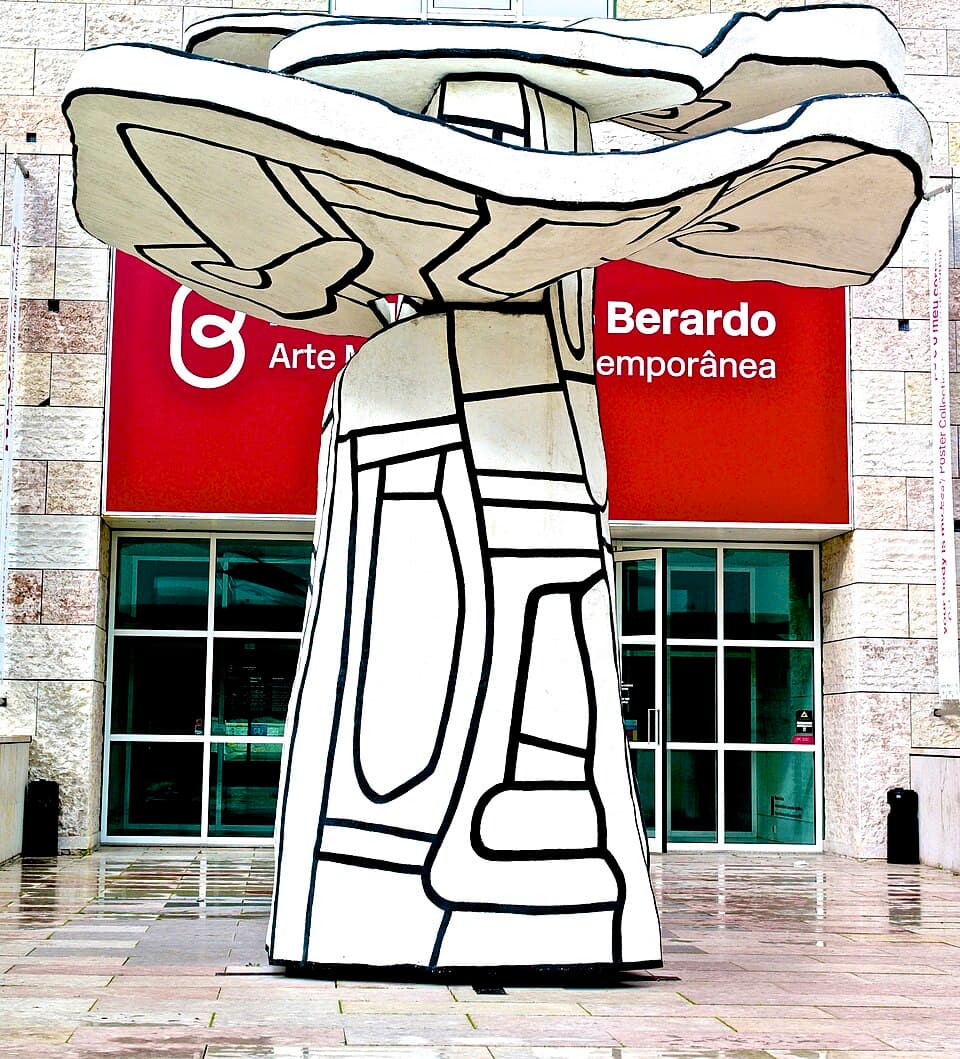
It is in the hinterland of Nice, in Bar-sur-Loup, that one afternoon in 1967, Jean-Paul Sartre comes to visit Francis Ponge. Provençal light falls on a table covered with notebooks, erasures, and an open Littré dictionary. They have known each other since the essay Sartre devoted to him in 1944, L'Homme et les choses, and the philosopher returns here as an admiring visitor, fascinated by this man who claims to silence the subject in order to let the pebble and the oyster speak.
—My dear Ponge, when I wrote about you in 1944, I thought I understood a man who had taken the side of things. Why flee human feeling like that?
You saw rightly, and yet you were already seeking existence where I was seeking the oyster. I don't flee feeling, I distrust it: it distorts everything, it chatters. When I look at a pebble, a crate, I want my sentence to embrace its resistance, its mute obstinacy. Le Parti pris des choses is not coldness, it's fidelity. Men talk too much about themselves; I want to do justice to what asks for nothing — the enduring stone, the oyster closed upon its world. You question the freedom of consciousness; I bow before the opacity of an object. That is my way, perhaps, of finding man again through the humblest detour.
I don't flee feeling, I distrust it: it distorts everything, it chatters.
—You who handle the written language with such authority, they say that at the oral exam of the École Normale in 1919 you remained mute. Is it true?
Alas, it is the exact truth, and I have never recovered from it. Before the philosophy examiner, with a knot in my throat, I could not utter a word. Silence swallowed me up, I gave up my studies. You, who debate so easily in cafés, can hardly imagine this paralysis. But see the paradox: this infirmity of speech became the driving force of my entire work. Since I could not express myself on the fly, I sought in writing an absolute precision, draft after draft. My muteness condemned me to notebooks, drafts, slowness. The stutterer of the oral became the craftsman of the written. My weakness, in short, dictated my method.
The stutterer of the oral became the craftsman of the written.
—Your Savon has just been published. Twenty years on a bar of soap! How do you justify, my friend, such obstinacy before so trivial an object?
Trivial? Rub it between your hands, it foams, it exults, it slobbers an airy foam — what richer subject? If I spent twenty years on it, it's because the thing resists, and so do words. You know my formula: each term used must be not a sign but a thing. That is why I publish my drafts along with the text, in La Rage de l'expression, and soon La Fabrique du pré: the work counts as much as the result. My Littré is my workbench, my notebooks are my shavings. I don't hide the effort, I expose it. Poetry is not a grace that descends; it is a struggle, erasure after erasure, against approximation.
My Littré is my workbench, my notebooks are my shavings.
—Before my essay pulled you from obscurity, you lived a strange double life. How did you reconcile the office and the poem?
You touch there on a wound and a pride. For nearly twenty years, I was a simple employee — at Messageries Hachette, then at Gallimard — bent over tasks without poetry. My days belonged to wage labor; my poems, I stole them in the evenings and on Sundays. Early in the morning, before anything else, I would sit at my table with coffee and my notebooks, in that brief moment when concentration is intact. It was a life cut in two, exhausting. But perhaps this discipline of earning a living nourished my respect for ordinary things: a man who works with his hands understands the crate and the pebble better. Your essay, in 1944, pulled the employee out of anonymity — I haven't forgotten that.
My days belonged to wage labor; my poems, I stole them in the evenings and on Sundays.
—We shared, in those dark years, the concern for commitment. You were in the Party and in the Resistance. What remains of that for you today?
What remains is a fidelity to things and to simple people, and a bitterness. I joined the Communist Party in 1937, in the momentum of the Popular Front, out of fraternity. Under the Occupation, I actively fought in the Roanne area, where I led the local committee, contributing to underground publications. It wasn't just a resistance of words; it was risky actions. But in 1947, the disagreements became unbearable: they wanted to subject thought to the party line, and I could not accept that. I broke away. You, who have never stopped debating with them, know how painful that rupture was. I remain a man of the left, but I will never trade my freedom to write for a directive.
I will never trade my freedom to write for a directive.
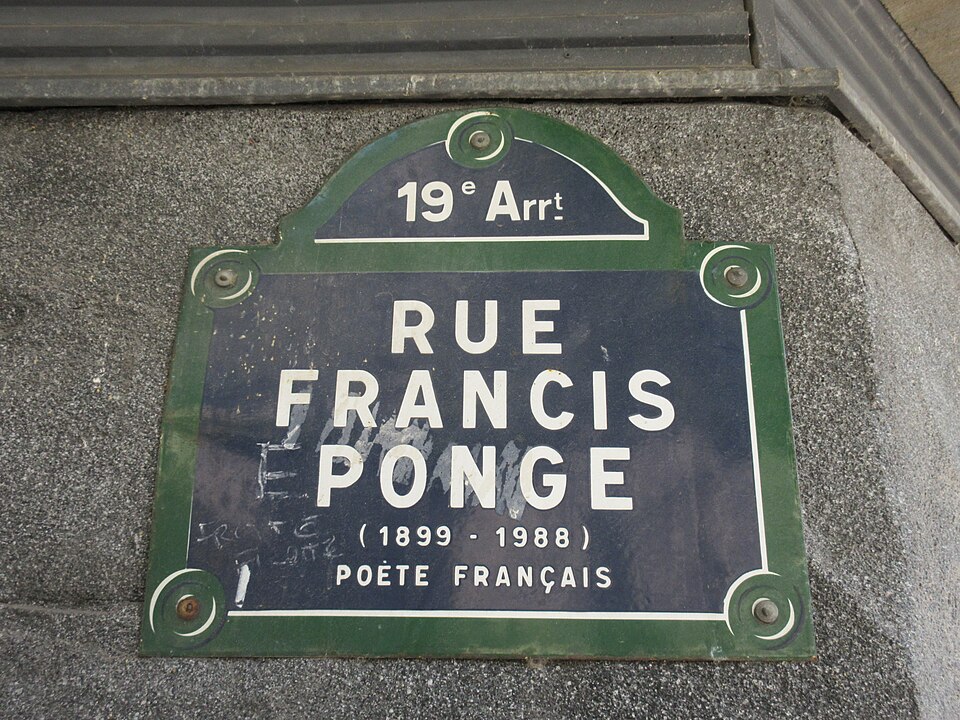
—Your readers often compare your texts to the still lifes of painters. You frequent Braque, Fautrier. Do you accept this kinship with painting?
Fully, and I'm glad you noticed. With Braque, with Fautrier, we talk for hours about matter — about paste, grain, the thickness of things. The still-life painter places a jug, a fruit, and gives them a presence that the hurried gaze denies them. I do the same with the sentence: I want the word oyster to have the weight and whitish sheen of the oyster. The objeu, as I call it — this play with the object — is not so far from the brush. But the painter has the advantage of visible matter; I have to fabricate mine with words that constantly slip toward the abstract. My soap is a still life that foams and speaks.
I want the word oyster to have the weight and whitish sheen of the oyster.
—You coin strange words — objeu, proême. Why this need to twist the language rather than use the one we have inherited?
Because the inherited language is worn out, polished like an old coin whose effigy is no longer legible. When I say proême, I fuse prose and poem to refuse the false choice of genres; when I say objeu, I wed object and play. These are not whims: they are tools that ordinary language did not provide me. I criticize old rhetoric, but only to build another, based on the materiality of words. You invent your concepts to think freedom; I invent my words to grasp the fig or the meadow. To forge a word is still to take the side of things: to give them a new syllable, to their exact measure.
The inherited language is worn out, polished like an old coin whose effigy is no longer legible.
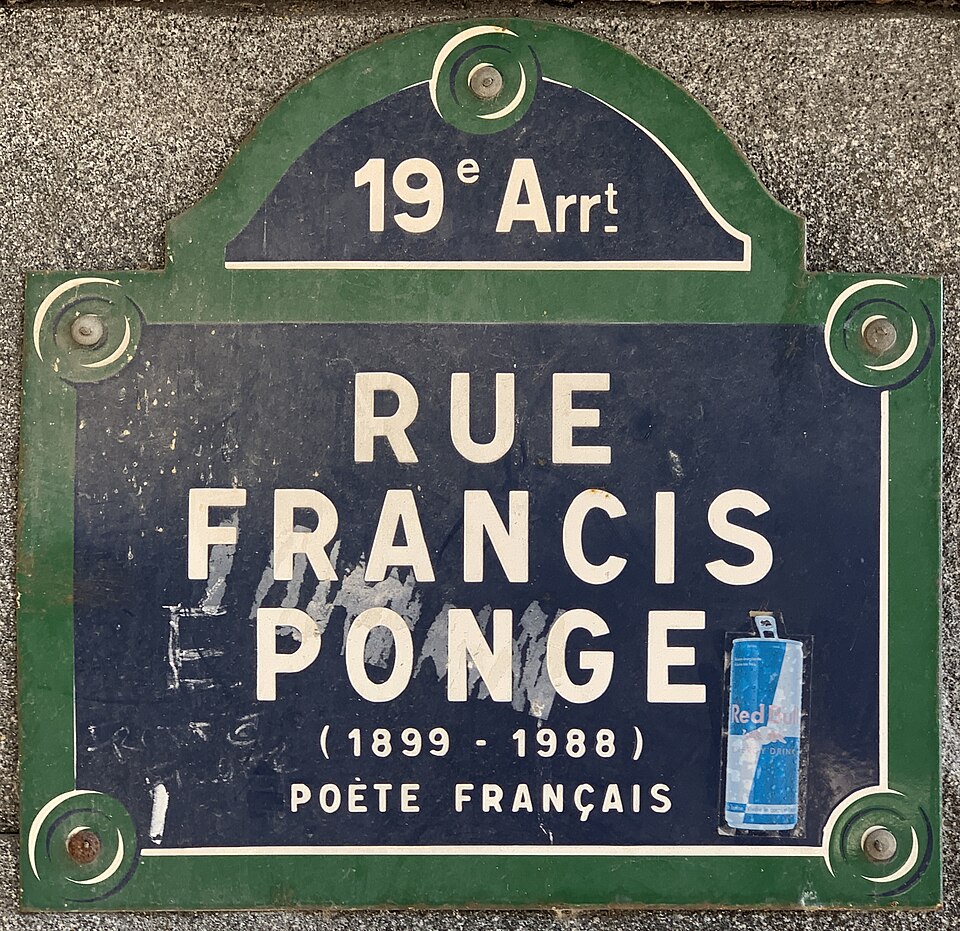
—This precision you pursue relentlessly — isn't it a way to endlessly repair the humiliation of that silence in 1919?
You play the philosopher, and you are probably right. Yes, there is something of reparation. That feeling of inadequacy before words, that gap between what I wanted to say and what came out — or didn't come out — I fight it with every line. Writing gives me the time that speech refused me: to revise, to erase, to start again until it is right. But do not think it is only a painful scar. It has become a joyful discipline, almost a jubilation, like the soap that beads. My initial powerlessness turned into infinite patience. I believe every man builds his work on a lack; mine was being unable to speak. So I write, slowly, to finally say it right.
Every man builds his work on a lack; mine was being unable to speak.
—Now you are far from Paris, in this Provençal village. Does this quiet retreat change your outlook and your writing work?
It returns me to my childhood, to the light of Montpellier that I had never quite left. Here in Bar-sur-Loup, the vegetation, the stones, the insects — everything becomes material to observe. My afternoons, once confiscated by the office, now belong to me: I read, I correspond, I walk for a long time looking. The meadow I am writing about now, I have it before my eyes. The simple table, olive oil, garden vegetables: this southern frugality suits my poetics of humble things. You who live in the Parisian bustle might find my life monotonous. But it is in this slowness that objects finally let themselves be approached. The provinces have not removed me from the world; they have brought me closer to it.
It is not the provinces that have removed me from the world; they have brought me closer to it.
—One last thing, Ponge. You broke with the Party but not with the idea of the writer's engagement. For you, how does describing a pebble constitute engagement?
That is the question I was expecting from you. Describing a pebble honestly is to refuse lies — and every refusal of lies is an act. Hollow rhetoric, fine phrases that flatter, that is the enemy: they serve the powers that lull people to sleep. By restoring exactness to things, I restore to people the taste for truth, for attention, for the concrete. It is a discreet politics, at the level of oyster and crate. I don't need a platform for that: my resistance now lies in the accuracy of a word. You engage your freedom in action and debate; I engage mine in the patience of a description. Deep down, we are fighting the same adversary — the approximation that enslaves minds.
Describing a pebble honestly is to refuse lies — and every refusal of lies is an act.
This imaginary interview was generated by artificial intelligence from sources documented in Francis Ponge's profile. It dramatises what the figure might have said based on what we know about them, but does not constitute attested historical testimony. For primary sources and factual documentation, refer to the full profile.