Imaginary interview with Francis Ponge
by Charactorium · Francis Ponge (1899 — 1988) · Literature · 5 min read
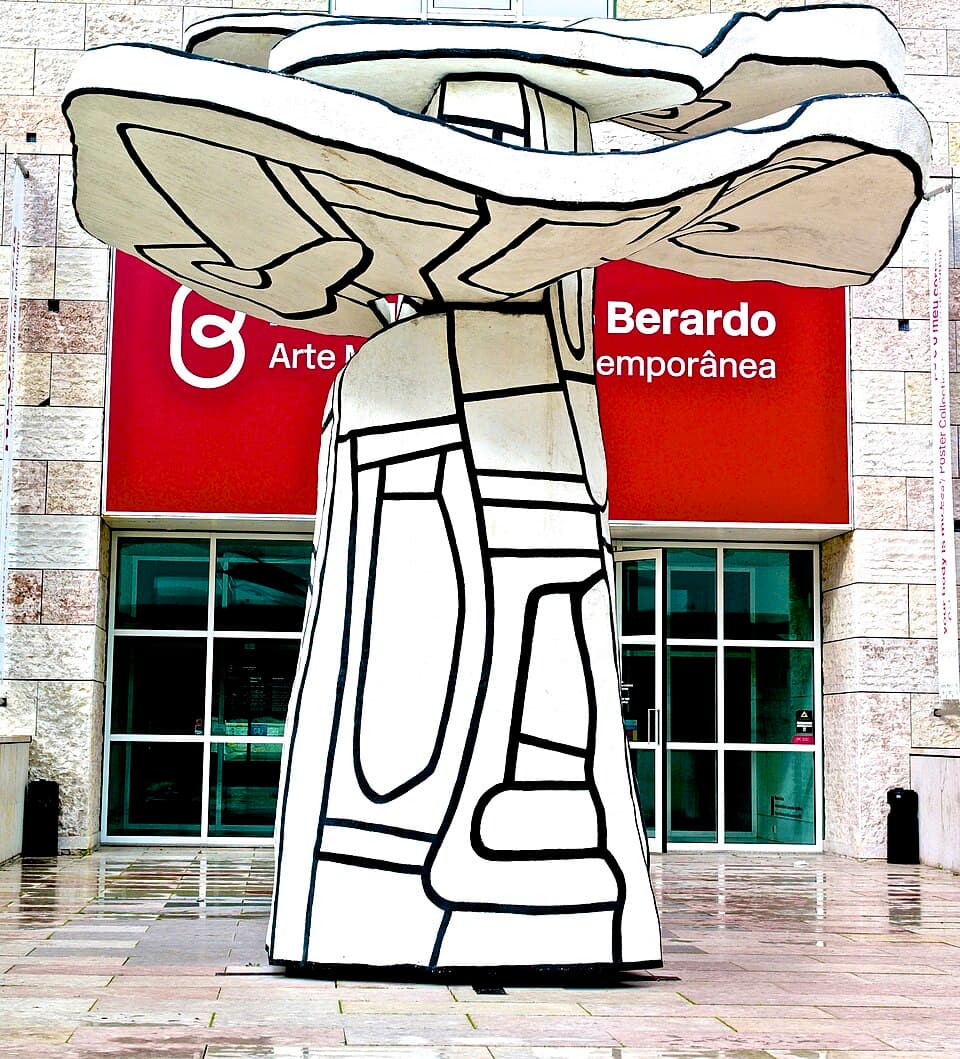
Bar-sur-Loup, late 1980s. In a Provençal house where the olive tree casts its shadows against the shutters, a man of nearly ninety welcomes us, an open notebook and a dictionary within reach. Francis Ponge speaks slowly, as if weighing each word before setting it on the table, next to the pebble.
—Do you remember the day your voice failed you at the oral exam for the École Normale?
It was in 1919, at the philosophy oral for the entrance exam to the École normale supérieure. They asked me a question, and nothing came out. Nothing. A lump in my throat, my mind full and my mouth empty. I understood that day that improvised speech was not my thing, that I did not know how to think aloud in front of a jury. That failure, which could have humiliated me, actually showed me the way: if I could not speak, I would write; and I would write with a slowness, an obstinacy that speech never allows. Muteness was my first master. All my life, I have sought through the pen that precision which my tongue had denied me.
If I could not speak, I would write; muteness was my first master.
—Why devote poems to the pebble, the oyster, the crate, rather than to great feelings?
Because love, death, boredom — they have been talked about so much that only worn-out words remain, medals rubbed smooth by too many hands. Whereas an oyster, you see, no one had really looked at it. In Le Parti pris des choses, I described it thus: 'It is a stubbornly closed world.' You have to force that shell, break your nails on it, and inside you discover a whole universe, sometimes a pearl. The crate, that light wood thrown away after its fruit has been emptied, deserves a whole page devoted to it. I placed myself on the side of things because they do not lie. They simply wait for us to find words to match them.
I placed myself on the side of things because they do not lie.
—What exactly are you looking for when you turn an object over and over before your eyes?
I seek to render it, as a painter renders a light. Take a simple pebble picked up on a beach: it has its grain, its resistance, its history of rock broken and polished by millennia of sea. I want my text to have that same density, that same tranquil hardness. In La Rage de l'expression, I put it bluntly: 'My work must be such that each term used is not a sign but a thing.' That is my whole ambition. That the word pebble, on the page, weighs as much in the hand of the mind as the pebble in the palm. It is impossible, of course. But it is this perpetual failure that keeps me standing at my desk every morning.
May the word weigh as much in the hand of the mind as the thing in the palm.
—They say you spent over twenty years writing a book about a bar of soap. How does one live with such an object for so long?
Soap is a wonderful companion, believe me. It has that rare quality of existing only in movement: motionless, it dries and hardens; but when you rub it between wet hands, it 'foams, exults,' secretes an airy lather. I followed Le Savon for two decades, because such a subject cannot be grasped at once. I accumulated notes in my notebooks, I came back, I revised, I consulted my Littré to delve into each word to its root. The final book also tells of that long time, those hesitations. Soap taught me patience: you do not dissolve the matter of the world in a single wash of sentences.
You do not dissolve the matter of the world in a single wash of sentences.
—You publish your drafts, your crossings-out, your hesitations. Why show what other writers hide?
Because the work itself is the poem, or at least its most honest equivalent. In La Fabrique du pré, I placed side by side the finished text and all the successive states that led to it, as one would display a workshop rather than a framed painting. The clean, smooth, dry result always lies a little: it makes you believe the sentence came by itself. But nothing comes by itself. I invented a word for this, objeu — the serious play with the object, where the thing and language contend and work on each other. Showing my revisions is to do justice to that struggle. The reader does not receive a product; they witness a making. That seems more honest to me, and much more alive.
The clean, smooth, dry result always lies a little.
—What does a morning of work look like for you?
I get up early, when the mind is still fresh and the house silent. A cup of coffee, and I sit at my desk with my notebooks and my dictionaries open. The Littré especially, which I consult constantly, not to check a word's spelling, but to trace its etymology, to uncover forgotten meanings, the ancient layers buried under usage. A word, for me, is also an object: it has thickness, grain, history. For years, the afternoon belonged to my job as an employee, first at Messageries Hachette, later at Gallimard; so the morning was sacred. Those few hours stolen from wage-work were my real life. All the rest was just a living.
A word, for me, is also an object: it has thickness, grain, history.
—You joined the Communist Party in 1937. What led you to that?
The times, above all. In 1937, in the momentum of the Popular Front, one felt the need to choose sides, and mine was with those who have nothing, the workers, the humble — the same humilities I sang in my poems, deep down. The crate, the discarded object, is not so far from the exploited man. My attention to simple, material things had its political translation. I sincerely believed that party would bring justice. Later, during the Occupation, this commitment became clandestine, dangerous, concrete. But at the origin there was this: refusing that the humble, whether things or people, remain invisible and voiceless.
The crate, the discarded object, is not so far from the exploited man.
—How did you experience the Resistance, and then your break with the Party in 1947?
In Roanne, from 1943, I led the local committee of the National Front for the liberation struggle. It was intellectual resistance as much as practical: clandestine publications, networks, words that had to circulate under cover at the risk of everything. Language there was no longer a workshop game; it could cost a life. Then the war ended, and disagreements grew. In 1947, I left the Party. No one dictated my poetry; I would not let my thought be dictated. The discipline that had seemed fraternal in the fight became a straitjacket in peacetime. I remained faithful to the humble, but unfaithful to orders.
I remained faithful to the humble, but unfaithful to orders.
—Sartre devoted a long essay to you in 1944. What did that recognition bring you?
A great deal, I must admit. I had written in near obscurity for years, evenings, weekends, with little echo. And then in 1944 the most resounding philosopher of the time, Jean-Paul Sartre, published 'L'Homme et les choses' in the journal Poésie 44, and spoke of my work seriously. Suddenly, I was read, discussed. They tried to classify me under existentialism, because my objects and their mute thickness interested those thinkers of being and nothingness. I let them, knowing all the while that my path was different: they questioned existence, I simply rubbed words against things. But that outstretched hand brought me out of the shadows, and I do not forget it.
They questioned existence, I simply rubbed words against things.
—You frequented painters like Braque or Fautrier. What did you have in common with them?
Matter. Georges Braque, Jean Fautrier — they were men who touched their paste, who knew the grain of a pigment, the thickness of impasto, the resistance of a surface. I worked the paste of words; they worked that of color. We understood each other without long theories. My poems have often been compared to still lifes, and I like the comparison: describing an oyster or a jug, is it not the same gesture of patient attention? The painter arrests light on an ordinary thing; I arrest words on it. Those studio friendships were worth more to me than all the literary salons. Before a canvas by Fautrier, I felt at home, among artisans of the sensible.
They worked the paste of color; I worked that of words.
This imaginary interview was generated by artificial intelligence from sources documented in Francis Ponge's profile. It dramatises what the figure might have said based on what we know about them, but does not constitute attested historical testimony. For primary sources and factual documentation, refer to the full profile.