Imaginary interview with Graça Machel
by Charactorium · Graça Machel (1945 — ?) · Politics · Society · 6 min read
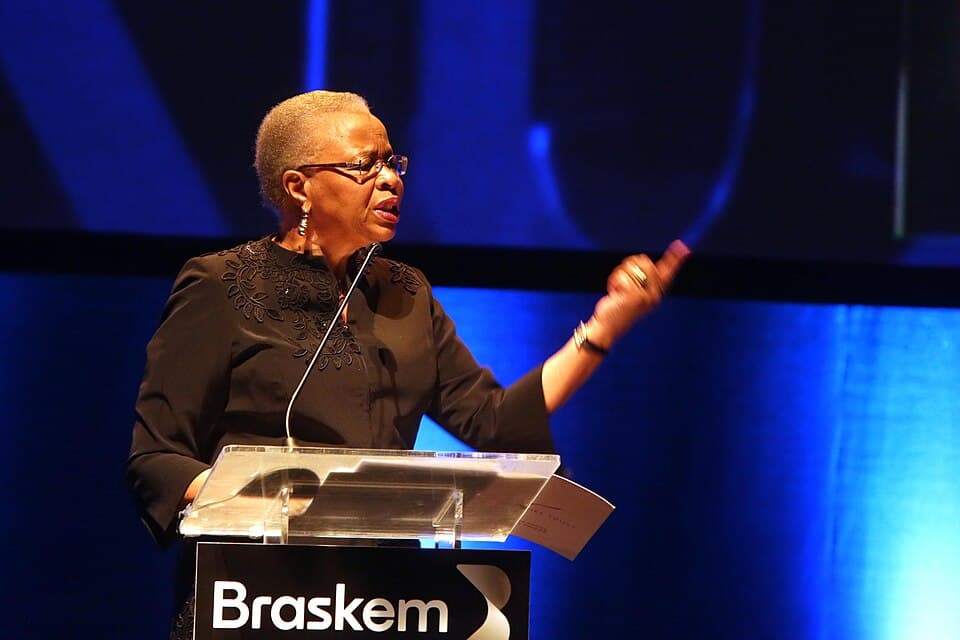
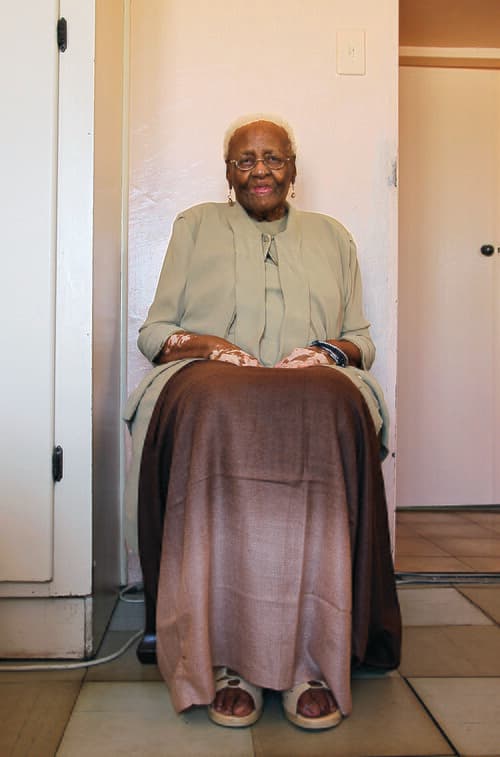
Maputo, late afternoon. In the bright offices of the Community Development Foundation, a colorful capulana rests on the back of a chair; on the table, humanitarian dispatches sit next to a cup of cold tea. Graça Machel receives us between meetings, her voice calm, the voice of someone who learned to speak softly in order to be heard for a long time.
—You were born in 1945 in Gaza Province. What memory do you keep of that Mozambican childhood?
I was born in Incadine, a village in the south, into a modest family, the youngest of many children. My father, a pastor, died a few weeks before my birth, but he left an instruction: that the youngest girl should go to school, no matter what. It was a Methodist mission that taught me to read, under a sky where girls were destined for the fields and marriage. I remember walking kilometers with my slate, in a country that still bore the name Portuguese East Africa. We were taught the greatness of Portugal, never our own. Very early, I understood that learning to read, for a black girl from the countryside, was not a granted privilege: it was a door that had to be forced open, and never let close behind you again.
Learning to read, for a black girl from the countryside, was not a granted privilege: it was a door that had to be forced open.
—How did a scholarship student in Lisbon end up joining a clandestine liberation movement?
In 1968, a scholarship took me to Lisbon, at the very heart of the empire that ruled us. Believe me, nothing opens your eyes more than observing the metropole from the inside. I saw the opulence built on our lands, the political police, the silence imposed on African students. It was there, between lecture halls and cafes where people whispered, that Decolonization ceased to be an idea and became a necessity of my entire being. I continued to Germany, then made my choice: join FRELIMO in exile, the liberation front founded in 1962 by Eduardo Mondlane. I was abandoning a comfortable life for the uncertainty of struggle. But how can you teach freedom to others if you don't have the courage to want it for yourself first?
—At independence in 1975, you became Minister of Education at age thirty. What country did you find?
A drained country. At independence in 1975, barely one in ten Mozambicans could read. The colonizer left taking almost everything: the cadres, the books, even the school plans. I was entrusted with Education and Culture of a nation where the majority did not even speak the official language. So we decided that literacy would not be a post-war luxury, but the first construction site of the revolution. I had textbooks in vernacular languages printed, because you don't teach a people to think in a language they don't dream in. It wasn't armchair pedagogy: it was a political urgency. A people who cannot read remain a people who can be made to sign anything without understanding.
You don't teach a people to think in a language they don't dream in.
—It is said that the literacy rate tripled in a decade. By what means was such a leap possible?
We had neither money nor schools in number, but we had women and men ready to carry knowledge on their backs. I launched popular brigades: educated young people sent to the most remote villages, sometimes days away by track, with a board, a box of chalk, and the conviction that no one was too poor to learn. Under a mango tree, in the evening, after the fields, adults traced their first letters. In ten years, from about one in ten we went to nearly a third of the population knowing how to read. Each board placed in the dust was a small victory against the colonial legacy of exclusion. No sustainable democracy was ever built on ignorance: I saw it with my own eyes, chalk in hand.
—In 1996, the UN entrusted you with a global report on children in war. How does one approach such a mission?
With the fear of not being up to what I was about to discover. The United Nations asked me to document the impact of armed conflict on children, and I wanted this dossier not to be an abstraction from a New York office. We went to the field, in Africa, Asia, in camps. I saw children who had been turned into soldiers, little girls torn from their families and raped as weapons of war, ten-year-old refugees older than me in everything they had endured. The 1996 Machel Report was born from those faces. For the first time, an official text dared to name these crimes and demand that the international community act. A child abandoned to war is a future murdered twice.
A child abandoned to war is a future murdered twice.
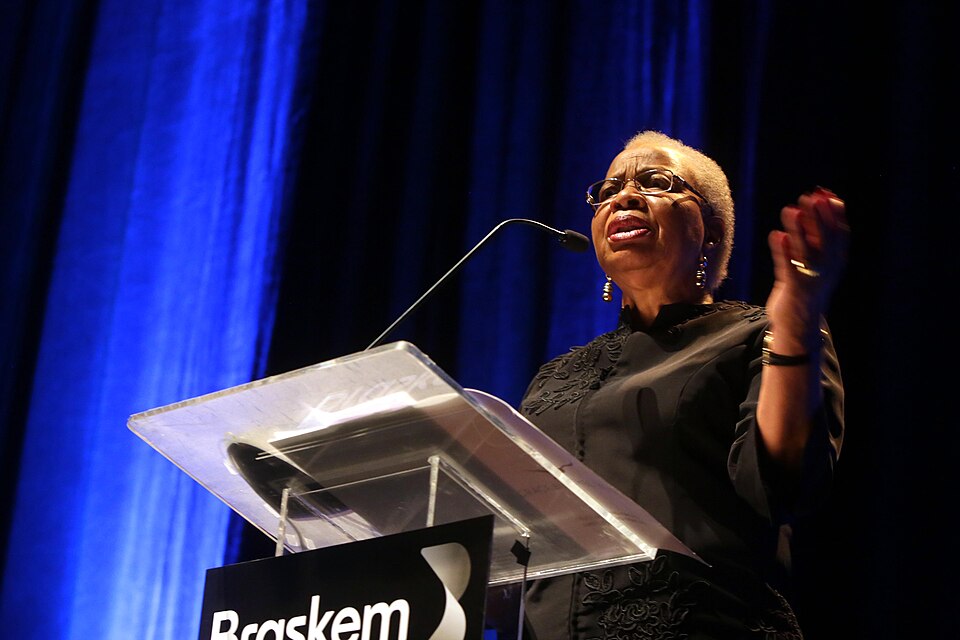
—Eleven years later, you signed a follow-up report. What can a simple document change about such brutal reality?
A report does not lay down arms, I am not naive. But a report can remove from the executioners the excuse of ignorance. In 2007, with The Machel Review, we wanted to measure the progress since 1996: what had moved in law, what remained dead letter. I saw courts born to judge the recruitment of children, international texts inspired by our investigation. The dossier I carried from one UN podium to another became a reference in child humanitarian law. What I learned is that you only sustainably protect children by refusing to look away, year after year, report after report. The world's conscience is lazy: you must constantly remind it of its promises.
—Your first husband, Samora Machel, was the founding president of Mozambique. What does the year 1986 represent for you?
1986 is the year the ground opened beneath my feet. Samora Machel's plane crashed near the border, in Swaziland, in circumstances that many in Mozambique never believed were accidental. I was forty-one, a nation in mourning, and the obligation to stand before it. Samora was not only my husband: he was the face of our independence, of the struggle we had led together since FRELIMO. Losing him was losing a comrade in arms as much as a husband. But you don't mourn long when a people looks at you: mourning among us never exempts from duty. I continued to work for children, because it was still the most faithful way to prolong him, and what we had wanted to build.
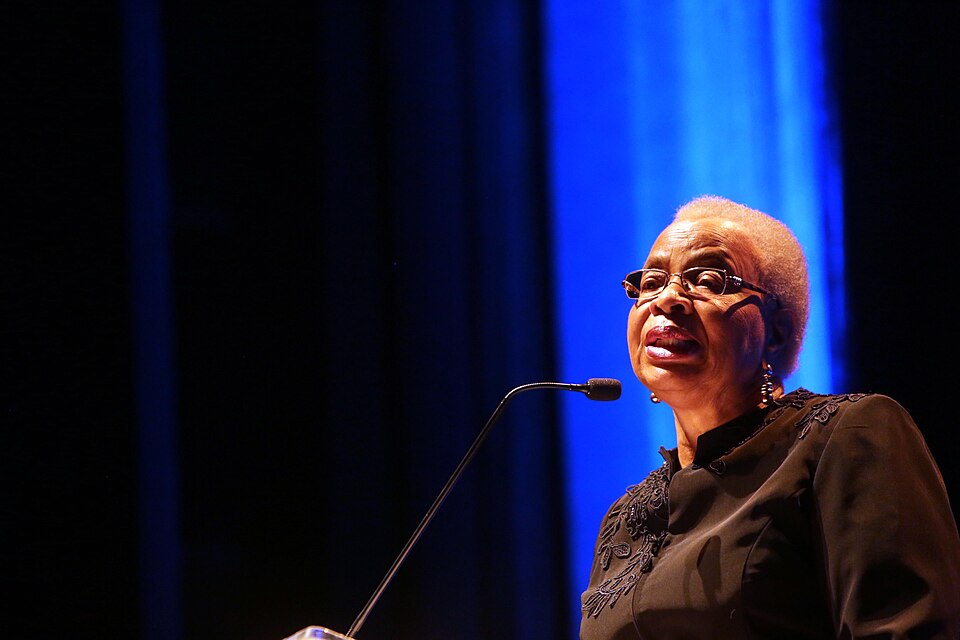
—You are the only woman to have been First Lady of two states. How does such a destiny come together?
It comes together slowly, and I assure you it is not planned. I married Nelson Mandela on July 18, 1998, his eightieth birthday — a date he insisted we share. Two men, two struggles: Samora against Portuguese colonialism, Nelson against apartheid, and here I am First Lady of Mozambique, then of South Africa. I was often introduced through them, as if a woman only existed next to a great man. But I had written my UN report before marrying Madiba, and I intended to continue my own struggle after. I loved two giants; I never accepted being only their shadow. You can walk alongside an immense man without ceasing to trace your own path.
I loved two giants; I never accepted being only their shadow.
—In 1994, you founded the Community Development Foundation in Maputo. Why this choice rather than only the international stage?
Because the great platforms of New York or Geneva do not feed a child in Gaza. In 1994 I created the Community Development Foundation right here, in Maputo, so that money and attention flow back down to the villages, to the rural women I had seen, as a young minister, learning to read under a mango tree. We work on poverty reduction, education, women's empowerment — a fancy word for a simple thing: giving each woman the power to decide her own life. A resolution passed at the UN is only worth something if it changes something in a rural schoolyard. I never wanted to choose between the summit and the field: without both, you only make speeches.
—Since Nelson Mandela's passing, you continue his work within The Elders. What does it mean to carry this legacy?
When Nelson Mandela left us in 2013, he left me more than grief: a responsibility. In 2007 he had gathered a circle of former leaders, The Elders, free voices with no electoral ambition, tasked with telling the powerful what diplomats no longer dare to say. I carry Africa's voice there, that of crises too quickly forgotten on the continent, and especially that of girls still denied school. Being an Elder is not about ruling: it's about having nothing left to gain, therefore nothing left to silence. At my age, you no longer seek honors; you seek to ensure that the struggles of a lifetime do not die with those who waged them. A girl's education remains, today still, the most certain revolution I know.
Being an Elder is not about ruling: it's about having nothing left to gain, therefore nothing left to silence.
This imaginary interview was generated by artificial intelligence from sources documented in Graça Machel's profile. It dramatises what the figure might have said based on what we know about them, but does not constitute attested historical testimony. For primary sources and factual documentation, refer to the full profile.