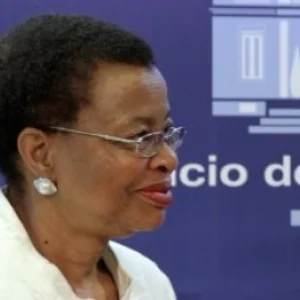

A Mozambican activist born in 1945, Graça Machel has established herself as a global figure in the defense of children's rights and women's rights. First Lady of Mozambique and later of South Africa, she has dedicated her life to fighting poverty and advancing education.
Frequently asked questions
Key Facts
- Born on October 17, 1945, in Gaza, Mozambique, then a Portuguese colony
- Minister of Education of independent Mozambique from 1975 to 1989
- Wife of President Samora Machel, who died in a plane crash in 1986
- Published the 1996 UN report 'Impact of Armed Conflict on Children', known as the Machel Report
- Married Nelson Mandela in 1998; the only person in history to have been First Lady of two different countries
Works & Achievements
A study commissioned by the UN and produced under the direction of Graça Machel, this report delivered a damning assessment of children's fate in wartime and put forward recommendations that had a lasting influence on international humanitarian law.
A mass education program launched under Graça Machel's leadership as Minister of Education, which tripled the country's literacy rate within a decade.
A non-governmental organization founded by Graça Machel in Maputo, dedicated to poverty reduction, education, and the empowerment of women and rural communities in Mozambique.
A follow-up report commissioned by the UN to assess progress made since 1996 in protecting children in conflict zones, again produced under the leadership of Graça Machel.
A founding member of this international organization of moral leaders created by Nelson Mandela, Graça Machel serves as a voice for Africa and champions peace, gender equality, and human rights.
Anecdotes
Graça Machel grew up in a modest family in Mozambique under Portuguese colonial rule. Gifted academically, she was one of the few African women of her generation to earn a scholarship to study in Lisbon, then in Germany. It was there that she became fully aware of the violence of colonialism and chose to join FRELIMO, the Mozambican liberation movement.
When Mozambique gained independence in 1975, Graça Machel became Minister of Education and launched an ambitious national literacy campaign. Within ten years, the literacy rate rose from around 10% to over 33%, thanks in large part to popular brigades sent to the most remote villages across the country.
In 1996, the United Nations commissioned her to write a global report on the impact of armed conflict on children. The 'Machel Report' landed like a bombshell: it meticulously documented the fate of child soldiers, refugee children, and girls subjected to sexual violence in wartime. It has since been recognized as a founding text of international humanitarian law relating to children.
On July 18, 1998 — Nelson Mandela's 80th birthday — Graça Machel became his third wife. She is the only woman in history to have served as First Lady of two different countries: Mozambique alongside Samora Machel, and then South Africa alongside Nelson Mandela. Both men were towering figures in the struggles against colonialism and apartheid.
After Nelson Mandela's death in 2013, Graça Machel continued her commitment through The Elders, an organization founded by Mandela that brings together former heads of state to champion peace and human rights. She has been particularly active on humanitarian crises in sub-Saharan Africa and on expanding access to education for girls.
Primary Sources
Children are both the direct and indirect victims of armed conflict. They are recruited as soldiers, separated from their families, and subjected to violence and abuse. The international community must take immediate action to protect children in war zones.
Education is the foundation of all human development. Without it, women remain trapped in poverty and children are robbed of their future. It is a right, not a privilege.
Refugee children are not merely victims. They carry within them an extraordinary resilience. Our duty is to give them the tools to rebuild their lives and the lives of their communities.
Every day, children are torn from their families and forced to kill. This reality must stir our collective conscience. No state can remain passive in the face of this crime against humanity.
Key Places
Graça Machel's birthplace in southern Mozambique. She grew up here in a modest family and received her early education through a local Methodist mission.
The capital of Mozambique, where Graça Machel served as a government minister and founded the Foundation for Community Development (FDC), which she continues to lead today.
The city where Graça Machel pursued her university studies in the 1960s, experiencing firsthand the contradictions of the Portuguese colonial empire — an experience that deepened her commitment to independence.
It was in New York, before the UN General Assembly, that Graça Machel presented her landmark 1996 report and championed numerous resolutions in defense of children's rights.
The city where she lived alongside Nelson Mandela and continued her activist work, including through The Elders and various African foundations.
Typical Objects

As Minister of Education, Graça Machel oversaw the development of textbooks in local Mozambican languages to promote literacy among rural populations who did not speak Portuguese.

This landmark international document, commissioned by the United Nations, synthesizes years of research into the fate of children in conflict zones. It stands as Graça Machel's defining documentary work.

A traditional women's garment from southern Africa, the capulana is frequently worn by Graça Machel during her travels across the African continent, symbolizing her deep ties to Mozambican culture.

A prominent voice on the world stage, Graça Machel has addressed the United Nations General Assembly, UNICEF, and numerous global summits to champion the rights of children and women.

A symbol of the educational revolution she led in Mozambique, the classroom chalkboard represents the central tool of the popular literacy brigades she organized across the country after 1975.
School Curriculum
Vocabulary & Tags
Key Vocabulary
Tags
Daily Life
Morning
Graça Machel starts her day early, reading the dispatches and humanitarian reports that reach her from around the world. When she is in Maputo, she has a light breakfast before joining her Foundation's teams to review ongoing projects across Mozambique's provinces.
Afternoon
Her afternoons are devoted to meetings with African delegations, NGO leaders, or UN representatives. When traveling to New York or Geneva, she prepares her addresses to UN committees, reviewing her speeches and consulting her advisors on the latest data.
Evening
In the evenings, Graça Machel makes time for family and personal reflection. Alongside Nelson Mandela, their evenings in Johannesburg were often enlivened by visitors from around the world seeking advice or support. She reads widely, particularly works on education, public health, and human rights.
Food
Her diet reflects her Mozambican roots: xima (maize porridge), grilled fish, local vegetables, and tropical fruits. When traveling, she adapts easily to the world's cuisines, but always retains a deep attachment to the flavors of southern Africa.
Clothing
Graça Machel alternates between traditional Mozambican dress — capulanas with bold geometric patterns — and understated suits for diplomatic occasions. She often wears warm colors (red, gold, green) that evoke both the Mozambican flag and African textiles.
Housing
In Maputo, she lives in a functional home close to her foundation, open to her colleagues. In Johannesburg, she shared with Nelson Mandela a residence that also served as a gathering place for political and humanitarian meetings, frequented by leaders from across the world.
Historical Timeline
Period Vocabulary
Visual Style
Un style documentaire chaleureux oscillant entre la savane mozambicaine aux tons ocre et les salles feutrées des institutions internationales, avec des tissus africains colorés en contrepoint.
Sound Ambience
Un paysage sonore mêlant l'Afrique australe rurale et les grandes tribunes internationales, entre chants scolaires mozambicains, rumeurs de conférences onusiennes et bruits de la savane.
Liens externes & ressources
Références
Œuvres
Rapport Machel : Impact des conflits armés sur les enfants
1996
Campagne nationale d'alphabétisation du Mozambique
1975-1989
Fondation pour le développement communautaire (FDC)
1994
The Machel Review — 10 ans après le rapport sur les enfants dans les conflits
2007
Engagement au sein de The Elders
2007-présent