Imaginary interview with Ha-Joon Chang
by Charactorium · Ha-Joon Chang (1963 — ?) · Economics · 6 min read
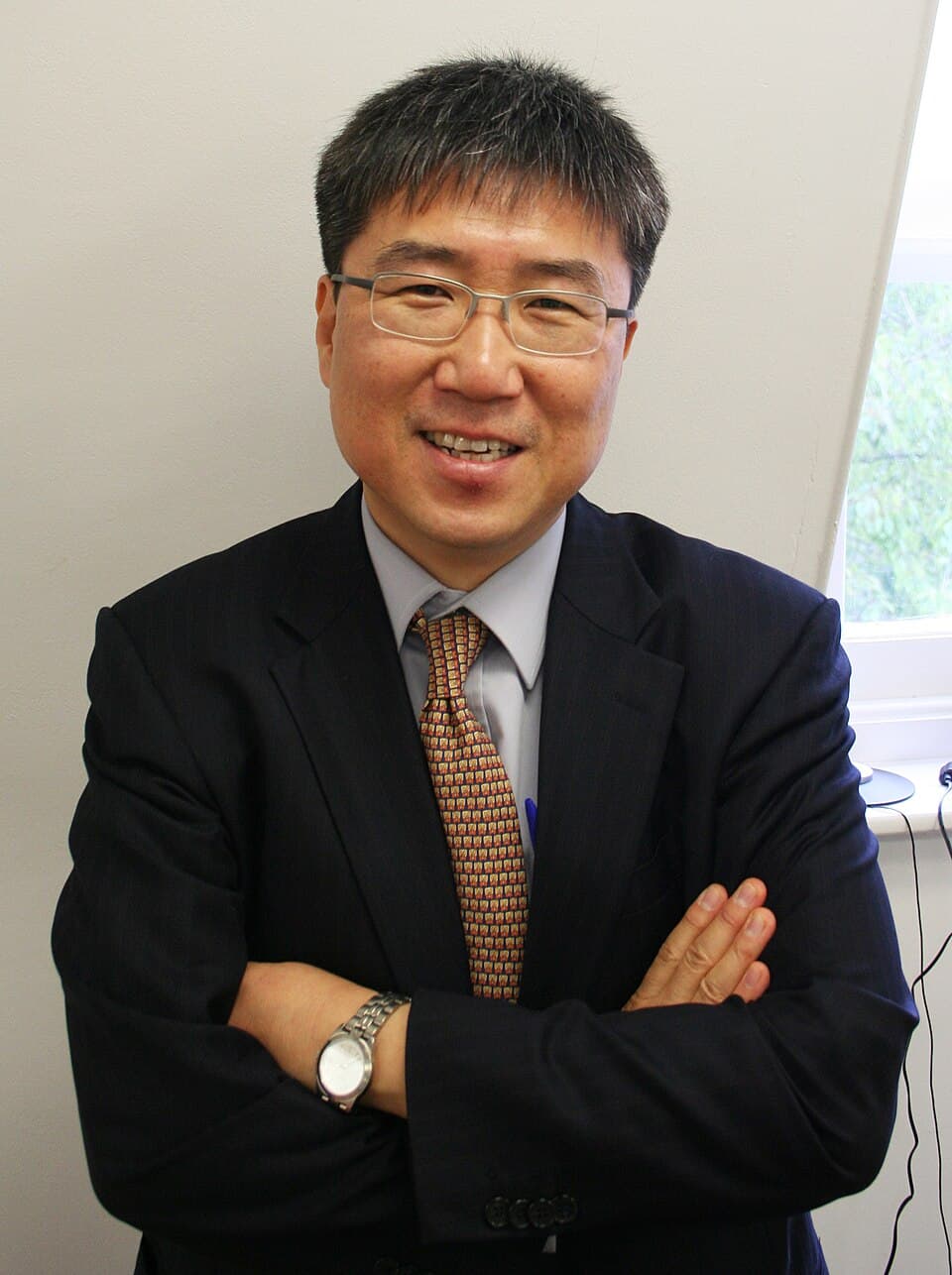
A late autumn afternoon in London, in a SOAS office cluttered with books and spices brought back from travels. Ha-Joon Chang greets us with a cup of coffee in hand, a mischievous glint in his eye, ready to talk about economics the way others talk about cooking. The conversation, naturally, will begin with the Korea of his childhood.
—You were born in Seoul in 1963. What memory do you have of the country of your childhood?
When I was born, in 1963, my country was poorer than many sub-Saharan African nations. People always think South Korea was always this giant of shipbuilding and smartphones; I saw the other end of the story. As a child in Seoul, I watched my country transform before my eyes, almost visibly, like dough rising. Two years before my birth, the regime of Park Chung-hee had launched a state-driven industrialization — roads, steel mills, shipyards, everything springing up from the ground. I wasn't theorizing anything, of course, I was a kid. But that experience lodged in me as a physical certainty: a country is not condemned to poverty, a proactive state can overturn its fate. Everything I have written since has only unfolded that childhood intuition.
A country is not condemned to poverty; I saw mine change its fate before my eyes.
—Would you say that this Korean story shaped the way you do economics?
Entirely. Many of my colleagues build models from axioms; I start from a memory. I did my early studies at Seoul National University before leaving for England in 1986, and I already carried the conviction that what they taught me in textbooks did not match what I had lived. The books said: let the market be, open borders, and prosperity will come. But Korea had done exactly the opposite — it had protected, subsidized, directed — and that was how it took off. Developmentalism, that somewhat rough word, was for me neither a doctrine nor an abstraction: it was the landscape of my youth. I believe an economist should always remember where they come from. Numbers lie less when you confront them with a street you have walked yourself.
My colleagues start from axioms; I start from a memory.
—Let's talk about Kicking Away the Ladder. Where does that image of kicking away the ladder come from?
The image is not mine; I borrowed it from the German economist Friedrich List, in the 19th century. It is brutally clear: a country climbs to the top of wealth using protectionism, then, once there, kicks away the ladder so no one can climb up behind it. I keep a small model ladder on my desk as a reminder. In Kicking Away the Ladder, published in 2002, I simply did the historical work no one wanted to do: showing that the United States and Great Britain, today's preachers of free trade, were among the most protectionist nations of their time. As I wrote, they want to impose on poor countries policies “that they themselves never applied when they were catching up.” This book earned me the Gunnar Myrdal Prize in 2003. But above all, it restored history's memory.
You climb to the top using protectionism, then kick away the ladder.
—Why do so many economists still hold free trade as an eternal truth?
Because forgetting is comfortable. It is more flattering to believe you became rich through the genius of the free market than to admit you cheated a lot. I spent nearly thirty years at Cambridge, chalk in hand in front of my students, telling them the real economic history rather than the official fable. And that fable is powerful: it serves the interests of those already at the top. The word free trade sounds like a promise of freedom, but imposed on a fragile economy, it becomes a straitjacket. An infant industry is like a child: you do not throw it into adult competition on the day it is born; you protect it while it grows. Rich countries knew this perfectly well for themselves. They just preferred that others ignore it.
Free trade sounds like freedom; imposed on a fragile economy, it is a straitjacket.
—You mentioned the infant industry as a child. Is this comparison dear to you?
It is almost autobiographical. In Bad Samaritans, in 2007, I took the example of my own son, Jin-Gyu, who was then six years old. No sensible person would think of sending him to work so he could “face market reality”; we protect him, educate him, precisely so that one day he can manage on his own. That is exactly what we owe a young industry. Yet in 1997, during the Asian financial crisis, the IMF did the opposite with my country: it demanded brutal liberal reforms, immediate opening, dismantling protections, like throwing a child out into a storm. I found that not only unfair but economically stupid. Neoliberalism claims to toughen; most often, it mutilates. Protecting is not coddling — it is betting on the future.
An infant industry is like a child: you do not throw it into the storm on the day it is born.
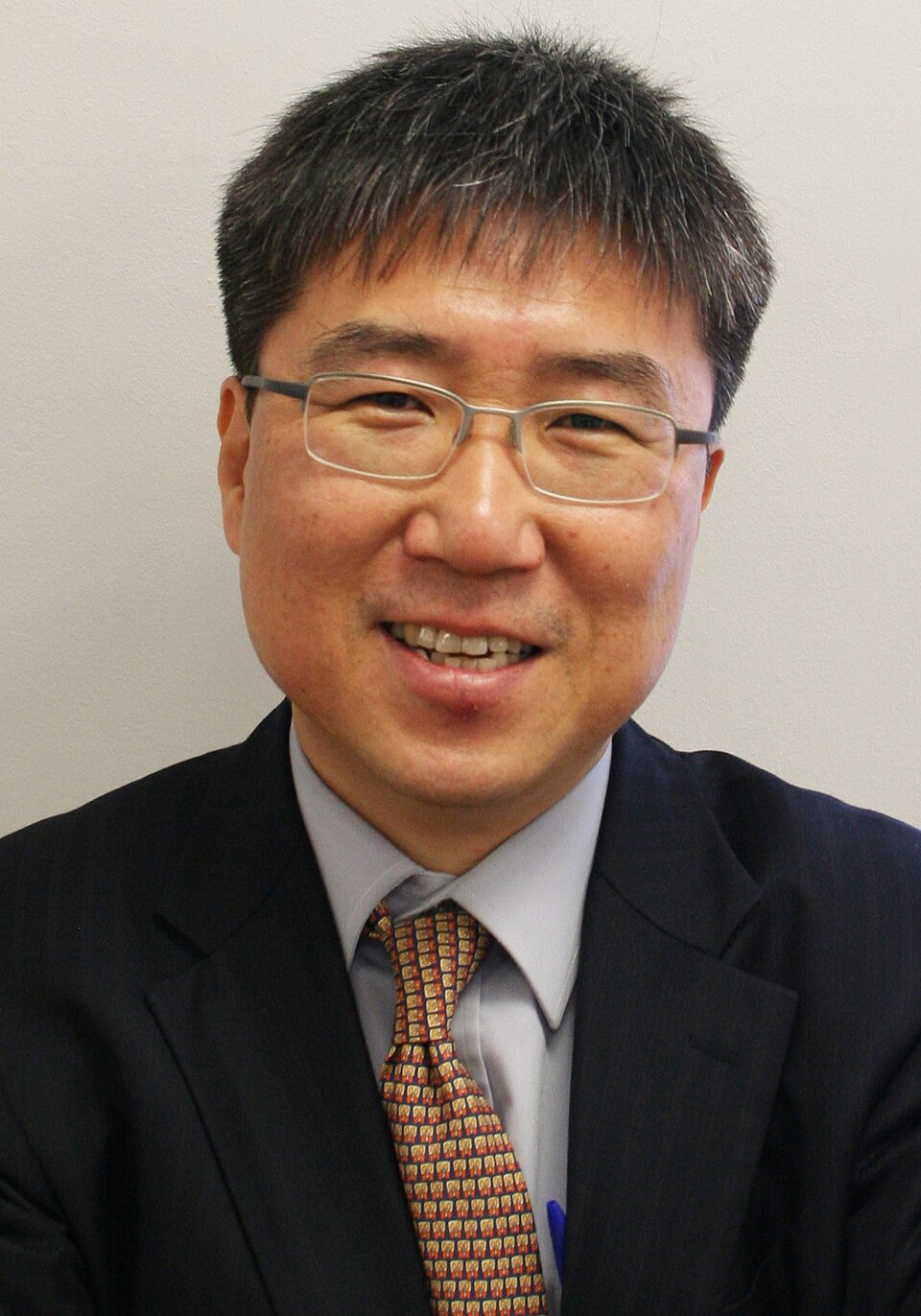
—Was the 1997 crisis a turning point in your engagement?
A painful turning point, yes. Seeing the IMF dictate its law to Seoul, to this country I had seen rise through sheer effort, made me angry — and anger, with me, always turns into books. Koreans were told that their past success had been a mistake, that the state had weighed too heavily, that everything had to be liberalized. That was turning the truth upside down like an hourglass. Eleven years later, the global financial crisis of 2008 reminded everyone that markets left to themselves do not self-regulate so wisely. I like to point out that there is no such thing, strictly speaking, as a “free” market: every market rests on rules, limits, prohibitions that we have ended up not seeing. The question is never “market or not,” but “what rules, and for whom?”
Anger, with me, always turns into books.
—In 23 Things, you claim that there is no free market. Isn't that provocative?
Provocative, but rigorously accurate. In 23 Things They Don't Tell You About Capitalism, published in 2010, I write it bluntly: there is no free market; every market obeys rules that restrict freedom of choice. Ban on child labor, health standards, working hours, tariffs: all limits we consider “natural” today but were battles yesterday. When someone tells you a measure “distorts the market,” they are really saying they do not like the rules it contains — not that they are defending a purity that never existed. I wanted this book to be a series of friendly little bombs, twenty-three received ideas exploded one by one. My goal was not to convert but to give ordinary readers the right to doubt the certainties they are sold.
There is no free market: every market obeys rules we have ended up not seeing.
—You argue that the washing machine changed the world more than the Internet. Seriously?
Quite seriously, even if I say it with a smile. Take the washing machine: before it, washing a family's laundry required hours of exhausting labor, almost always done by women. By freeing up that time, this machine and its household cousins brought millions of women into the labor market, transformed families, reshaped societies. The Internet changed how we amuse ourselves and chat — real, but the shock wave is much smaller. I tell this in 23 Things to shake a reflex: we systematically overestimate the new and flashy, and underestimate the humble object that has already turned everything upside down. Economics, you see, is full of these false hierarchies. Often you just need to look at your own laundry room to correct them.
We overestimate the flashy and underestimate the humble object that has already turned everything upside down.
—You devoted an entire book to food. Why use food to talk about economics?
Because everyone eats, and almost no one feels invited to the table of economics. In Edible Economics, in 2022, I open each chapter with a food item — okra, anchovy, carrot — and use it as a gateway to an idea. It is not a gimmick: cooking is my true passion, and in the evening, when I finally put down the data to pick up a knife, I rediscover the same joy as in dismantling a line of reasoning. I like to say that understanding economics should be as accessible as sharing a meal. Too many economists have made their discipline an inedible dish, served in jargon that keeps diners at a distance. I want to reopen the kitchen. A well-chosen anchovy sometimes teaches you more about global trade than a curve.
Understanding economics should be as accessible as sharing a meal.
—What would you like people to remember about the way you teach economics?
That it belongs to everyone. When I wrote Economics: The User's Guide in 2014, I wanted a textbook that presents all schools of thought — not just the orthodox one — like presenting several world cuisines without imposing a single menu. I deeply believe that most of economics is just common sense made unnecessarily complicated, and that it is far too important to be left to specialists alone. A citizen who votes, a worker, a nurse: all have the right and duty to understand the forces that govern their lives. My role as a teacher, long at Cambridge and now at SOAS, has never been to produce intimidating experts, but to give people back the confidence to think for themselves. If my books give a reader the audacity to contradict an economist in a suit, I have won.
Economics is just common sense made complicated — it is too important to be left to economists alone.
This imaginary interview was generated by artificial intelligence from sources documented in Ha-Joon Chang's profile. It dramatises what the figure might have said based on what we know about them, but does not constitute attested historical testimony. For primary sources and factual documentation, refer to the full profile.