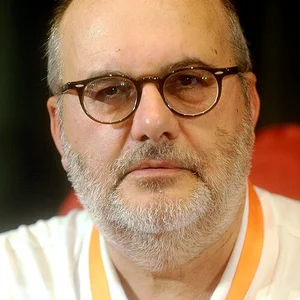

Serbian-American economist specializing in the study of income inequality on a global scale. A former lead economist in the World Bank's research department, he is one of the leading contemporary theorists on the measurement of global inequality.
Branko Milanović(1953 — ?)
Branko Milanović
Serbie
6 min read
Frequently asked questions
Key Facts
- Born in 1953 in Belgrade (former Yugoslavia), he studied economics and defended a doctoral thesis on inequality in Yugoslavia
- Became lead economist in the World Bank's research department, where he developed his work on global inequality
- Popularized the “elephant curve” (around 2012-2016) showing the winners and losers of globalization between 1988 and 2008
- Published “Global Inequality” (2016), a landmark work on the distribution of income across the planet
- Published “Capitalism, Alone” (2019), comparing liberal capitalism and political capitalism
Works & Achievements
The first major synthesis of his method: in it he distinguishes inequality between countries from inequality among all the individuals in the world.
A lively and accessible history of inequality, blending hard data, history, and examples drawn from literature.
A chart that became world-famous, showing who won and who lost from globalization between 1988 and 2008.
His most influential book, which proposes the “Kuznets waves” and the concept of a citizenship premium for thinking about global inequality.
An analysis of the worldwide victory of capitalism and of the rivalry between its liberal version and China's “political” version.
A history of how the great economists, from Adam Smith to Kuznets, thought about inequality across the centuries.
Anecdotes
In 2013, Branko Milanović and his colleague Christoph Lakner published a graph nicknamed the "elephant curve
: its silhouette
rising and then falling
looks like an elephant raising its trunk. It shows that
between 1988 and 2008
the middle classes of emerging countries (especially in Asia) and the very rich saw their incomes soar
while the working classes of wealthy countries stagnated. This drawing has become one of the most famous images for explaining globalization.
Milanović likes to say that the factor that most determines your income is neither your talent nor your work, but simply the country where you were born: he calls this the "citizenship premium." According to his calculations, being born in the right place by itself explains more than half of the income gaps in the world.
Born in Belgrade in Tito's communist Yugoslavia, Milanović grew up in a uniquely "market socialist" country. This experience of a system that was neither truly Soviet nor truly capitalist fueled all of his thinking about the different forms that capitalism can take.
To measure inequality on a planetary scale, Milanović spent years gathering and harmonizing hundreds of household surveys from dozens of countries. Comparing the income of a Chinese farmer with that of a German executive requires meticulous adjustments: it is this patient data work that made possible the first measurement of "global" inequality between individuals.
In his book “The Haves and the Have-Nots” (2011), Milanović has fun ranking characters from novels by their wealth: he calculates, for example, where Mr. Darcy from *Pride and Prejudice* or Anna Karenina would sit in the social hierarchy of their time, to make economics concrete and alive.
Primary Sources
The citizenship premium or penalty is, for most people in the world, the most important determinant of their income level.
For the first time in human history, it is possible to speak of global inequality, that is, the inequality among all the inhabitants of the planet.
The entire world is now organized according to the same economic principles: production for profit, wage labor, and capital coordinated in a decentralized manner. Capitalism rules alone.
Where you live largely determines what you will earn throughout your life; it is the lottery of birth.
Key Places
Milanović's birthplace, then the capital of socialist Yugoslavia, where he studied and defended his thesis on inequality.
Headquarters of the institution where Milanović was a lead economist in the research department for nearly twenty years.
New York institution where he continues his research on inequality at the Stone Center on Socio-Economic Inequality.
One of the American universities where Milanović taught development economics and the economics of inequality.
A leading school of economics where he was a visiting researcher, in a city at the heart of the international debate on inequality.
Typical Objects

A numerical index between 0 and 1 that summarizes the degree of income inequality within a population. It is the central tool that **Milanović** uses and discusses to compare countries and eras.

An elephant-shaped graph showing how global incomes evolved between 1988 and 2008 across different social groups. It has become the visual symbol of the effects of globalization.

Vast statistical questionnaires recording the incomes and expenditures of families in each country. **Milanović** harmonized hundreds of them to reconstruct global inequality.

The everyday working tool of the modern economist, used to process enormous databases. Without it, calculating inequality among all the inhabitants of the planet would be impossible.

A currency conversion method that takes into account the real cost of living in each country. It makes it possible to fairly compare the income of an Indian with that of an American.

Works such as *Global Inequality* or *The Haves and the Have-Nots*, written for the general public and packed with concrete examples. They made his ideas known far beyond universities.
School Curriculum
Vocabulary & Tags
Key Vocabulary
Daily Life
Morning
Like many contemporary researchers, Milanović often begins his day by reading economic news and reviewing the latest statistical data released by international institutions. The morning is devoted to writing articles or book chapters, in peace and quiet.
Afternoon
The afternoon is divided between analyzing databases on the computer, exchanging ideas with other economists, and preparing lectures or conferences. He also runs a blog and social media accounts where he discusses inequality with a broad audience.
Evening
The evening may be taken up by video conferences with colleagues from other continents, or by reading works of history and economics. Milanović is known for his fondness for literary and historical references.
Food
His life unfolds between Europe and the United States, shaped by an urban, international diet with nothing particularly distinctive about it. Coffee often accompanies the long hours of work on data.
Clothing
He wears the usual attire of the contemporary academic: jacket, shirt, and understated city clothes for lectures and teaching.
Housing
An economist who splits his life between Washington and New York, he lives in modern urban housing, close to the major universities and institutions where he works.
Historical Timeline
Period Vocabulary
Liens externes & ressources
Références
Œuvres
Worlds Apart: Measuring International and Global Inequality
2005
The Haves and the Have-Nots (Les Nantis et les démunis)
2011
Courbe de l'éléphant (avec Christoph Lakner)
2013
Global Inequality: A New Approach for the Age of Globalization
2016
Capitalism, Alone: The Future of the System That Rules the World
2019
Visions of Inequality: From the French Revolution to the End of the Cold War
2023