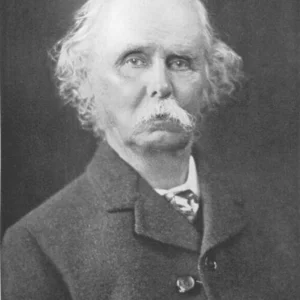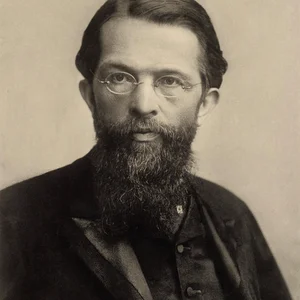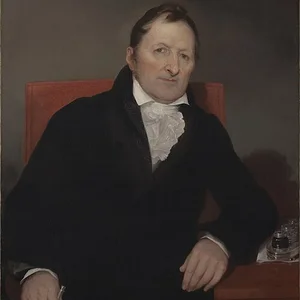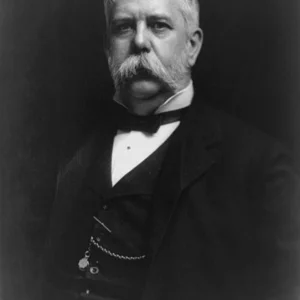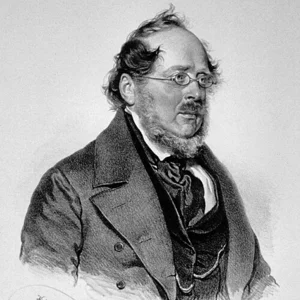

German economist and publicist, theorist of educational protectionism. He advocated the temporary protection of infant industries to allow developing nations to catch up with England.
Friedrich List(1789 — 1846)
Friedrich List
États-Unis, Royaume du Wurtemberg
5 min read
Frequently asked questions
Key Facts
- Born in 1789 in Reutlingen (Württemberg) and died in 1846 in Kufstein
- Published his major work, The National System of Political Economy, in 1841
- Developed the theory of educational protectionism (temporary protection of infant industries)
- Supporter of the German customs union (Zollverein) and the development of railways
- Emigrated to the United States in the 1820s, where he refined his protectionist ideas
Works & Achievements
His masterpiece, the foundation of protectionist thought and national economics; in it he sets the interest of nations against the free-trade “school” of Smith.
A series of letters written in the United States defending the protection of infant industries against England.
A memoir written in France, the first systematic formulation of his ideas and a sketch of his great 1841 work.
His central idea that a state must temporarily protect its young industries to let them mature before facing international competition.
Projects and campaigns in favor of a unified railway network, seen as a tool for the economic and national unity of Germany.
An early struggle against Germany's internal customs barriers, anticipating the 1834 customs union.
Anecdotes
Friedrich List was elected as a deputy to the parliament of Württemberg, but his reformist ideas were so unpopular that in 1822 he was sentenced to ten months in a fortress prison for agitation. He chose exile instead and eventually emigrated to the United States in 1825.
In America, List did not merely theorize: he became a coal mine operator in Pennsylvania and took part in building a small railway line. It was there that he observed first-hand how a young country protected its industries in order to catch up with England.
List liked to compare nations to children: an industrially “minor” country needed to be temporarily protected, just as one protects a child, before facing the competition of adults on its own. This is the image of “educational protectionism.”
A railway enthusiast, List campaigned passionately for a unified German rail network as early as the 1830s, seeing in the railroad a tool for national unity as much as for economic growth. He even published plans for lines connecting the German cities.
Ruined, ill, and in despair, List took his own life in November 1846 at Kufstein, in the Tyrol, in the falling snow. Recognition came mostly after his death, when a unified Germany drew inspiration from his ideas of a national market.
Primary Sources
The power of producing wealth is therefore infinitely more important than wealth itself.
A nation that sacrifices industry to free trade, while its manufactures are not yet mature, sacrifices its future to its present.
The system suited to England, which has already attained manufacturing supremacy, cannot suit the nations that still aspire to industry.
Key Places
Town in Württemberg where Friedrich List was born in 1789, the son of a tanner.
University where List was appointed professor of administration and politics in 1817, before his ideas got him into trouble.
Region where List, as an émigré, ran coal mines and observed American protectionism in the 1820s.
List stayed here and in 1837 wrote a treatise on political economy for the Academy of Moral and Political Sciences.
Austrian town where List, ruined and ill, took his own life in November 1846.
Typical Objects

His major book of 1841, in which he sets out the theory of educational protectionism and of national “productive forces.”

A symbol of industrialization that List wanted at the heart of a unified German railway network, an engine of national unity.

List drew up plans for lines connecting the major German cities, seeing the railway as the backbone of a future unified state.

A border post where customs duties were collected; the Zollverein abolished them between the German states, an idea dear to List.

The tools of the journalist and pamphleteer that List was, through which he spread his ideas in the press and in memoranda.

List founded and ran several newspapers to champion industry and the railway before the public and decision-makers.
School Curriculum
Vocabulary & Tags
Key Vocabulary
Tags
Daily Life
Morning
List often began his day by reading newspapers and correspondence, attentive to economic and political news from Germany, France, and America. A tireless publicist, he devoted his mornings to writing articles, memoranda, and letters.
Afternoon
The afternoon was given over to meetings with merchants, industrialists, and politicians whom he sought to win over. He sometimes visited factories, mines, or railway construction sites to inform his concrete analyses.
Evening
In the evening, in the drawing rooms or cafés of the cities where he lived, he debated economics and politics with passion. He often continued writing his works late into the night by lamplight.
Food
A member of the educated bourgeoisie of the 19th century, he ate according to German customs: bread, meats, soups, potatoes, and beer. His frequent travels and exiles also gave him a taste for American and French cuisine.
Clothing
He wore the bourgeois costume of his time: a dark frock coat, waistcoat, high-collared shirt, and knotted necktie, as befitted a professor and public figure. The top hat completed the outfit on official occasions.
Housing
His turbulent life as an exile took him from house to house, from Württemberg to Pennsylvania, then to Paris and the cities of Germany. He lived in bourgeois dwellings, but his financial difficulties cast a shadow over his final years.
Historical Timeline
Period Vocabulary
Liens externes & ressources
Références
Œuvres
Système national d'économie politique
1841
Outlines of American Political Economy
1827
Le Système naturel d'économie politique
1837
Théorie du protectionnisme éducateur
1841
Promotion du réseau ferroviaire allemand
1833
Soutien au Zollverein
1819