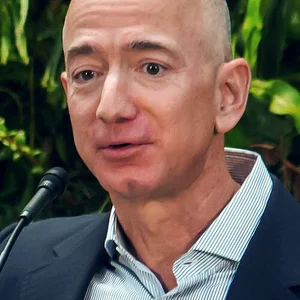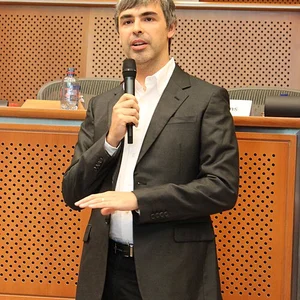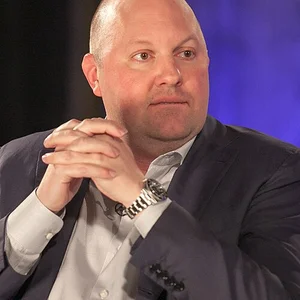

Co-founder of Microsoft, Bill Gates revolutionized personal computing with the Windows operating system. Having become one of the wealthiest people in the world, he went on to dedicate himself to philanthropy through the Bill & Melinda Gates Foundation.
Bill Gates(1955 — ?)
Bill Gates
États-Unis
8 min read
Frequently asked questions
Famous Quotes
« If you think your teacher is tough, wait until you get a boss.»
« Success is a lousy teacher. It seduces smart people into thinking they can't lose.»
Key Facts
- 1955: Born in Seattle, Washington
- 1975: Founded Microsoft with Paul Allen
- 1985: Launch of Windows 1.0
- 2000: Creation of the Bill & Melinda Gates Foundation
- 2008: Stepped back from operational leadership at Microsoft to focus on philanthropy
Works & Achievements
Licensed to IBM to power its PCs, MS-DOS became the most widely used software in the world during the 1980s. Its success established Microsoft's dominance over the computing industry.
Microsoft's first graphical interface, allowing users to click on icons rather than type text commands. It paved the way for computing accessible to the general public.
A productivity suite bundling word processing (Word), spreadsheet (Excel), and presentation (PowerPoint) software, Microsoft Office became the standard work tool for hundreds of millions of businesses and educational institutions.
The operating system that definitively standardized the graphical interface with the Start menu and taskbar. Its launch was a worldwide event, with queues forming outside stores on the night of its release.
A book in which Gates predicted with remarkable accuracy the rise of the internet, e-commerce, and digital communication. Translated into many languages, it became a global bestseller.
A philanthropic organization founded with his wife, today endowed with more than $50 billion. It works to combat poverty, infectious diseases (malaria, polio, tuberculosis), and to improve education.
A global partnership co-founded and largely funded by the Gates Foundation to vaccinate children in developing countries. Hundreds of millions of children have been vaccinated thanks to this initiative.
Anecdotes
At 13, Bill Gates discovered computing thanks to a computer terminal that his private school, Lakeside School in Seattle, had purchased with money raised from a used-clothing sale. He spent his nights programming, to the point where his teachers had to ban him from the machine so he would get some sleep.
In 1980, IBM was looking for an operating system for its upcoming personal computer. Gates didn't have one, but he quickly bought QDOS (Quick and Dirty Operating System) from a small Seattle company for $50,000, licensed it to IBM under the name MS-DOS, and kept the rights for himself. This business move turned out to be one of the most profitable decisions in corporate history.
In 1976, hobbyists were freely sharing the Altair BASIC software Gates had written. He responded by publishing an indignant open letter in several hacker newsletters, demanding that programmers be paid for their work. This text is considered the founding act of the commercial software industry.
Gates had a habit of memorizing his employees' license plates to track what time they arrived and left the office. He boasted that he could recognize every car, and openly challenged employees he felt were leaving too early.
Gates received an honorary degree from Harvard in 2007 — 32 years after dropping out — and delivered a speech in which he joked that he was probably the slowest student in the university's history to earn his diploma.
Primary Sources
As the majority of hobbyists must be aware, most of you steal your software. Hardware must be paid for, but software is something to share. Who cares if the people who worked on it get paid? Is this fair?
Gates answered questions about Microsoft's strategy regarding the Netscape browser, contesting the terms used by prosecutors and asserting that Microsoft was only seeking to improve its products in the interest of consumers.
We are on the threshold of a revolution that will transform the way we work, learn, and communicate. The information highway will change our culture as profoundly as Gutenberg changed the medieval world.
If the world were just, we would not have to choose between treating wealthy patients and treating poor patients. But the world is not just. It is up to us to make it more just.
Our bet is that if poor countries can improve the health and education of their children, they will be able to break the cycle of poverty within a generation.
Key Places
Bill Gates's hometown, Seattle is also the birthplace of Microsoft. Gates grew up in a wealthy family there and returned after relocating the headquarters from Albuquerque.
A private school where Gates discovered computing at age 13 through a PDP-10 terminal. It was there that he met Paul Allen, who would later co-found Microsoft with him.
Gates enrolled there in 1973 to study law, but dropped out in 1975 to found Microsoft. He received an honorary degree in 2007, 32 years later.
The city where Microsoft was founded in 1975, chosen because Micro Instrumentation and Telemetry Systems (MITS), Gates's first client, was based there.
Microsoft's global headquarters since 1986, this campus of several dozen buildings housed thousands of engineers who developed Windows, Office, and the company's other flagship products.
A residential town on the shores of Lake Washington where Gates had his high-tech home built in the 1990s, nicknamed Xanadu 2.0. The house is equipped with computer systems that control lighting and temperature according to each visitor's preferences.
Typical Objects

It was on this type of terminal that Gates learned to program at age 13 at Lakeside School. He spent hundreds of hours there, developing his passion and coding skills.
The IBM personal computer equipped with MS-DOS, Microsoft's operating system, was the object that propelled Gates to fortune. Millions of units were sold throughout the 1980s.

This small magnetic disk contained the operating system that ran on virtually every personal computer in the 1980s and 1990s, ensuring Microsoft a revenue stream on every PC sold.

Gates was famous for his casual dress style — typically just a simple sweater and shirt — which stood in sharp contrast to the suits and ties worn by most CEOs of the era, symbolizing Silicon Valley's informal culture.

Gates is known for reading around 50 books a year, primarily works on science, history, and economics. Reading lies at the heart of his approach to thinking and his philanthropic work.

An early champion of touchscreen interfaces and digital ink, Gates was investing in the development of Tablet PCs at Microsoft as far back as the 1990s — well before Apple's iPad.

A symbol of Gates's transformation into a philanthropist, the foundation has distributed more than $50 billion since 2000, with a particular focus on vaccinating children against polio and malaria in the developing world.
School Curriculum
Vocabulary & Tags
Key Vocabulary
Tags
Daily Life
Morning
During the years when Microsoft was being built, Gates would arrive at the office very early, often before his employees, and frequently worked until exhaustion. He would sometimes fall asleep at his desk and pick back up a few hours later. Today, his morning begins with reading several newspapers and news sources on a tablet.
Afternoon
At Microsoft's peak in the 1990s, his afternoons were structured around intense technical team meetings known as 'bill reviews,' where Gates would quiz engineers on the smallest technical details of their projects, often unsettling presenters with sharp, highly specific questions.
Evening
Gates is known for his 'Think Week' — a week of solitary retreat he took twice a year at an isolated cabin to read hundreds of technical documents and reflect on Microsoft's strategy. In the evening, reading is central to his routine: he dedicates about an hour before bed to books.
Food
Gates long maintained a fairly simple diet, favoring hamburgers, hot dogs, and Coca-Cola — a reflection of the informal culture of American startups. He enjoyed visiting fast-food restaurants like McDonald's and paid little attention to meals as social occasions during his years at Microsoft.
Clothing
Gates is known for his casual, functional style: wool sweaters, plaid or plain shirts, jeans. He rarely wore suits and lacked the polished appearance typical of traditional corporate executives, embodying instead the laid-back culture of Silicon Valley tech companies.
Housing
In the 1990s, Gates had a vast high-tech residence built in Medina, on the shores of Lake Washington, nicknamed 'Xanadu 2.0' after the palace in the film *Citizen Kane*. The house, which took seven years to build and cost $63 million, is equipped with computer systems that automatically adjust the lighting, music, and temperature to match the preferences of each visitor wearing an electronic badge.
Historical Timeline
Period Vocabulary
Liens externes & ressources
Références
Œuvres
MS-DOS (Microsoft Disk Operating System)
1981
Windows 1.0
1985
Microsoft Office
1989
Windows 95
1995
La Route du futur (The Road Ahead)
1995
Fondation Bill & Melinda Gates
2000
Initiative GAVI (Alliance du Vaccin)
2000