Imaginary dialogue between Maria Deraismes and Hubertine Auclert
by Charactorium · Hubertine Auclert (1848 — 1914) · Politics · Society · 5 min read
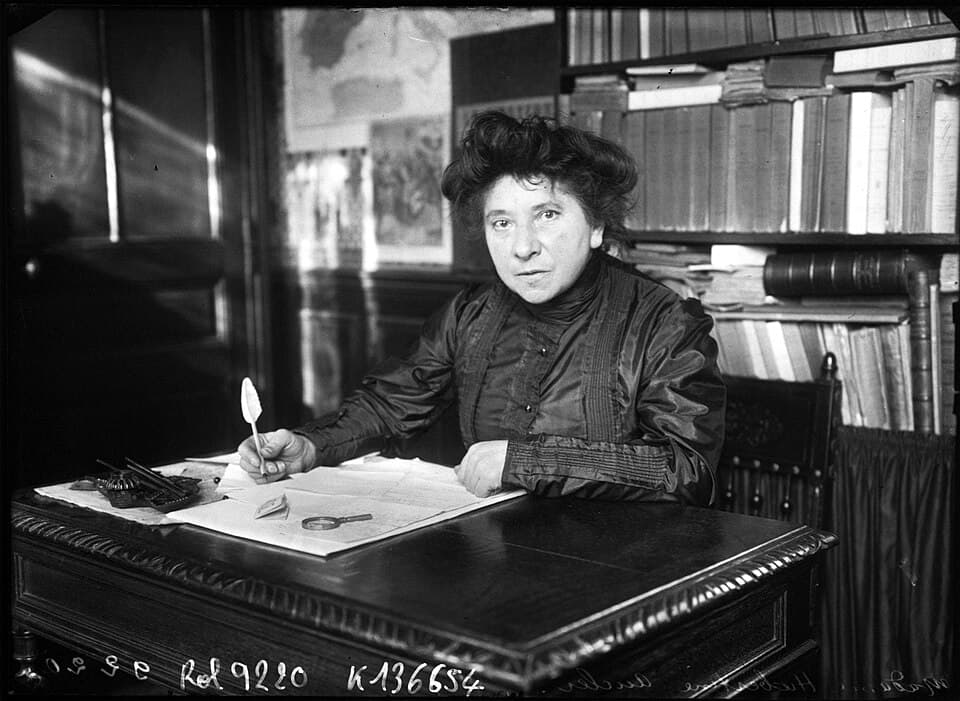
It is in the modest Parisian apartment that also serves as the editorial office of La Citoyenne that Maria Deraismes meets Hubertine Auclert, in this autumn of 1908. On the cluttered table lie fresh proofs, a nearly dry inkwell, and the manuscript of Le vote des femmes. Since Maria, with Léon Richer, founded the first associations demanding civil equality, she has watched her younger colleague with a mixture of admiration and concern at her boldness. She has come today to understand why Hubertine still, and always, chooses spectacle over patience.
—Hubertine, all Paris is talking about that ballot box you overturned last May. You, whom I know as measured in our meetings, why this spectacular act?
My dear Maria, you have seen me plead, petition, write for thirty years — and where are we? On May 3rd last, I entered that polling station and overturned the ballot box because polite words slide off those gentlemen without touching them. A gesture that the press could not ignore was needed. You see, a petition sleeps in a drawer; an overturned ballot box makes the front page the next day. You, who prefer to convince through reason, may judge me imprudent. But I believe that injustice must first be made visible before we can hope to correct it. The scandal is not in my gesture: it is in the law that compels me to it.
A petition sleeps in a drawer; an overturned ballot box makes the front page the next day.
—It is also said that you refuse to pay taxes, and that long ago you sabotaged your census form. Isn't that putting yourself outside the law?
Outside the law? The law put me outside the city long before! Since I am not a citizen, why should I contribute to the finances of a state that denies me any voice in how my money is spent? Our ancestors made a revolution with the cry “no taxation without representation” — I am merely turning their principle against them. And during the 1880 census, I refused to be counted: if women do not exist to vote, let them not exist either to inflate the nation's numbers. It is disobedience, yes, but thoughtful and non-violent. I force the Republic to look at the absurdity it has built.
—Let us talk about your newspaper. In 1881 you launched La Citoyenne and carried it alone for ten years. Where did that title come from, so audacious for a women's paper?
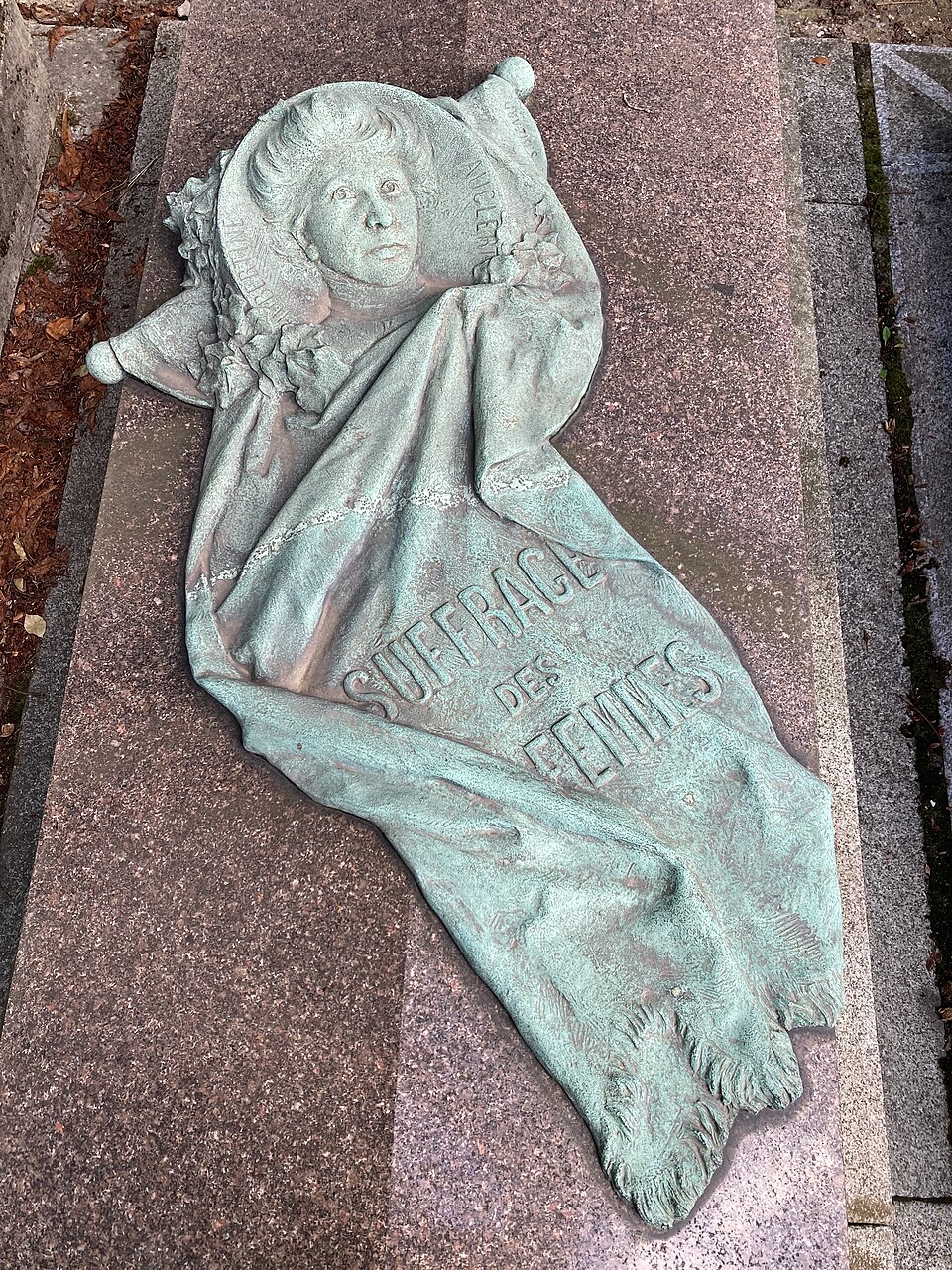
That word, Maria, I chose like planting a flag. They call us “ladies,” “wives,” “mothers” — never citizens, for that title implies rights. By putting it at the head of my newspaper every week, I affirmed that we deserved this status that the law steals from us. From the first issue I wrote that to vote is to exist politically, and that without the ballot a woman can weigh neither on the law that governs her nor on the tax she pays. I wrote almost everything: the editorials, the replies to mockers, the news of feminists elsewhere. My pen was my daily weapon. As long as these gentlemen deny us the ballot box, we still have the inkwell.
As long as these gentlemen deny us the ballot box, we still have the inkwell.
—I have often seen you at your desk from dawn, overwhelmed with mail. Did this life of solitary labor never weigh on you?
It did weigh on me, I will not deny it before you who know this burden. My mornings began with a pile of letters: parliamentarians to follow up with, provincial activists to encourage, editors to contradict. Then came the articles, the petitions, the evening speeches. I reinvested almost everything I owned into that journal, living simply, without concern for fine dining or attire. There were weeks when I wondered for whom I was crying in the wilderness. But every letter from an unknown woman who wrote “I too want to vote” restored my strength. One does not run a newspaper for ten years out of ambition — one does it out of necessity, because silence would be worse than exhaustion.
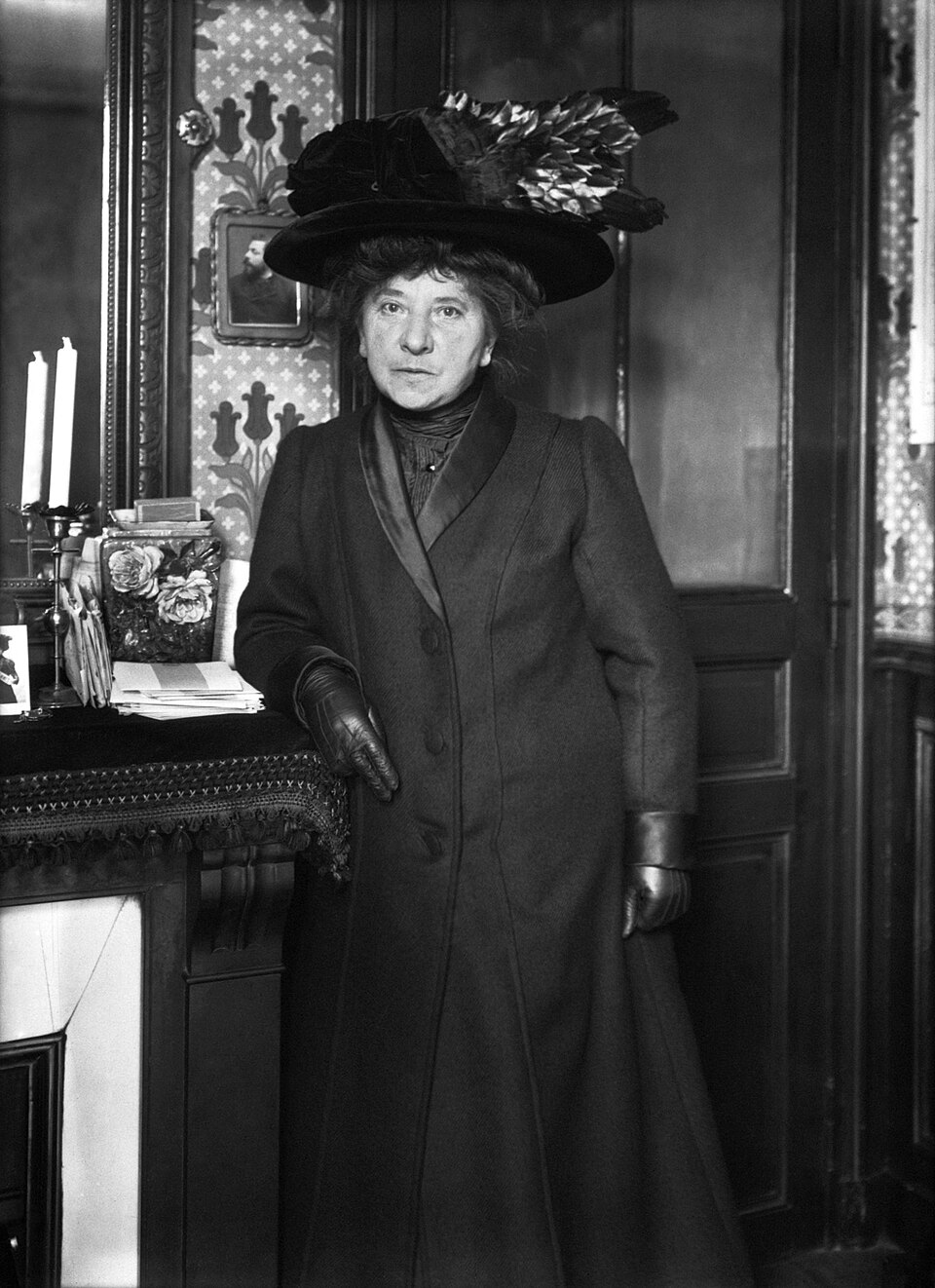
—Do you remember, in 1878, at that first International Congress: you were demanding suffrage, and so many of us found you too hasty. Do you regret that solitude back then?
I remember very well, Maria — many of you wanted civil equality first, the vote “later.” But that “later,” you see, is still going on. I submitted my first petition to the Chamber as early as 1876, with my society Le Droit des femmes, and I was the first to bring this demand before Parliament, when so many friends deemed it scandalous. No, I do not regret that solitude: someone had to open the breach. Without the right to vote, all your civil reforms remain revocable at the whim of elected officials. It is through the ballot that woman will cease to be a perpetual minor. Divorce restored, education — good! But nothing holds if we do not have our hand on the law itself.
Without the right to vote, all civil reforms remain revocable at the whim of elected officials.
—Your opponents repeat that women's suffrage is a chimera that no sensible nation would adopt. What do you answer them, you who confront them tirelessly?
I answer them with facts, for facts are stubborn. New Zealand granted women the vote in 1893; Finland did so in 1906. The sky did not fall on their heads, families did not perish! When a deputy tells me that woman is not made for politics, I ask him why these nations, younger than ours, have surpassed us on the path to democracy. France calls itself the homeland of human rights — what a shame that it excludes half the nation from its representation! In my essay Le vote des femmes, I refuted their objections one by one. All that remains for them is prejudice, and prejudice has never been an argument.
—We saw little of you between 1888 and 1892: you had left for Algiers. What did you go to seek, or flee, on that other shore of the Mediterranean?
I followed Antonin Lévrier, my companion, who was posted there — it was a matter of the heart as much as an exile from the struggle. But believe me, Maria, one never ceases to be what one is. In Algiers, I discovered a condition that moved me deeply: that of Arab women, doubly crushed. Crushed as women by the men of their own people, and crushed as colonized by France, which claims to be civilizing. I saw young girls married off, wives reduced to a servitude that our laws, harsh as they are, no longer know. I could not remain silent. Those four years taught me that the oppression of women wears a face everywhere, and that no border should limit our indignation.
The oppression of women wears a face everywhere, and no border should limit our indignation.
—From that stay you produced a book in 1900. Were you not afraid of being accused of judging the customs of a people you had only recently come to know?
I was accused of it, indeed, and I hear that. But Les femmes arabes en Algérie is not the book of a tourist: it is four years of observation, visits, conversations as far as the language barrier allowed. I did not seek to condemn a people; I sought to denounce an injustice that our Republic covers in the name of colonization. For here is the height of it: we claim to bring civilization, and we leave these women in complete abandonment, without schools, without recourse. France cannot claim progress for itself and deny it to those it administers. My feminism does not stop at the gates of Europe — it would be a small thing if it did.
—One last thing, between us: when you break a ballot box or refuse taxes, do you think about what the coming generation will say of you?
I think above all of those who live today, Maria, and who die without ever having slipped a ballot into a box. What will be thought of me matters little; what matters is that the breach remains open for the next woman. I made my apartment a headquarters, my pen a weapon, my very body a banner when needed before that polling station. If anything is to be remembered, let it be the principle, not the person: a Republic that excludes half of its children is not a complete Republic. The rest — the ballot box, the tax, the scandal — is only the noise needed so that they finally deign to hear us.
A Republic that excludes half of its children is not a complete Republic.
Read further
This imaginary interview was generated by artificial intelligence from sources documented in Hubertine Auclert's profile. It dramatises what the figure might have said based on what we know about them, but does not constitute attested historical testimony. For primary sources and factual documentation, refer to the full profile.