Imaginary dialogue between Martin Luther King and Joséphine Baker
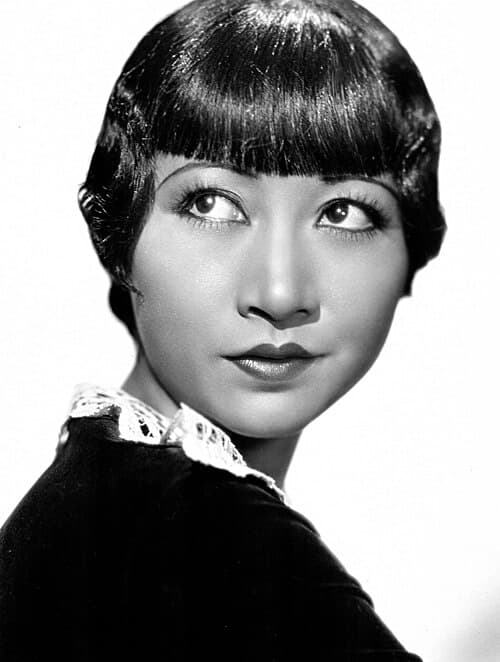
by Charactorium · Joséphine Baker (1906 — 1975) · Performing Arts · Society · 6 min read
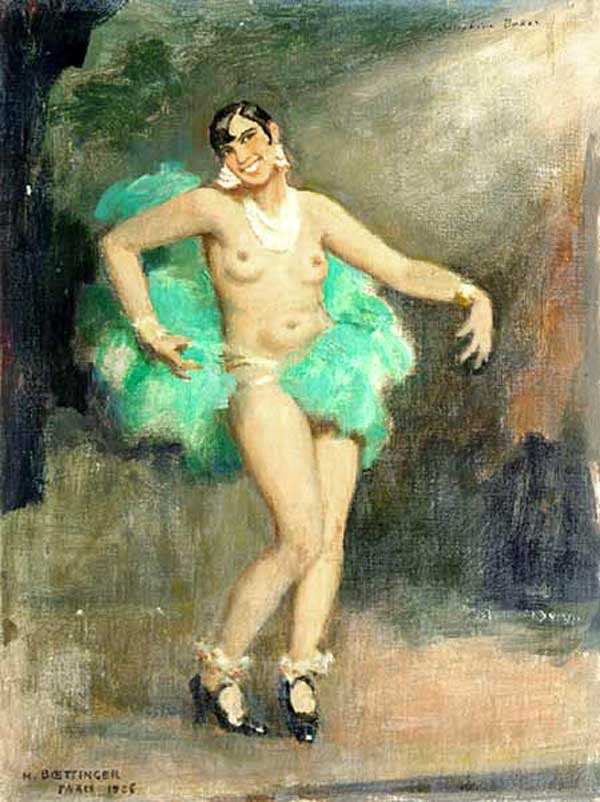
Paris, October 1966. In the sitting room of Joséphine Baker's apartment in the sixteenth arrondissement, afternoon light falls across a wall of framed photographs — twelve children, a Légion d'honneur ribbon, a Folies Bergère poster faded to amber. Martin Luther King has come to France on a brief lecture tour, and before his address at the Sorbonne he has stopped here, in the city where his hostess first learned what full freedom felt like. They shared a podium in Washington three Augusts ago; today, with coffee between them and no crowd listening, he sits across from the woman who told 250,000 people she had already arrived where he was still asking America to go.
—Josephine, you were eleven when Saint-Louis burned in 1917. What did those nights take from you — and what did they forge?
They took what a child should never lose, Martin — the belief that a street is safe, that your neighbour will not turn. I watched houses burn from the window and understood something my mother had tried to hide from me: that no amount of quiet would protect us, that patience was not armour. What those nights forged, though, was a cold clarity. I knew from that summer that I had to go somewhere the colour of my skin would not decide the colour of my future. The fear never entirely left me. But neither did that clarity. It followed me all the way across the Atlantic, and I would not be sitting in this room without it.
—You arrived in Paris in 1925 with almost nothing. What did this city hand you that first night that America never could?
I arrived with forty francs in my pocket. But I had something money cannot buy: I had the will to succeed and to prove that the colour of my skin was not an obstacle. And Paris gave me the proof immediately. That first night at the Théâtre des Champs-Élysées, a woman in the audience reached up and touched my arm as I came offstage — not the way you touch a curiosity, but the way you touch someone you have just recognised. She saw a person. After twenty years in America, that was not a small thing. It was the whole thing. I breathed differently in Paris. I still do.
I arrived with forty francs in my pocket. But I had something money cannot buy.
—The banana skirt at the Folies Bergère made you a world spectacle. Did you choose that image, or did it claim you?
I chose it — I want to be clear about that. Someone else may have designed the costume, but I understood what wearing it could do, and I pushed it further than anyone had imagined. Paris wanted something it called primitive, something wild, so I gave it wild with my spine perfectly straight, my timing exact, a smile that kept me entirely in control of that stage. That is not submission. That is a very old negotiation, and I played it better than anyone who had tried before me. The question was never whether they were watching. The question was who decided what they actually saw — and that was always me.
—Chiquita in the Paris streets, Chanel in the afternoons — where did the performance end and Josephine begin?
You are asking the question everyone has wanted to ask and never quite dared, Martin — I appreciate the directness. The honest answer is that I stopped trying to separate them, and I think it was the right decision. Chiquita on a leash in the streets of Paris was me, genuinely, delighting in the looks on people's faces, the absurdity of it, the refusal to be ordinary. The Chanel suit at four in the afternoon was also me. What I refused to be was the version of me that someone else had scripted — the compliant exotic, the grateful immigrant. Whether it was the bananas or the pearls, I was the one deciding which costume made the argument I needed to make that day.
—In 1940, you turned your concert tours into cover for French intelligence. What made you say yes without hesitating?
I did not hesitate for a single hour. France had given me a life — citizenship, a stage, the right to be a complete person. When she needed me to give something back, the accounting was not complicated. Captain Abtey explained what they required: someone who could travel freely, whose luggage would attract no suspicion, whose face every border official would recognise as belonging to a performer, not a spy. I was exactly what they needed, and I knew it. There was also something simpler: I had grown up watching what a country does to people it decides are inferior. I had lived that logic in Saint-Louis. I was not going to sit in a dressing room and wait to see how this version of it ended.
—Hidden messages in your sheet music, borders crossed on a performer's passport — how did you keep the fear from showing?
The stage training helped, strangely. When you spend thirty years learning to control your face, your breath, your hands — to appear easy when nothing is easy — that discipline does not vanish because the stakes have changed. I crossed into neutral territory with intelligence written in invisible ink on my sheet music and notes on my skin, and I smiled at every border official the way I had always smiled at a difficult audience. The difference was that a difficult audience could only whistle you offstage. But I was also simply angry enough that the fear had less room to breathe. In Marrakech, in Lisbon, I kept telling myself: if this is the last tour, let it count for something real.
If this is the last tour, let it count for something real.
—You wore your French uniform that August 28th, standing beside us on the Mall. What were those medals saying to that crowd?
They were saying: this is not a theory. I was standing there as an officer in the French Air Force, decorated for work I did when France herself was on her knees — and she gave me that rank and those medals without reference to the colour of my skin. I wanted every person on that Mall to see what a country can do, what one already has done. Not because France is perfect — she is not — but because she proved it was possible to organise a society differently. You bring magnificent words, Martin, and the world needs them. I brought a uniform, because some arguments need to be worn, not only spoken.
—You said that morning: you had the dream, and I had the reality. What did you mean me to understand, standing right there beside you?
I meant no disrespect to your dream — you know that, and I know you know it. But I wanted you to hear what I had been living. I have not been waiting for legislation. I crossed the Atlantic, learnt the language, took the uniform, earned the medals. When I return to America, I suffer — you know exactly what I mean. But when I come back to France, I breathe. I am free. I am a full human being. That is not imagination. That is not a bill pending in committee. That is Tuesday morning. And I thought the people who most needed to know freedom was already possible were standing right there on the Mall, looking at a woman in a French uniform who had been living it for forty years.
When I come back to France, I breathe. I am free. I am a full human being.
—Twelve children, twelve nations, one château in the Périgord — what does the Milandes prove that words and laws alone cannot?
It proves that children can grow up together without the hatred having to be taught. My twelve — from Japan, from Colombia, from Finland, from Morocco, from France and beyond — they argue about who ate the last of the bread at breakfast. They do not argue about race, because no one has handed them that argument. The Tribu Arc-en-ciel was not a publicity exercise, whatever the newspapers said. It was an experiment, and the experiment is working. When you walk into the château and you see them at the table together, you understand something that no law has ever communicated on its own: that the hatreds people treat as natural are in fact learned — which means they can also be unlearned. You can legislate behaviour. You cannot legislate the table.
—The debts are real, Josephine. If the Milandes were lost tomorrow — would the argument have failed, or just the building?
Just the building. The argument is already in the children — twelve people growing up knowing that the family you choose is as real as the family you are born into, and that a nationality is an address, not a destiny. I will not pretend the finances do not frighten me; they do, more than I admit to anyone. But I am not trying to preserve a château, Martin. I am trying to demonstrate something, and a demonstration does not disappear when the stage is struck. Whatever happens to those walls, twelve lives are already differently shaped. That cannot be repossessed. Though I confess — between you and me — I would very much prefer to keep the château.

This imaginary interview was generated by artificial intelligence from sources documented in Joséphine Baker's profile. It dramatises what the figure might have said based on what we know about them, but does not constitute attested historical testimony. For primary sources and factual documentation, refer to the full profile.