Kids interview Joséphine Baker
by Charactorium · Joséphine Baker (1906 — 1975) · Performing Arts · Society · 5 min read
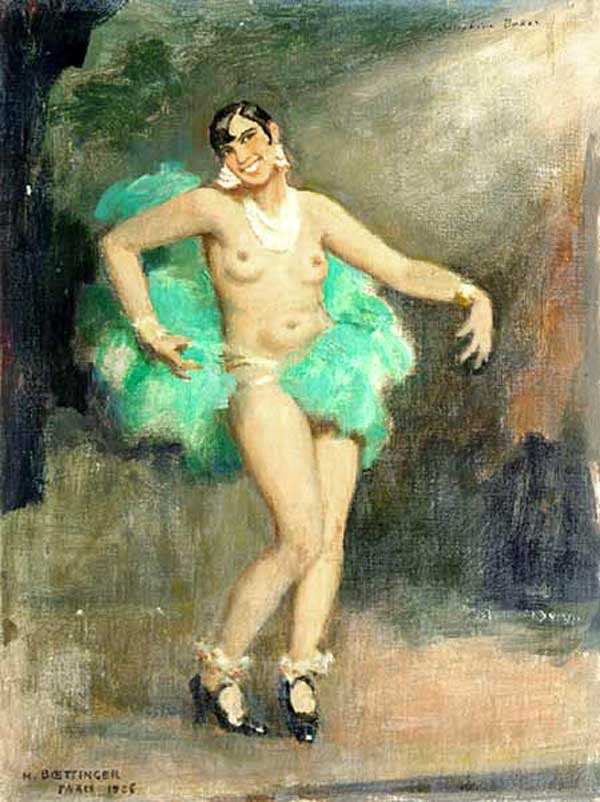
Two twelve-year-olds are sitting on the edge of their chairs, their questions scribbled on a crumpled piece of paper. Their class has come to learn about the woman before them — a dancer, a spy, a mother of twelve, a soldier. Joséphine Baker leans forward, rests her chin on her hands, and smiles: she has always loved children.
—What was life like when you were little in Saint-Louis?
Oh, Saint-Louis, Missouri — it was not an easy place, my child. We were very poor. My mother washed other people's clothes to earn a little money. And when I was eleven, in 1917, terrible riots broke out in our city. I saw the houses of Black families burning in the street. I saw people running in fear. Imagine: you are a child, and the street you walk every morning suddenly becomes a place of violence. That fear never quite left me. But it also gave me something. It gave me a hunger — a hunger to find somewhere in the world where no one could tell me I was worth less because of the colour of my skin.
—Why did you leave America and come to France? Were you sad?
Sad? A little. But mostly I was hungry for air — if you can understand that. I arrived in Paris in 1925 with barely forty francs in my pocket. Almost nothing. But something remarkable happened: people looked at me. Not to push me aside, not to tell me which door to use or which seat to take. They looked at me because they wanted to see me dance. That had never happened before. Back home in America, there were separate doors for Black people, separate seats, separate lives. In France, I felt I could simply be. That is why, twelve years later, I became French. I chose France the way you choose a home — because it let me breathe.
I chose France the way you choose a home — because it let me breathe.
—What did it feel like to dance at the Folies Bergère for the first time?
Imagine walking into a theatre bigger than anything you have ever seen — chandeliers blazing, a thousand people in their finest clothes, a full orchestra tuning up below you. That was the Folies Bergère in 1926. The moment the music started, every nerve in my body came alive. I was not nervous: I was on fire. I danced the way I had danced as a little girl in the streets of Saint-Louis, but now there were feathers, sequins, and oh — those lights! The crowd gasped, then laughed, then cheered. It was the loudest silence breaking I had ever heard. I thought: this is why I crossed the ocean.
—Did the banana costume shock people? Why did you choose it?
Some people were absolutely scandalised — yes! The banana belt was just a string of small fabric bananas around my waist, nothing more. But it caused an enormous fuss. Some said it was outrageous. Some said it was wild. I will tell you a secret: I chose it on purpose. People expected to see something strange and exotic? Fine. I would give them something so extraordinary, so funny, so completely mine, that they could not look away — and then they would have to ask: who is this woman, really? Art can do that. It can make you laugh and make you think at the very same time. That was always my game.
—How did you hide secret messages inside your music sheets during the war?
During the Second World War, I worked for the French secret services — what we called the Deuxième Bureau, the military intelligence branch. I was travelling to Morocco, Spain, Portugal, giving concerts. And inside my sheet music, I wrote military information in invisible ink. The notes were real music; but between the lines, there were secrets about enemy troop movements. No border guard would search an artist's scores too carefully. My fame was my best disguise. Captain Abtey, the officer who worked with me, wrote afterwards that I had transmitted information of the highest importance — at the risk of my own life. I was just a singer with a suitcase full of songs. Or so they thought.
My fame was my best disguise.
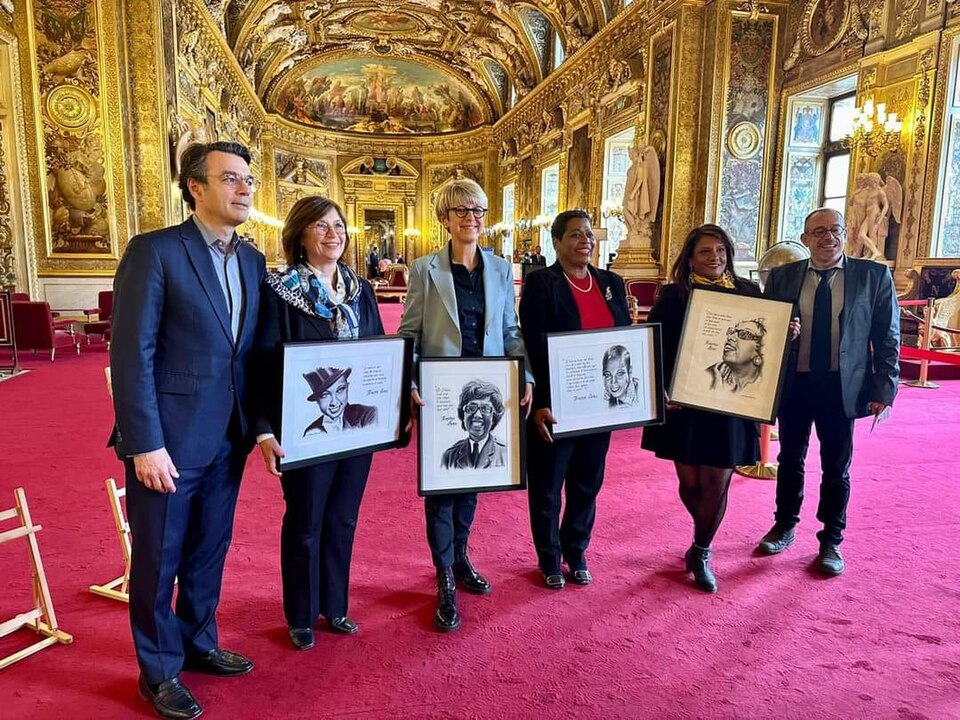
—Were you scared someone would discover you were a spy?
Of course I was scared — I would be lying if I said otherwise. Every time I crossed a border, every time a soldier looked through my bags, my heart beat just a little faster. But I thought of something that steadied me: France had taken me in when my own country had not. I owed her something real — not just a song. And beyond that, I thought of the people hiding in cellars, the children going hungry, the families being torn apart. My fear? It was small compared to theirs. So I kept smiling at the border guards, kept playing my music, kept carrying my secrets safely across. Fear is real. But it does not have to be the loudest thing in the room.
—Why did you adopt twelve children from different countries and religions?
Because I wanted to prove something — not with words, but with life itself. People said that different races and religions could never truly live together in peace. I said: watch me. I adopted twelve children — from Korea, Colombia, Finland, Morocco, France, Japan, and elsewhere. I called them my Rainbow Tribe. We lived together at the Château des Milandes, my castle in the Dordogne. They ate at the same table, played in the same garden, and taught each other their languages. That family was my real masterpiece. Not the banana dance, not the films — those children, living proof that brotherhood is not just a dream.
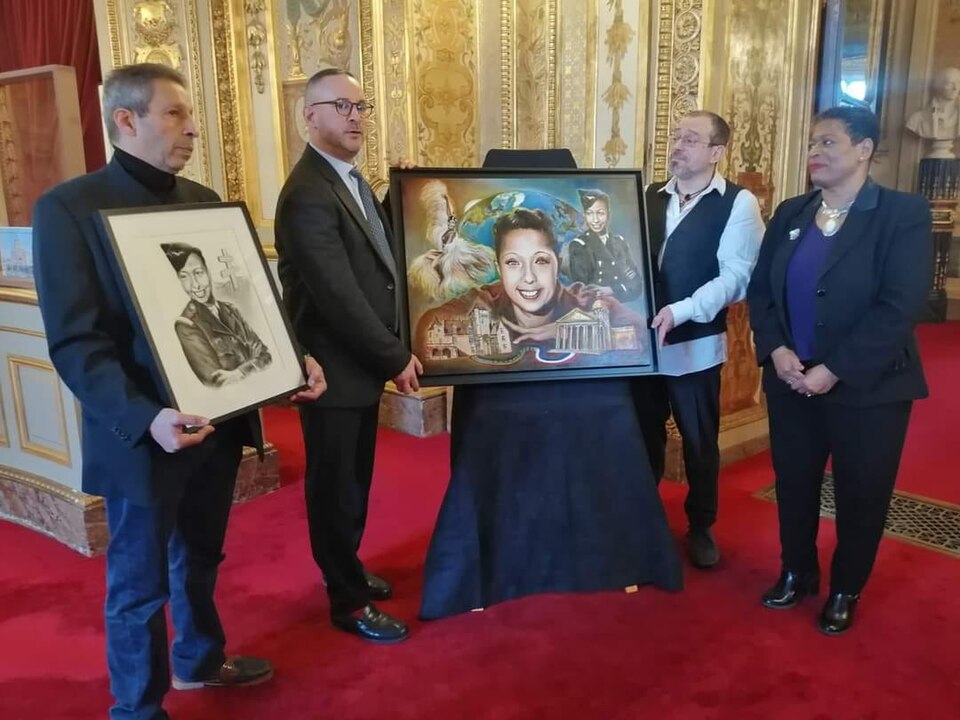
—What was a morning like at the castle with all your children?
Loud! Beautiful and wonderfully loud. The youngest ones woke first, crying or laughing — often both at once. We had animals everywhere: cats, parrots, and for a while Chiquita, my pet cheetah, padding through the hallways. Breakfast was eggs, fresh fruit, strong coffee for me. I helped the little ones dress, listened to their squabbles, checked their lessons. Then, if I had no rehearsal, we would walk the grounds together. The Dordogne countryside in the morning is extraordinary — green hills rolling to the horizon, birdsong everywhere, mist sitting on the river. I wanted those children to grow up knowing that the world was wide and generous, not narrow and afraid.
—Why did you wear your French army uniform at the big march in Washington?
On 28 August 1963, I stood in Washington alongside Martin Luther King — the only woman to speak officially that day, before a crowd of 250,000 people. I wore my uniform of the French air force, my decorations pinned on my chest. Why? Because I wanted every single person in that crowd to understand: I was not just a singer. I was a decorated officer. I had risked my life for freedom. And yet, when I returned to America, I was still treated as less than a full human being. My uniform was my argument. It said, quietly but firmly: look at what I have already given. Now ask yourself what you owe.
—What do you most want children like us to remember about you?
That freedom is not a gift someone hands you — you have to go and find it, sometimes very far from home. I left Saint-Louis as a teenager with almost nothing. I crossed an ocean. I hid secrets in music sheets. I built a family out of twelve strangers from every corner of the earth. I stood before a quarter of a million people and told the truth. None of that was easy. But I never stopped believing that the world could be different from what it was. You are young — the world is still being shaped. You still have time to make it kinder than the one you found. That is all I ask of you.
Freedom is not a gift someone hands you — you have to go and find it.
This imaginary interview was generated by artificial intelligence from sources documented in Joséphine Baker's profile. It dramatises what the figure might have said based on what we know about them, but does not constitute attested historical testimony. For primary sources and factual documentation, refer to the full profile.