Imaginary interview with Karan Johar
by Charactorium · Karan Johar (1972 — ?) · Performing Arts · Culture · Visual Arts · 5 min read
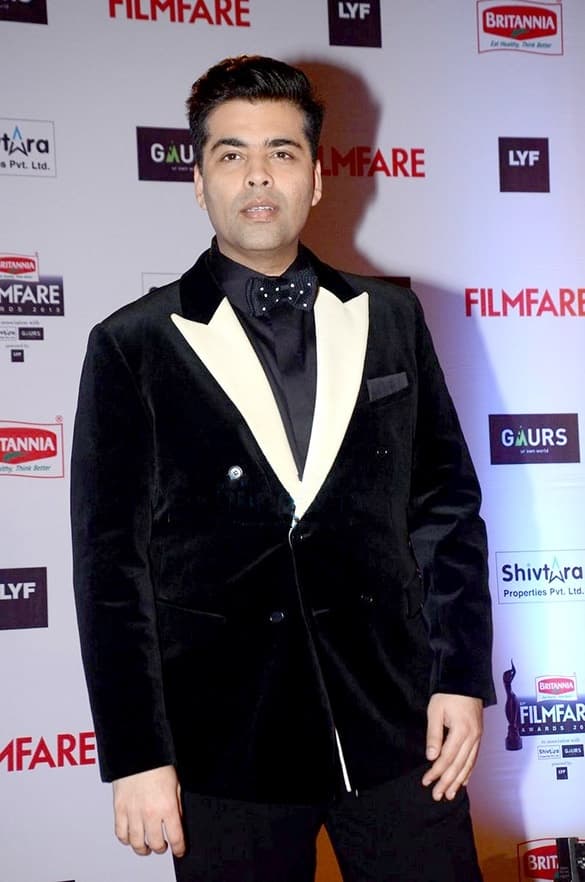
A monsoon afternoon in Mumbai, in the plush offices of Dharma Productions, between two editing screenings. Karan Johar receives guests in an impeccable suit, an annotated script on the coffee table. The conversation quickly slides from box-office to memories of a child who grew up in the smell of celluloid.
—Do you remember the feeling you had on the set of your first film?
I was twenty-six years old and scared to death, which I hid behind a lot of chatter. In 1998, when I clapped the slate on the first take of Kuch Kuch Hota Hai, with Shah Rukh Khan and Kajol in front of me, I told myself that a kid has no right to dream so big. And yet I was dreaming exactly that: a romance that would make a theater in Bandra weep just as much as one in Southall. The film swept eight Filmfare Awards that year, but what moved me wasn't the trophies—it was seeing strangers hum my soundtrack in the street. I had put my dream into images, and the dream stood on its own.
A kid has no right to dream so big—and yet I was dreaming exactly that.
—What about that first film forever set your way of filming?
Everything, I think. I understood on Kuch Kuch Hota Hai that I am not a filmmaker of restraint. My pleasure is the overflowing wedding, the embroidered sherwani catching the light, the song arriving exactly when words are no longer enough. Some call it sentimentalism; I call it the emotional truth of film masala, that blend of spices where you laugh and cry in the same reel. I still work on my scripts the way I did back then, page by page, writing in the margin the tone, the color, the melody I want to hear. Luxury on screen is never gratuitous with me: it's a way of saying that feelings deserve to be sumptuous.
I am not a filmmaker of restraint.
—How would you describe the legacy left by your father, Yash Johar?
My father founded Dharma Productions in 1976, the year I was barely walking. At home, cinema wasn't a job—it was the air we breathed. He would come home in the evening and talk about his films, his actors, his battles with distributors, the way others talk about the rain. When he died in 2004, I inherited a studio, but above all a standard. I was afraid of not measuring up, so I decided that every film would bear his mark: a taste for grand popular storytelling, the conviction that generous cinema is not easy cinema. Running Dharma is continuing a conversation with him that death did not interrupt.
At home, cinema wasn't a job—it was the air we breathed.
—What does sitting at the head of the family house mean to you today?
A responsibility that keeps me awake. After 2004, I could have just managed a catalog; I preferred to turn Dharma Productions into a dream factory on a grand scale, producing dozens of films and betting on unknown faces. I spend my afternoons in endless meetings—writers, composers, young actors who blush as they walk in. In my autobiography, I wrote that cinema was our family religion, and that's exactly what I feel every morning when I walk through those doors. The studio is not a monument to my father; it's a living, noisy place that must keep discovering, daring, sometimes making mistakes, the way he knew how to.
—How do you explain that your films have found such resonance outside India?
In 1991, India opened its economy to the world, and without knowing it, it also opened our screens. The Indian diaspora—in London, New York, Johannesburg—was waiting for stories that spoke of home without making them blush at sentimentality. Kabhi Khushi Kabhie Gham, in 2001, was that bridge: a family saga that children born in England watched sitting between their parents and grandparents. Seeing a cinema in Southall sold out for a Hindi film was to measure something immense. We weren't just exporting songs and weddings; we were giving millions of people far away the right to be moved in their own language.
We were giving millions of people far away the right to be moved in their own language.
—Why did you go all the way to New York to tell some of your stories?
Because the lives of so many Indians now unfold elsewhere. With My Name is Khan, in 2010, I wanted to place my camera in New York, on the sidewalks where a man with a Muslim name becomes suspect simply for being called Khan, after 9/11. The West, in my films, is never just a postcard backdrop: it's the place where India bumps into its own modernity, where you learn who you are by being seen as a stranger. I grew up believing that Bollywood could open its arms to the whole world without renouncing its soul. Filming far from Mumbai is my way of keeping that promise.
—What drove you to bring to the screen subjects that mainstream Indian cinema avoided?
Boredom, perhaps, of always telling love stories without shadows. In 2006, with Kabhi Alvida Naa Kehna, I was the first to speak frankly about infidelity and divorce in a big mainstream film, and India choked a little. I was accused of sullying marriage; I simply thought I was showing adults as they are—hesitant, guilty, human. The film caused a scandal at home and a triumph abroad, in the United Kingdom, even in Pakistan. That day I learned that popular cinema is not condemned to be cowardly cinema: it can entertain millions of people and, along the way, force them to look at what they preferred not to see.
Popular cinema is not condemned to be cowardly cinema.
—Would you say that cinema has a responsibility beyond entertainment?
Absolutely, and that conviction has strengthened with age. My Name is Khan was not just the story of a man with Asperger's syndrome; it was a stance against the idea that a name, a faith, is enough to make you an enemy. I deeply believe that our cinema must reflect the diversity and soul of India while opening up to the world. Entertain, yes, always—that is our job, our honor even. But if between two songs a spectator walks out with one less prejudice, then the film has done more than fill theaters. Grand spectacle and conscience are not enemies; in fact, it's their marriage that interests me.
Grand spectacle and conscience are not enemies.
—How did the idea of sitting down with stars for your show come about?
In 2004, no one really got Bollywood actors to talk beyond canned lines. I wanted a couch, two cups, and conversations where we would laugh at gossip instead of fearing it. Koffee With Karan became, to my great surprise, a real institution. I've known these people forever—many grew up like me in the shadow of the Film City studios—so I could tease them where a journalist wouldn't dare. The show changed the way our stars speak to the public: less statues, more human beings. I've been accused of frivolity; I own it, because behind the lightness there is real tenderness for this crazy profession.
—What brings you the most joy: directing a film or revealing a new face?
Cruel question. Directing is my breath; but discovering talent is perhaps my greatest pride. In 2012, with Student of the Year, I launched an entire generation of actors who had never set foot in front of a camera. My afternoons at Dharma are filled with these auditions where I watch for a spark—a way of lowering the eyes, a poorly controlled laugh—that betrays the future star. My father did the same, in his quieter way. From my director's chair, I feel I'm holding a chain: someone trusted me when I was young, and I pass that trust on to others. Bollywood only survives if each generation adopts the next.
I watch for a spark that betrays the future star.
This imaginary interview was generated by artificial intelligence from sources documented in Karan Johar's profile. It dramatises what the figure might have said based on what we know about them, but does not constitute attested historical testimony. For primary sources and factual documentation, refer to the full profile.