Kids interview Karan Johar
by Charactorium · Karan Johar (1972 — ?) · Performing Arts · Culture · Visual Arts · 5 min read
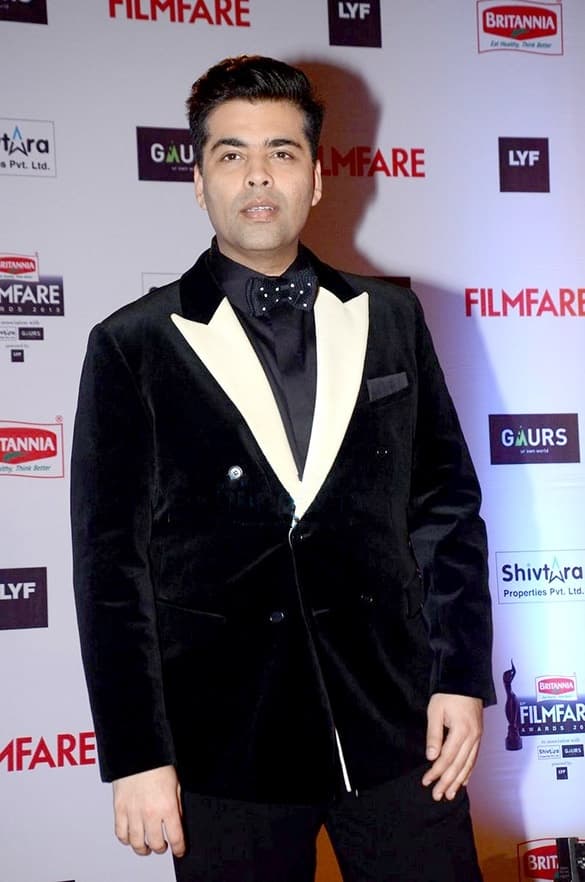
Two twelve-year-old students visit a film studio in Mumbai. On a still-lit set, a director in a sharp suit greets them with a big smile. He sits down near them and invites them to ask all their questions.
—How old were you when you made your very first film?
You know, my child, I was only 26. Imagine: you've barely finished your studies, and you're entrusted with a camera and huge stars like Shah Rukh Khan and Kajol. My heart was beating very fast. That film was Kuch Kuch Hota Hai, in 1998. A story of love and friendship, with songs in your head. I said at the time that it was my dream put into images. And the dream worked! It won eight Filmfare Awards, the top prizes in Indian cinema. The first film is like learning to swim by jumping straight into the deep end.
My first film was my dream put into images.
—Were you scared to direct such famous actors?
A little, yes! Imagine having to explain to your favorite hero how to play a scene. Your hands shake. But I prepared everything very carefully. My script was covered in little handwritten notes: here, smile; there, the music should be soft; there, we cry. Everything was thought out before the camera even rolled. And then, with Kajol and Shah Rukh Khan, trust builds. They felt that I loved this story with all my heart. When you truly love what you do, fear becomes smaller than joy. That's what I learned that day.
When you love what you do, joy becomes bigger than fear.
—Did your dad inspire you to make films?
Absolutely, my child. My father, Yash Johar, was a film producer. At home, we talked about nothing else: actors, stories, the battles to finish a shoot. I once said that cinema was our family religion. In the evening, my father would come home and recount his day like others recount a match. He had founded a company, Dharma Productions, in 1976, the year I turned four. I grew up in it like a little fish grows in water. I never had to choose a career: it was already there, all around me, in every dinner conversation.
For us, cinema was our family religion.
—What was it like taking over your dad's company?
It was 2004, and it was a very sad time: my father had just passed away. Suddenly, the whole Dharma Productions company rested on my shoulders. Imagine being entrusted with the house a loved one built with their hands. You're afraid of breaking it. But I decided to make it a tribute. Every film I produced was a way of telling my father: “Look, I'm continuing.” And little by little, this studio became one of the most powerful in all of Bollywood. Taking over someone's legacy isn't copying it. It's making it grow in your own way.
A legacy isn't copied: it's made to grow.
—Why do your films succeed in countries other than India?
Good question! You know, many Indians live far from India: in England, the United States, South Africa. This is called the diaspora, meaning a single family scattered around the world. These people miss their country. So when my film Kabhi Khushi Kabhie Gham came out in 2001, with its big celebrations and reunited families, they cried with joy. It was a piece of home that reached all the way to London. A film is sometimes like a letter sent to those who live far away. It tells them: “You haven't forgotten where you come from, and neither have we.”
A film can be a letter sent to those who live far away.
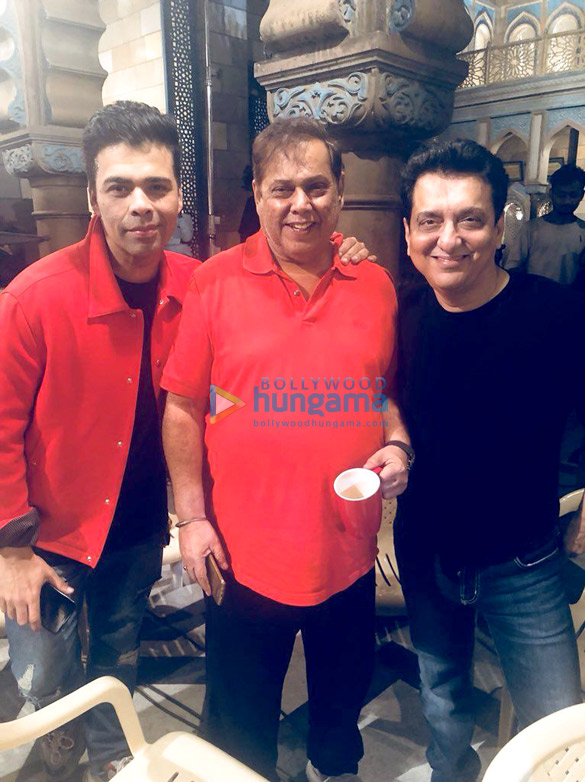
—Why do you often film in London and not just in India?
Because the world has changed, my child. In 1991, India opened its doors to the rest of the planet for trade and exchange. Suddenly, our stories could travel further. So I took my cameras to London, a city I love. In my films, it represents freedom, modernity, and also all those Indians building their lives elsewhere. Filming there was a way to show that my characters belong to two worlds at once: the India of their grandparents, and the big city where they work. Growing up is sometimes learning to love two homes at the same time.
You can belong to two homes at the same time.
—Were you scared when you talked about subjects that upset people?
Yes, often. In 2006, I made Kabhi Alvida Naa Kehna, a film about marriages breaking apart. In India at the time, this was almost never shown in mainstream cinema. Some people were very angry. Imagine saying out loud a true thing that no one dares to say: it makes noise. But I thought cinema should also show real life, not just pretty stories. People sometimes suffer in their relationships, and pretending it doesn't exist is lying. I was scared, yes. But I preferred truth to silence.
I preferred to tell the truth rather than remain silent.
—What's the film you're most proud of?
I think it's My Name is Khan, in 2010. It tells the story of a Muslim man living in the United States, in New York, after the 2001 attacks. Many people looked at him suspiciously just because of his religion. My hero also has a particularity: Asperger's syndrome, which makes relationships with others more difficult. Through him, I wanted to say one simple thing: a human being should not be judged by their label. It was my bravest film. Sometimes, a camera can make millions of people think better than a long speech.
A human being should not be judged by their label.
—Is it true that you have stars over for coffee on TV?
Ha! Yes, that's my show Koffee With Karan, launched in 2004. I invite the biggest Bollywood stars, and we chat over coffee, casually. Imagine being able to ask all your questions to your favorite actors, and they answer you laughing: that's a bit like it. Before, stars remained distant, almost untouchable. My show made them closer, more human. People loved discovering their real personalities, their jokes, their secrets. Making films is my job; but making people talk and bringing them closer is also a way of telling stories.
Bringing people closer is also a way of telling stories.
—You do lots of different things, how do you choose?
You're right, I wear many hats! I direct films, I produce them, I host my show, and I even acted in Bombay Velvet in 2015. I'm also known for my very colorful, tailored clothes. How do I choose? I simply follow my curiosity. One day, I'm chatting with a music composer; in the afternoon, I'm looking for a young unknown actor to launch. Staying locked in a single role would bore me. The secret, my child, is to keep the desire to try new things, even when you've succeeded. Curiosity never wrinkles.
Curiosity never wrinkles.
This imaginary interview was generated by artificial intelligence from sources documented in Karan Johar's profile. It dramatises what the figure might have said based on what we know about them, but does not constitute attested historical testimony. For primary sources and factual documentation, refer to the full profile.