Kids interview Koken
by Charactorium · Koken (718 — 770) · Politics · Spirituality · 5 min read
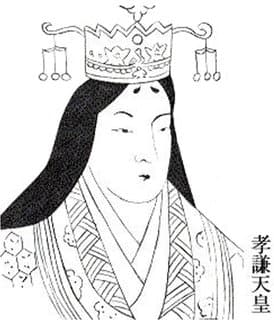
Two twelve-year-old students visit an old temple in Nara with their class. In the incense-scented dimness, an empress in a purple silk robe greets them with a smile. She sits down near them, like a grandmother ready to tell stories.
—What was your childhood like, when you were a little girl at the palace?
You know, my child, I was born Princess Abe, in 718, in the great capital of Nara. My father was Emperor Shōmu, a man with a heart full of prayers. He wanted to offer Japan a Buddha so large that it could be seen from afar. Imagine a bronze statue as tall as fifteen men standing on top of each other! It was called the Daibutsu. I grew up surrounded by chanting monks and artisans casting metal. I learned sacred texts in the morning, court manners in the evening. I was a serious child, a bit solitary. But I already knew one thing: one day I would carry a very heavy burden.
My father wanted a Buddha so large that it could be seen from afar.
—How old were you on the day the Great Buddha's eyes were 'opened'?
I was thirty-four years old, in 752. That day was one of the most beautiful of my life. The ceremony is called kaigen: a monk climbs a scaffold and paints the statue's eyes. It is believed that at that moment, divine life enters the Buddha. Picture the scene! Monks from China, India, Korea, drums, silks of a thousand colors. A long cord ran from the monk's brush, and hundreds of hands held it to participate in the miracle. I wept, I think. It was like seeing my father dream aloud, before the whole country gathered at Tōdai-ji.
You paint the Buddha's eyes, and divine life enters him.
—What was it like to become empress? Were you afraid?
Yes, a little afraid, I admit. In 749, I ascended the throne. I was named Empress Kōken. It was rare, you know: no woman had reigned for a very long time. Some at court whispered that a woman could not govern. So I wore the high crown of sovereigns, the kanmuri, and I received the guardianship of the sacred treasures, like the divine mirror. I was called Tennō, which means 'heavenly sovereign' — for emperors were believed to be descendants of the sun goddess. Faced with all this weight, I decided one thing: I would never reign alone, but with the Buddha by my side.
I would never reign alone, but with the Buddha by my side.
—What did you eat in the morning, and what was a typical day like?
In the morning, I rose before the sun to pray. I burned incense, I recited sutras, those long sacred texts copied by hand on scrolls. Then a simple meal: white rice, vegetables, seaweed, a little fish. We ate little meat, because the Buddha teaches respect for living beings. In the afternoon, I received my ministers. I read their reports, sometimes written on small wooden tablets called mokkan. In the evening, there was court music, gagaku, with flutes and drums. Then a final prayer, and the silence of the night.
I recited sutras before the sun even rose.
—Is it true that you were empress twice? How is that possible?
It is true, and it is a sad story. In 758, tired, I left the throne to a young man, Emperor Junnin. I thought I would rest in a monastery. I was then called Jōkō, a sovereign who had abdicated but kept her authority. But Junnin began to criticize me in front of everyone. That hurt me. Then, in 764, a powerful general, Fujiwara no Nakamaro, rebelled against me. We crushed him. So I retook the throne and sent Junnin away. I became sovereign again, under the name Shōtoku. Few women in the world have reigned twice. It was not a joy, believe me, but a duty.
Reigning twice was not a joy, but a duty.
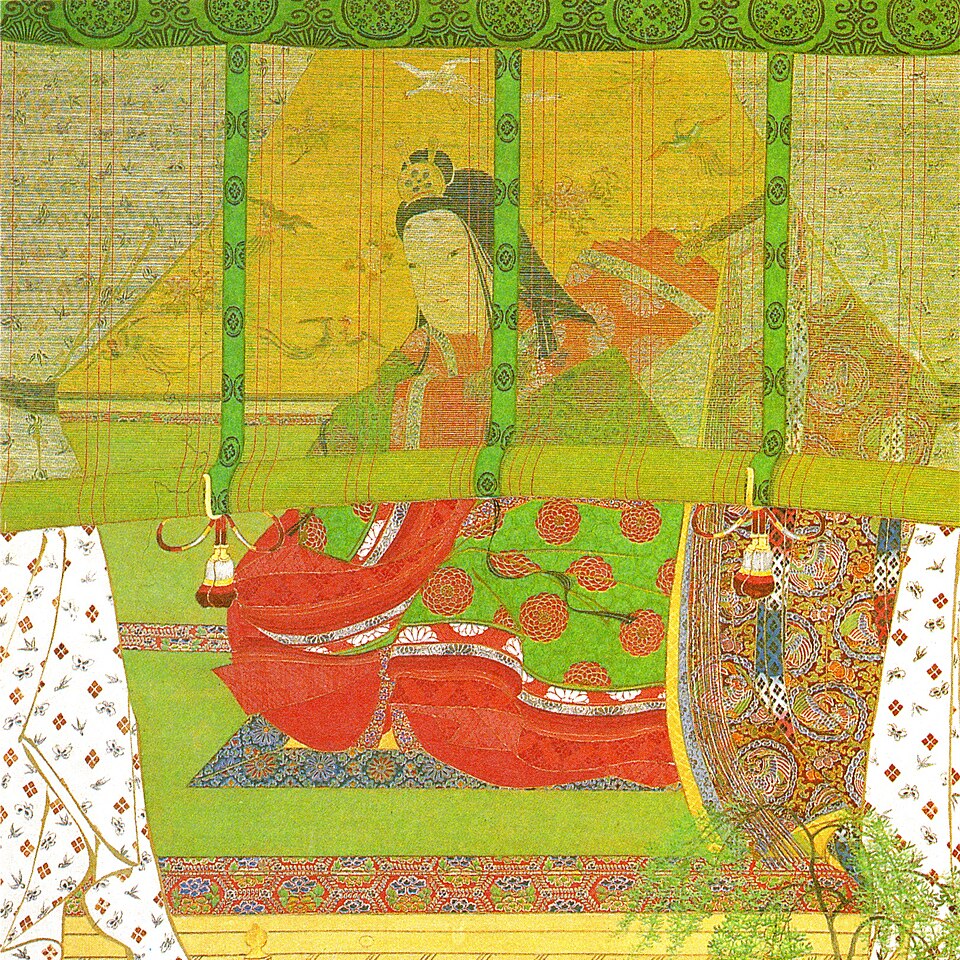
—After winning that war, what did you do to thank the Buddha?
Ah, that was my greatest project! After the victory of 764, I wanted to thank the Buddha in an immense way. I had a million small wooden pagodas made. Yes, a million! Each was only as long as your forearm. Inside, a sacred prayer, a darani, was inserted. It was meant to purify the faults of all living beings. On that text was written that by the grace of the Buddha, we had been victorious. Hundreds of artisans worked on it for years. Imagine entire workshops of people cutting wood, inking paper, folding prayers. It was an ocean of little prayer towers.
A million small pagodas, each holding a prayer in the hollow of the wood.
—How did you make a million prayers by hand? That must have taken too long!
Exactly, my child, they were not all written by hand! To go faster, the prayers were carved onto blocks, then pressed onto paper over and over. That is called printing. Those darani placed in my pagodas, the hyakumantō, are among the very first printed texts the world has known. Imagine: long before other peoples thought of it, artisans in Nara repeated the same gesture, thousands of times. Each prayer was identical, perfect. I did not know then that I was leaving such a treasure. I only wanted to protect my country and thank heaven.
Pressing the same prayer, a thousand times: that is how you print a million times.
—How do you go about ruling a whole country? What rules did you follow?
Good question! I relied on two things. First, the law of men: a great system of rules from China, the ritsuryo, which said how to judge, tax, and govern each province. Second, the law of the Buddha. On my coronation day, I proclaimed that I would govern the realm relying on the Law of the Buddha and the law of men, so that all might live in peace. I had a temple built in each of the sixty-six provinces, the kokubunji. That way, everywhere in the country, someone prayed for the protection of the people. For me, ruling was not just about commanding. It was about watching over, like a mother watches at night.
Governing is not commanding: it is watching over like a mother watches at night.
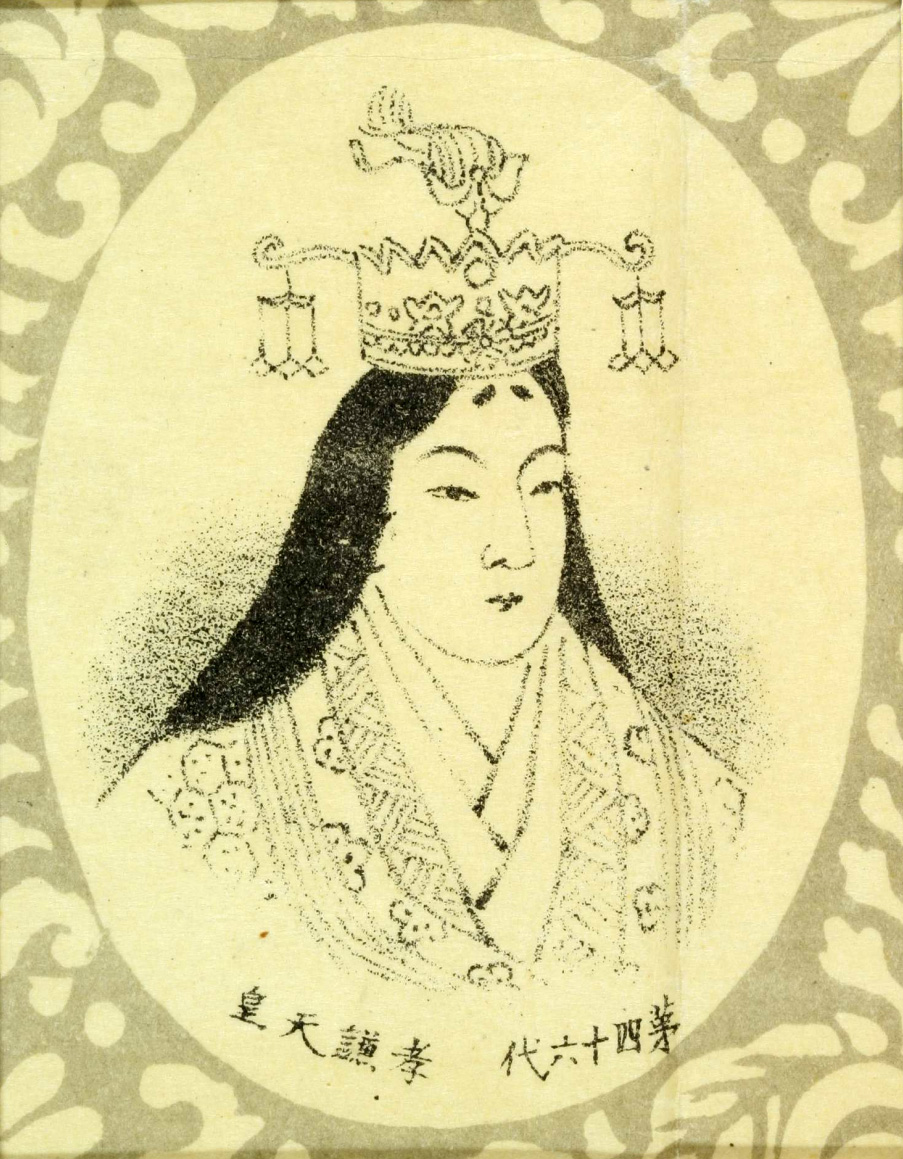
—They say a monk was your friend and it caused a scandal. Is that true?
It is true, and it is still painful to tell. That monk was called Dōkyō. He had healed me when I was ill, and I trusted him. I elevated him very high, even giving him the title of Hōō, 'King of the Dharma', a rank almost equal to mine. The lords of the court grew afraid. They whispered that I wanted to offer him the throne itself! You know, it is hard to be close to a sovereign: people immediately imagine the worst. I saw a man of faith. They saw an ambitious man. Who was right? I leave you to guess. The truth of a friendship, often, no one else really knows.
The truth of a friendship, often, no one else really knows.
—And how was it decided whether he could become emperor or not?
We did something very ancient: consult an oracle. In the south of the country, in Kyushu, stands the great shrine of Usa Hachiman. There the gods were asked about major decisions. The question was serious: can a man not of imperial blood ascend the throne? The answer reported was clear: no, only a member of the imperial family can. That closed the door to Dōkyō. When I died, in 770, he was sent away from court. You see, even an empress does not decide everything. There were laws older than me, which even my love could not undo.
Even an empress does not decide everything.
—If only one thing were remembered about you, what would you want it to be?
What beautiful questions you ask, both of you! If only one thing is remembered, I would like it to be this: a woman reigned, twice, in a time when it was doubted. I left temples standing, a vast Tōdai-ji, a network of sanctuaries from one end of the country to the other. And that million of small pagodas, those hyakumantō, which still keep their prayers in the hollow of the wood. I was not always right, my child. I loved, I made mistakes, I fought. But I tried to hold my country as one holds a lamp in the wind: with both hands, so that the flame does not go out.
I held my country like a lamp in the wind: with both hands.

This imaginary interview was generated by artificial intelligence from sources documented in Koken's profile. It dramatises what the figure might have said based on what we know about them, but does not constitute attested historical testimony. For primary sources and factual documentation, refer to the full profile.