Kids interview Lady Montagu
by Charactorium · Lady Montagu · Literature · Sciences · 5 min read
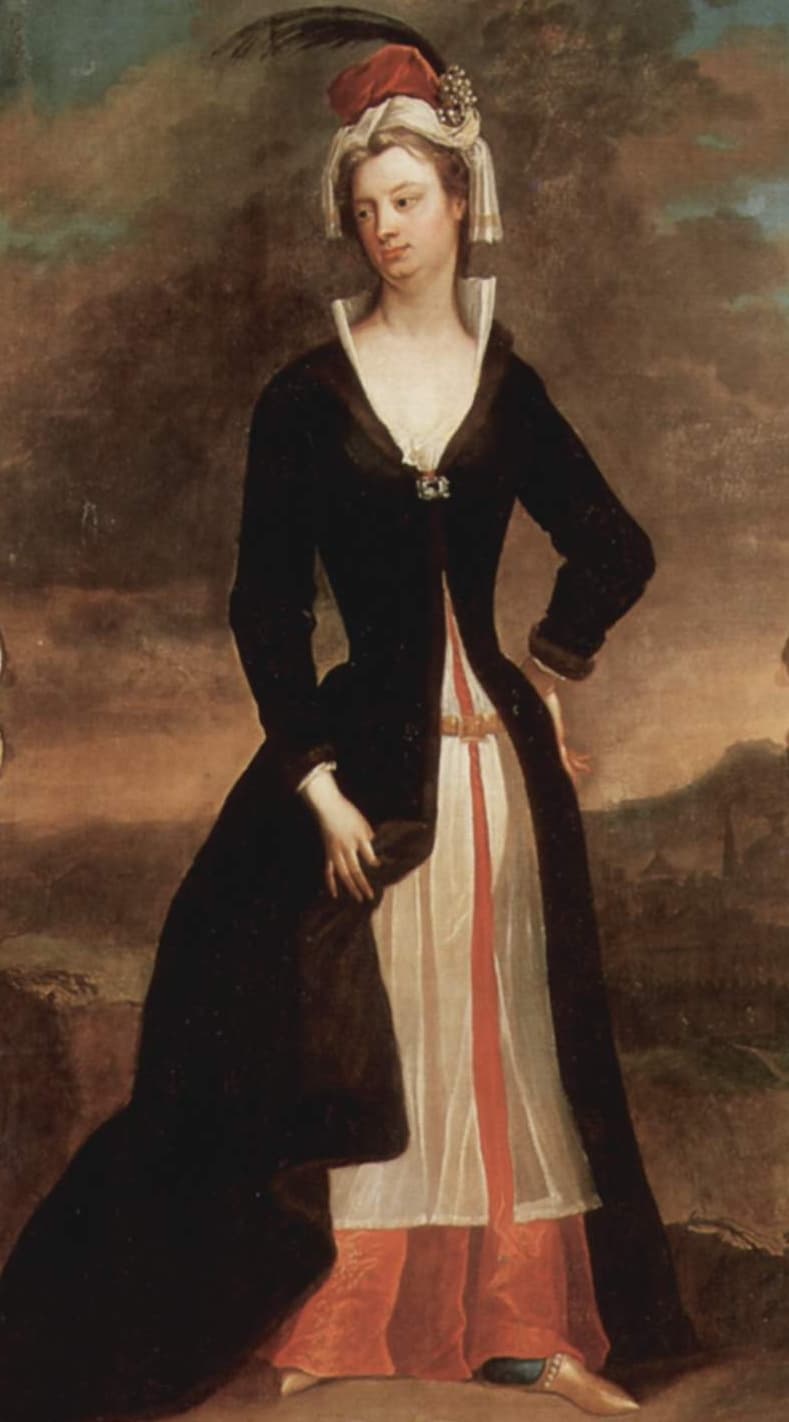
Two twelve-year-old students, on a school trip, pushed open the door of an old Georgian drawing-room. A lady with a marked face waits near a window, a pen in hand. She smiles: few children still come to listen to her.
—Is it true you caught a very serious disease when you were young?
Yes, my child. In 1715, smallpox seized me. Imagine a fever that burns you, then marks all over your skin. Many died from it. My own brother did not survive. I did — but I lost my fair complexion and even my eyelashes. I looked in the mirror and did not recognize myself. You know, this ordeal changed me. Two years later, in Constantinople, when I saw that they knew how to protect children from this scourge, my heart leaped. I had suffered in my flesh; I no longer wanted others to suffer so.
I had suffered in my flesh; I no longer wanted others to suffer so.
—You dared to do that on your own little boy? Weren't you afraid?
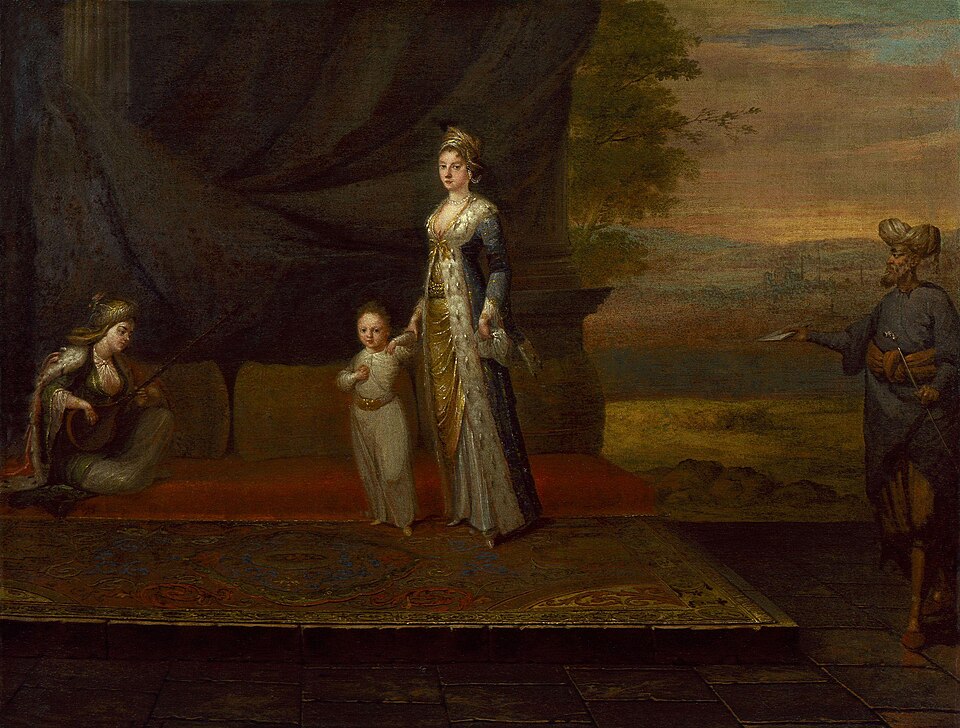
Yes, I was afraid, of course. He was my son, only five years old. No European had ever attempted this. Imagine: you hold your child's hand, and you let a surgeon scratch his arm to slip in a bit of the disease. My heart beat fast. I asked the embassy surgeon, Charles Maitland, to do it there, in Istanbul, in 1717. And my little one was protected without falling seriously ill. You see, a mother who has seen death up close does not gamble with her child's life. But sometimes, true courage is believing what you have understood.
True courage is believing what you have understood.
—Who showed you that technique over there, in Turkey?
It was old Ottoman women, my child, not great physicians. Every autumn, they went from house to house. They took a little 'bad seed' from a mildly ill patient, then introduced it into a healthy child through a small cut. They called it variolation, or inoculation: giving a tiny illness to avoid the big one. Imagine a peasant woman with her sure gestures, passed down from mother to daughter for generations. I was amazed. Back home, they would have laughed at them. I understood that knowledge does not always wear a fine gown or a diploma.
Knowledge does not always wear a fine gown or a diploma.
—How did you manage to tell all that to the people back in England?
I wrote, my child, letters, many letters. One day in April, from the city of Adrianople, I described the whole method to my friend Sarah Chiswell. I explained how they barely opened the vein to insert as much as could fit on a pinhead. You see, it had to be precise, otherwise no one would believe me. The small blade used to incise, I could still see it as I wrote. Those letters traveled from hand to hand all the way to the physicians of London. That is how an idea crosses the sea: on paper, carried by friendship.
That is how an idea crosses the sea: on paper, carried by friendship.
—And once you returned, did the physicians believe you right away?
Oh no! The physicians looked down on me. A woman talking about medicine, just imagine! So in 1721, when smallpox was ravaging London, I did something bold. I asked the surgeon Maitland to inoculate my little four-year-old daughter, before the gentlemen of the Royal College of Surgeons. Picture the scene: those learned men in wigs, leaning in, skeptical, watching for the slightest sign of fever. And my daughter did splendidly. Then they could no longer laugh. You see, sometimes it is not enough to speak the truth: you must show it, before the eyes of those who doubt.
Sometimes it is not enough to speak the truth: you must show it.
—Did important people finally listen to you?
Yes, and that rejoiced me. Shortly after my demonstration, the Princess of Wales, Caroline of Ansbach, took an interest. She was an intelligent woman who wanted to understand for herself. In 1722, she had her own children inoculated! Imagine: when a princess protects her own in this way, the whole court watches, then the whole city. What had been the business of old Turkish women and a disfigured lady became respectable. You see, my child, a just idea sometimes needs a great name to finally be heard. I would have preferred that they listen to the truth alone. But I took the allies that fate offered me.
A just idea sometimes needs a great name to finally be heard.
—What was life like for women over there? Were they locked up?
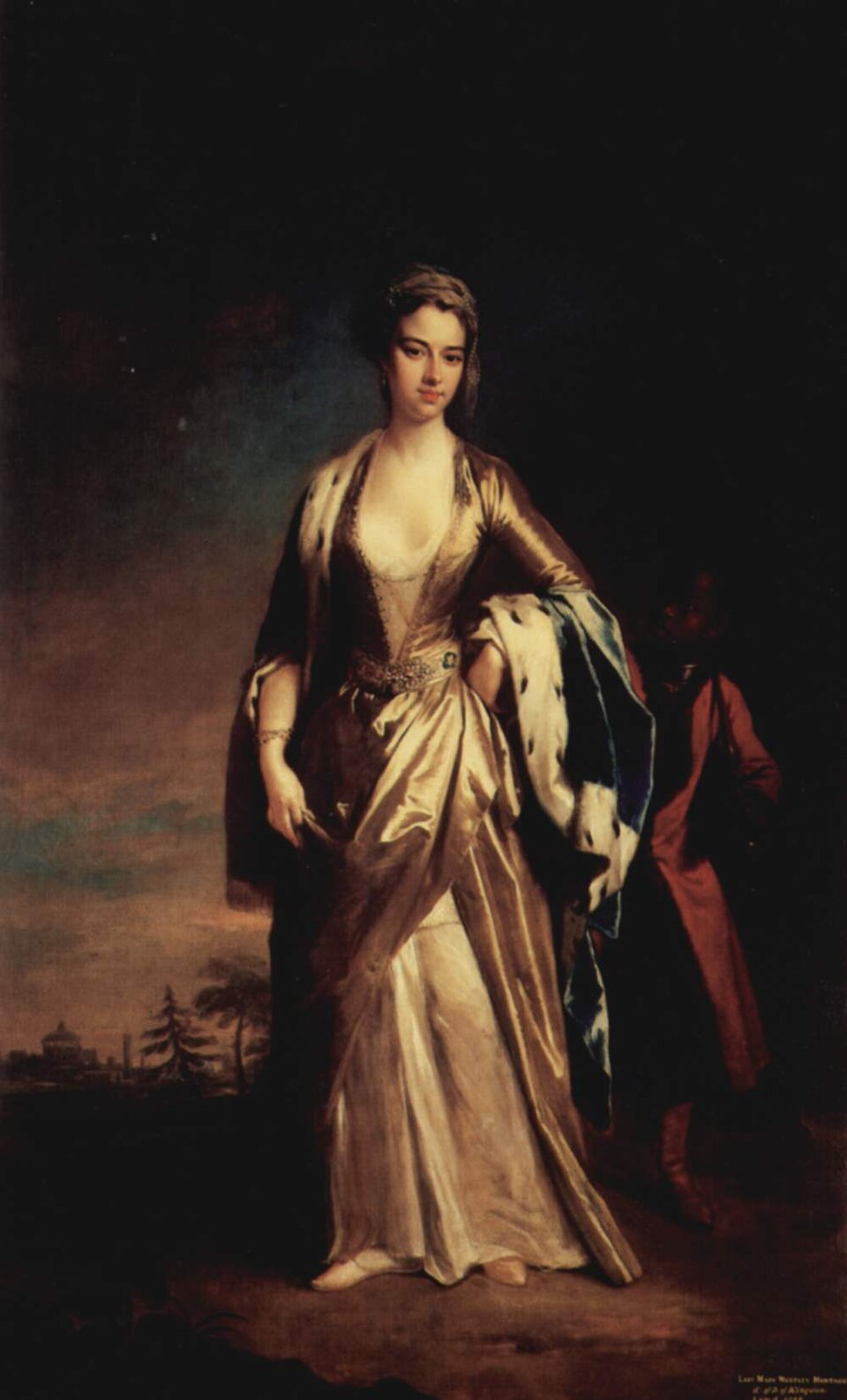
That is what they said back home, and it was false. To see for myself, I put on Ottoman costume: a long embroidered robe and a fine veil. Thus dressed, I could enter where an Englishwoman never went. One day, I went to the hammam, the women's public bath. Picture a great marble hall, steam, flowing water, and dozens of women laughing, doing their hair, chatting for hours. No man here. It was their kingdom, a place of freedom. I, with my tight corset, suddenly felt quite confined. The veil does not always hide what you think.
The veil does not always hide what you think.
—Did you write everything you saw in a book?
Yes, in my Letters from the Orient. I noted the baths, the streets, the clothes, the way women lived. You see, before me, travelers described the Ottoman Empire without ever setting foot in a house. They invented. I was there, in Pera, the embassy quarter, with the Bosphorus under my windows. I described what I really saw, with respect, not imagined monsters. Those letters only appeared after my death, in 1763. You know, looking at others without contempt is already knowledge. I tried to hold my pen as one holds an open window.
Looking at others without contempt is already knowledge.
—Apart from medicine, what did you like to do with your days?
Write, my child, always write! In the morning, with my pen, I blackened pages. With my poet friends Pope and Gay, I composed mocking verses, the Town Eclogues, to laugh at the airs of high London society. Later, under a false name, I ran a little journal, The Nonsense of Common-Sense, to defend my ideas in politics. Imagine a woman who has no right to sign, yet writes anyway, in secret, to make her voice heard. Laughter was my weapon. A lady could not mount the podium; so she took up her pen.
A lady could not mount the podium; so she took up her pen.
—Is it true you left far from your husband all alone?
Yes. In 1736, I left England and my husband to live on the continent, especially in Italy. A woman alone on the roads of Europe was hardly done. I continued to write, especially to my daughter, the Countess of Bute: I spoke to her about education, old age, how to keep the mind sharp. For you see, as I grew older, I understood that the only true consolations are a well-exercised mind and a clear conscience. The rest fades away. So when you grow up, cultivate your head and your heart: beauty fades, but a lively mind stays with you to the end.
Beauty fades, but a lively mind stays with you to the end.
Read further
This imaginary interview was generated by artificial intelligence from sources documented in Lady Montagu's profile. It dramatises what the figure might have said based on what we know about them, but does not constitute attested historical testimony. For primary sources and factual documentation, refer to the full profile.