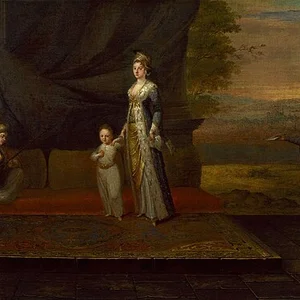

An English aristocrat and woman of letters of the 18th century, Mary Wortley Montagu accompanied her husband, an ambassador, to Constantinople. There she discovered variolation and introduced it to Western Europe, saving countless lives before Jenner's development of the vaccine.
Lady Montagu
Mary Wortley Montagu
royaume de Grande-Bretagne, royaume d'Angleterre
8 min read
Frequently asked questions
Famous Quotes
« I am patriot enough to take pains to bring this useful invention into fashion in England.»
« Turkish women are perhaps the only free women in the universe.»
Key Facts
- 1689: born in London into an aristocratic family
- 1716–1718: resided in Constantinople as the wife of the British ambassador
- 1718: had her son Edward inoculated against smallpox using the Ottoman practice
- 1721: had her daughter inoculated in England, helping to spread variolation across Europe
- 1762: died in London, leaving behind a major body of epistolary writing on the East
Works & Achievements
A collection of letters describing her diplomatic stay in the Ottoman Empire, including the first detailed Western account of variolation. A major literary work, considered a forerunner of travel literature and critical orientalist studies.
A foundational medical and epistolary document in which Mary precisely describes the Ottoman inoculation technique. This letter circulated among European physicians and directly contributed to the spread of the practice in the West.
A collection of satirical poems written in collaboration with Pope and Gay, parodying London high society. A testament to Mary's literary talent and her participation in the literary circles of her time.
An extensive correspondence spanning over twenty years, rich in reflections on women's education, old age, society, and philosophy. An invaluable source on Mary's intellectual and personal life abroad.
A satirical journal Mary wrote anonymously to defend the Walpole government against its critics. A testament to her political engagement and her ability to wield irony and public argumentation.
Anecdotes
In 1715, Mary Wortley Montagu contracted smallpox, a disease that disfigured and killed thousands of Europeans every year. She survived, but lost her famously beautiful complexion and her eyelashes. This personal ordeal made her especially attentive, two years later in Constantinople, when she discovered that Ottoman women practiced a method to protect against it.
In Istanbul in 1717, Mary observed the practice of variolation: 'old women' would collect pus from patients with a mild form of smallpox and inoculate healthy children through a small incision. Fascinated, she had her own five-year-old son inoculated by the embassy surgeon, Charles Maitland — a bold and unprecedented decision for a European.
Back in England in 1721, during a smallpox epidemic in London, Mary persuaded surgeon Maitland to inoculate her four-year-old daughter in front of physicians from the Royal College of Surgeons. The little girl came through perfectly, and this public demonstration helped legitimize the practice in Western Europe. The Princess of Wales, Caroline of Ansbach, subsequently had her own children inoculated.
Mary Wortley Montagu is also celebrated for her Letters from the East, written during her diplomatic stay between 1716 and 1718. In them, she describes Ottoman society, Turkish baths, and the status of women with rare precision and empathy — challenging the orientalist clichés of her era. The letters were published posthumously in 1763 and remain an exceptional historical document.
A woman of remarkable independence of mind for her time, Mary maintained a long correspondence with the French writer Madame de Tencin and traveled alone across Europe after her de facto separation from her husband. She lived for several years in Italy and France, moving in Enlightenment intellectual circles, and did not return to England until her husband's death in 1761.
Primary Sources
The small operation, which I am about to describe to you, is so universal here that no one trembles at seeing it performed... They make a small opening in the vein and introduce as much virus as can be contained on the head of a pin.
I am patriot enough to take pains to bring this useful invention into fashion in England, and I should not fail to write to some of our doctors very particularly about it if I knew any one of them that I thought had virtue enough to destroy such a considerable branch of their revenue for the good of mankind.
I have since had the curiosity to examine this practice more carefully since my arrival here, and I am well convinced that it is perfectly safe as it is performed.
The only solid consolations of old age are a mind exercised in all its faculties and a conscience that has nothing to reproach itself with.
Key Places
Mary's diplomatic residence from 1716 to 1718, where she discovered variolation and had her son inoculated. Her descriptions of the city, Turkish baths, and harems provide a unique Western account of early 18th-century Ottoman society.
Mary's birthplace and eventual home, where in 1721 she organized the first public demonstration of variolation in Europe before the Royal College of Surgeons.
A stop on the diplomatic journey where Mary wrote one of her most detailed letters on variolation, addressed to her friend Sarah Chiswell. This letter is the first written Western account of the practice.
One of the cities where Mary lived during her voluntary exile on the European continent after 1736. There she moved in Italian intellectual circles and continued her literary correspondence.
The aristocratic residential neighborhood where the Wortley Montagu family lived in London. These Georgian townhouses reflect the elevated social milieu in which Mary moved.
Typical Objects

Mary wrote her celebrated letters with a goose-quill pen, the essential tool of any woman of letters in the 18th century. Her correspondence with friends, philosophers, and loved ones forms her major literary legacy.

A small surgical blade used by Ottoman practitioners to nick the skin during inoculation. Mary described its use in precise detail in her letter to Sarah Chiswell, helping to introduce the technique to Europe.

During her stay in Constantinople, Mary partly adopted local dress to gain access to spaces reserved for women, including the baths. She describes with admiration the freedom this disguise paradoxically afforded Ottoman women.

Mary recorded her daily observations on Ottoman society, architecture, customs, and medicine. These notes would form the basis of her celebrated Letters from the East.

An ambivalent symbol for Mary, who had lost her looks to smallpox. In her letters she reflects on her changed relationship with physical appearance — an experience that only strengthened her determination to promote variolation.

Mary corresponded with leading philosophers and read widely in Locke, Newton, and the Encyclopédistes. Her writings reveal a rationalist, critical outlook shaped by the English Enlightenment.
School Curriculum
Vocabulary & Tags
Key Vocabulary
Tags
Daily Life
Morning
Mary rose early and devoted her mornings to correspondence, writing her letters by quill in the light of the windows. In Constantinople, she would also visit the women's public baths in the early morning — an opportunity to observe and exchange with women from Ottoman society.
Afternoon
Afternoons were dedicated to diplomatic visits, receptions at the embassy, or, in London, salon gatherings. Mary took an active part in intellectual debates, discussing medicine, politics, and literature with the philosophers, physicians, and writers in her circle.
Evening
Evenings were spent at society dinners, reading aloud, or writing in her private journals. Abroad, Mary sometimes preferred the solitude of her library to social obligations, reading Enlightenment philosophers by candlelight.
Food
Like any English aristocrat of the eighteenth century, Mary dined on roasted meats, game, fish, and rich pastries at formal meals. In Constantinople, she discovered Ottoman cuisine with great interest: pilaf, spiced lamb, honey pastries, and Turkish coffee — a drink she took a particular liking to.
Clothing
In England, Mary wore the silk or brocade pannier gowns typical of Georgian nobility, with corset, lace, and powdered wig for official occasions. In Constantinople, captivated by the freedom of movement it allowed, she temporarily adopted Ottoman dress — a long embroidered robe and sheer veil — to visit spaces reserved for women.
Housing
In London, the Wortley Montagu family occupied a grand Georgian townhouse in an aristocratic neighborhood, complete with a library, drawing room, and writing study. The embassy at Pera (Constantinople) was a lavish palace blending European architecture with Oriental décor, surrounded by gardens and overlooking the Bosphorus.
Historical Timeline
Period Vocabulary
Visual Style
Portrait d'apparat georgien teinté d'influences orientales ottomanes, alliant l'élégance des lumières anglaises aux motifs brodés et aux couleurs profondes de Constantinople.
Sound Ambience
Un mélange des bains ottomans de Constantinople et des salons feutrés de Londres georgien, évoquant la double vie de Mary entre Orient et Occident.
Liens externes & ressources
Références
Œuvres
Embassy Letters (Lettres de l'Orient)
rédigées 1716-1718, publiées 1763
Lettre à Sarah Chiswell sur la variolisation
1er avril 1717
Town Eclogues (avec Alexander Pope et John Gay)
1716
Correspondance avec sa fille, la comtesse de Bute
1740-1761
The Nonsense of Common-Sense (journal)
1737-1738
See also
Related Characters
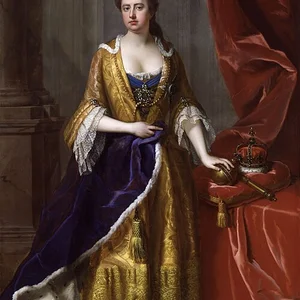
Anne of Great Britain
1665 — 1714
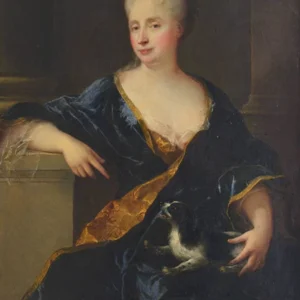
Anne Thérèse de Marguenat de Courcelles, marquise de Lambert
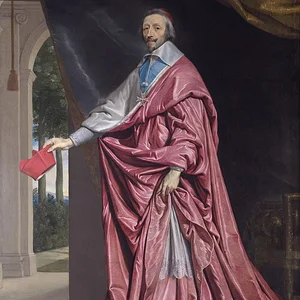
Cardinal de Richelieu
1585 — 1642
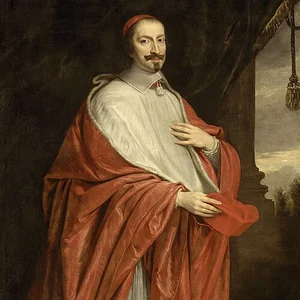
Cardinal Mazarin
1602 — 1661
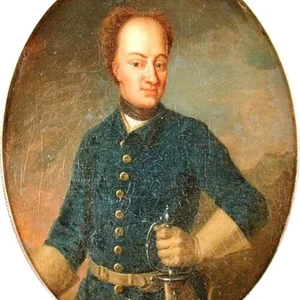
Charles XII of Sweden
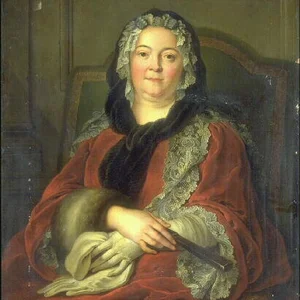
Claudine Guérin de Tencin
1682 — 1749