Imaginary interview with Lady Triệu
by Charactorium · Lady Triệu · Politics · Military · 5 min read
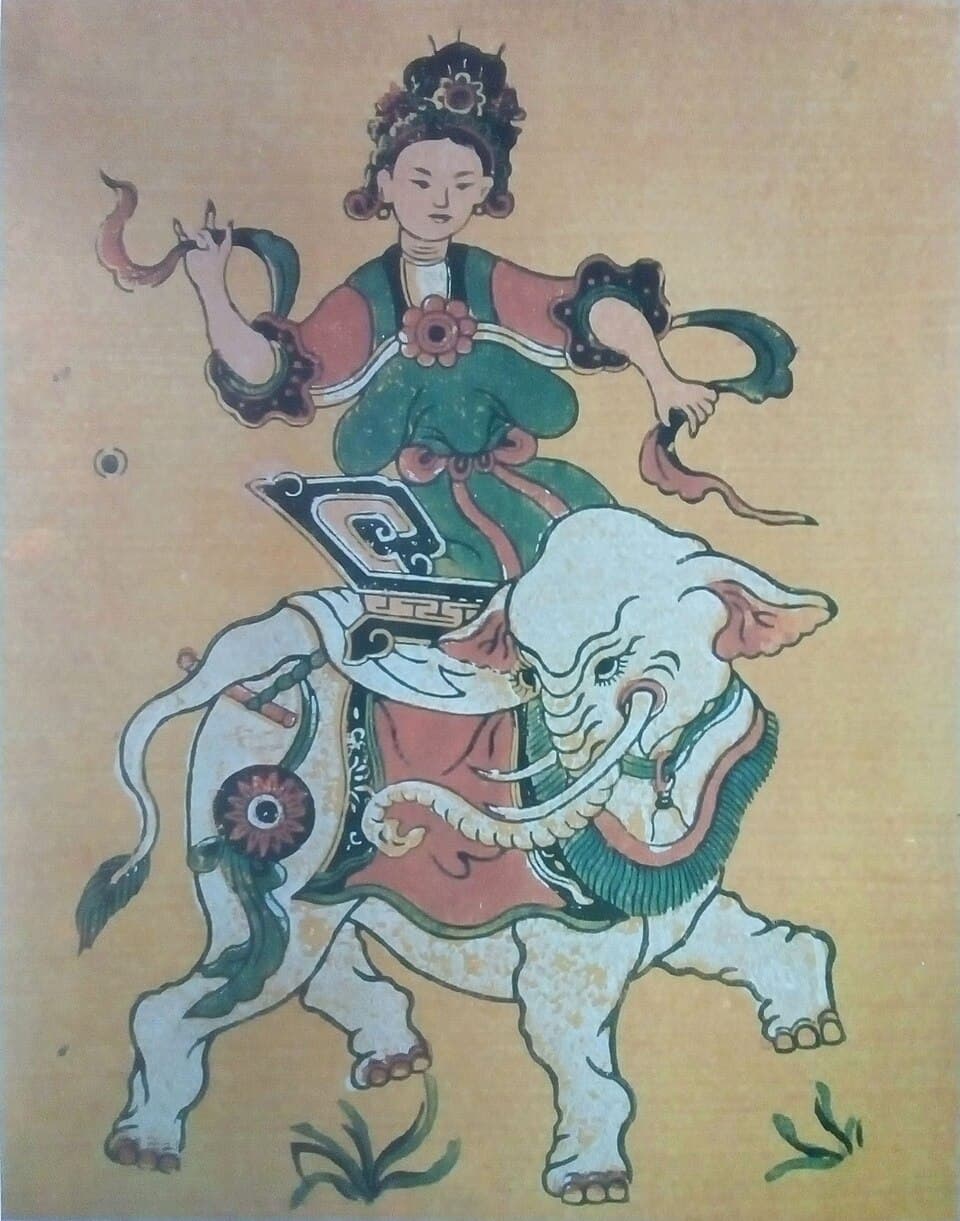
On the wooded slopes of Mount Tùng, a campfire crackles in the mist of Cửu Chân. A tall woman, dressed in an indigo tunic and golden-hued armor, dismounts from her elephant and sits near the embers. She agrees to speak—she who usually addresses only her lieutenants and the spirits.
—How did the idea of rising against the Wu come to you?
My elder brother, Triệu Quốc Đạt, wanted to marry me off, keep me at home. I told him what I still carry in my belly: I want to ride the storms, kill the sharks in the seas, drive the invaders out of our land, and break the chains of our people. He looked at me as one looks at a madwoman. But look around you: the tax collectors of the Wu come right into our nhà sàn stilt houses to take our sticky rice and salt. A starving people has only one wealth left: their anger. I turned mine into an army. In 248, we were several thousand in these mountains.
A starving people has only one wealth left: their anger.
—What did those six months of resistance in the mountains mean to you?
Six moons, yes, during which no Wu garrison slept soundly. We struck at dawn, from the ridges of Cửu Chân, then melted into the forest before their columns could reform. Our torches answered each other from hill to hill to trigger ambushes—a fire lit, and a hundred men rose. Their officers, from the plains, understood nothing of these terrains that fed us with game and hid us. Six moons is little in the life of an empire. But an empire that must halt for six moons before a woman and peasants has already shown its flaw. I knew it was fleeting. I wanted it to be remembered.
—Why do you lead your troops from the back of an elephant?
Because one does not follow a voice one cannot hear, nor a hand one cannot see. From the back of my war elephant, I dominate the field, I see where the enemy bends, and my men see me—that is what matters most. My armor catches the daylight as gold catches the sun, the color of kings and stars, and that alone is enough to hold a frightened rank. The soldiers of the Wu, they say, are troubled when they see this silhouette raised on the beast, taller than a man, the voice carrying above the din. Fear is as sure a weapon as the dao sword. I wear it at my side, but I prefer to kindle it in their hearts before drawing it.
My armor catches the daylight as gold catches the sun.
—They say your stature and voice struck your enemies as much as your own soldiers. What do you think?
The scribes of the Wu write about me with ill-concealed astonishment: a tall woman, a strong voice, gone to war. Let them be astonished. Among us, in the north, the bronze drum has set the rhythm of charges since the time of our Đông Sơn ancestors; when it roars, no heart stays still. My voice does the same: it cuts through the noise and tells my men where to strike. A leader does not need to be loved from afar; he must be heard up close. If my height bothers the governors from Jianye, so much the better—it reminds them they are fighting a country, not a docile province.
A leader does not need to be loved from afar; he must be heard up close.
—Do you remember the moment when you took sole command of the movement?
The death of Triệu Quốc Đạt left me facing a choice few women had had to make. We had prepared this uprising together, in secret, on the heights. When he passed, the clan chiefs looked at me: would they follow a sister, or scatter? I took command as one takes a burden one cannot put down. No one in our world had foreseen that a woman would lead men into battle. But a leader is not chosen by custom; he is chosen by what he holds upright when everything wavers. I gathered the clans around the fire, one by one, and I kept my brother's spear in my hand.
A leader is not chosen by custom; he is chosen by what he holds upright when everything wavers.
—How did you hold together all those clans from the mountains?
By day, I shared their hardship: training with spear and bow, sharing rice and salt, arbitrating old quarrels between villages—for free men quarrel almost as much as they fight. By night, around the fire, I received the elders and we called upon the spirits of our ancestors. Without them, a highlander will not march. Alliances in the highlands are not held by written oaths, but by the gaze exchanged over the embers and by the dead we honor together. That is what the governors from the plains never knew how to seize: you can starve a people, but you cannot undo their spirits.
—How did General Lục Dận finally break your revolt?
Not by courage, know that. Lục Dận, the governor of Giao Châu, knew he could not take me head-on in these terrains. So he aimed not at my spears, but at the souls of my men—base stratagems, made to defile what we hold sacred and cast fear of spirits into our ranks. A soldier who doubts the omens already has half his body in flight. Little by little the resistance tightened, encircled, and I fell back toward Mount Tùng, my last stronghold. To conquer by cunning what one cannot conquer by arms is to admit one's weakness while shouting victory. I do not envy him that triumph.
To conquer by cunning what one cannot conquer by arms is to admit one's weakness.
—Facing the impending defeat on these heights, what outcome do you foresee?
The circle closes on Mount Tùng. I feel it as one feels the storm before it breaks. Surrender? That word does not enter my mouth. I once said I wanted to drive out the invaders and free my people; I will not end up kneeling before them, offering my wrists to the bonds of the Wu. To die free is better than to live subjugated—that is the only victory a vanquished person keeps whole. Let my body fall here, on this hill, among my people: the spirits of our ancestors await me there, and this land of Cửu Chân that bore me will keep my trace better than any chronicle of the victors.
To die free is better than to live subjugated.
—If you could imagine being spoken of in centuries to come, what would you wish to be remembered?
I do not build for centuries; I fight for today. But if a child of Cửu Chân, in a hundred years, lights a torch thinking of me, then my defeat will have lied. Let them not remember the woman vanquished in 248—that, all empires know how to do. Let them remember that a people thought tamed rose up, that a peasant woman from the mountains made the governors of Jianye tremble for six moons. The spirits of our ancestors feed on memory; as long as my name is repeated near a fire, I will still ride my elephant. The rest—the titles, the temples—I leave to the living who may need them, not me.
As long as my name is repeated near a fire, I will still ride my elephant.
—You often speak of spirits and ancestors. What place do they hold in your fight?
All the place. Every evening under Mount Tùng, before sleeping, we invoke those who came before us—for a warrior who forgets his dead fights with empty hands. The bronze drum we strike is not just an instrument of war: it is the voice of our Đông Sơn ancestors speaking through the metal. When I fall, I will not leave this land; I will cross to the other side of the fire, among the spirits venerated from village to village. That is our strength and what the occupier will never understand: you can take our rice, our lands, our lives—you cannot take what binds us to the dead. Therein lies our true country.
You can take our rice, our lands, our lives—you cannot take what binds us to the dead.
This imaginary interview was generated by artificial intelligence from sources documented in Lady Triệu's profile. It dramatises what the figure might have said based on what we know about them, but does not constitute attested historical testimony. For primary sources and factual documentation, refer to the full profile.