Imaginary interview with Leontyne Price
by Charactorium · Leontyne Price (1927 — ?) · Music · Performing Arts · Society · 7 min read
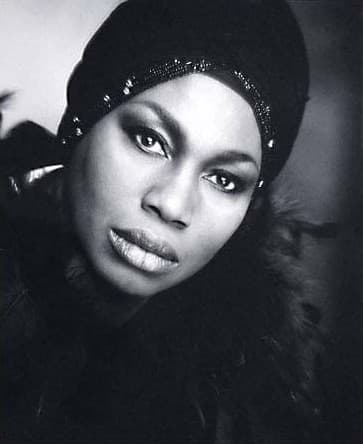
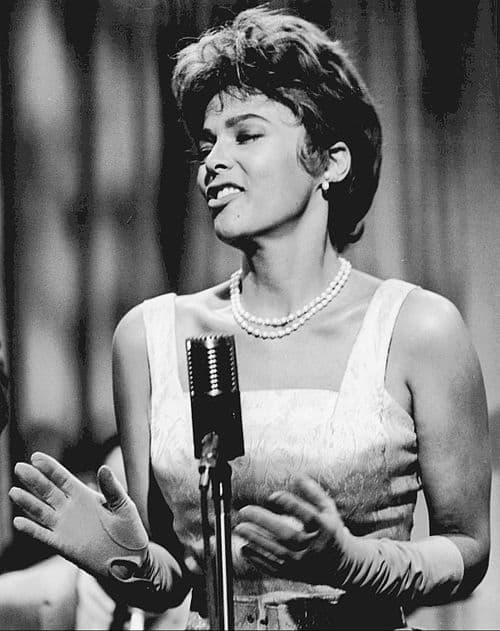
Late winter, a New York apartment where annotated scores sit alongside RCA Red Seal record sleeves and stage photographs from the Met. Leontyne Price receives guests in a quietly elegant living room, her voice steady, her laugh ready, the Mississippi accent never quite faded. She agrees to look back, without nostalgia but forgetting nothing, on thirty years at the summit of opera.
—What remains with you today from the evening of your Metropolitan Opera debut?
January 27, 1961. I was in my dressing room, wrapped in Leonora's costume, and I assure you my hands were trembling more than my voice ever would. Il Trovatore by Verdi — I knew every phrase of that role as one knows one's mother's face. Then I went on, and something I hadn't expected happened: at the final curtain, the house refused to let me go. Forty minutes, I was told afterward. Forty minutes during which the greatest opera house in the world stood for a girl from Laurel. The next day, in the New York Times, Harold Schonberg wrote that this ovation was among the longest the theater could remember. That night, I wasn't thinking about history. I was only thinking that I had sung well, and that my people would have been proud.
Forty minutes during which the greatest opera house in the world stood for a girl from Laurel.
—Were you aware, that evening, of becoming the first Black prima donna at the Met?
People have often spoken to me about the symbol. I prefer to talk about the work. But I'm not naive: when a Black soprano triumphs in that theater, at a time when the country is tearing itself apart over civil rights, every note becomes an argument. Today they call it cultural desegregation — a cold word for something that was, in truth, burning. I grew up where a little Black girl wasn't allowed to enter through the front door. So to walk through that of the Metropolitan Opera in full light, under applause, was to open a breach that others would follow. I never felt like a standard-bearer — that burden crushes the voice. But I knew that, behind me, people were watching. And that awareness never leaves you, not even in Vienna, not even in Milan.
—How did that recording of Aida with Karajan, which introduced you to the world, come about?
1962, the Vienna Philharmonic, and Herbert von Karajan conducting — a man who heard the orchestra like a fabric, every thread in its place. Aida was already my signature role, the Verdian heroine with whom I identified most: a displaced princess, torn between her blood and her heart. We worked every page with an almost painful intensity. Karajan sought the right color, I sought the truth of the breath. When the record came out on RCA Red Seal, it carried my voice into homes where my name had never been heard. They called my voice 'golden' — I don't know; I only know that with Aida, I had finally found the role that said everything I couldn't say otherwise.
Aida, a displaced princess, torn between her blood and her heart — the role that said what I couldn't say otherwise.
—They say you annotated your scores excessively. What were you looking for in those pages covered with your notes?
A singer who relies only on her voice will eventually lose it. Every morning, first thing, the vocal exercises — a ritual as relentless as a prayer. Then came the score. My score of Verdi's Aida looked like a war notebook: underlinings, arrows, words in the margin to remind me where to breathe, where to hold, where to finally release the note as if opening my hand. I wanted to enter the composer's intention, not circumvent it. In the afternoon, I worked on Italian, German, and French diction with my coach, until every vowel sounded right. People think vocal beauty is a gift. It is, no doubt. But what you hear at the Met or La Scala is first of all thousands of hours of invisible labor, bent over pages that no one will ever see.
—Why Verdi, precisely, and not another composer, became the heart of your art?
Because Verdi writes for women who carry the world on their shoulders. Amelia, in Un ballo in maschera, which I sang on every major stage for nearly twenty years; Leonora; Aida above all. They are flesh-and-blood heroines, caught in dilemmas beyond them, and his music gives them a dignity that nothing can crush. That dignity, I understood in my bones. Verdi demands a full voice, capable of power and tenderness in the same phrase — what is called the dramatic soprano. But above all, he demands a heart that doesn't cheat. When I sang Verdi, I wasn't imitating an emotion: I was recognizing it. That's why, of all composers, he accompanied me until the very last evening.
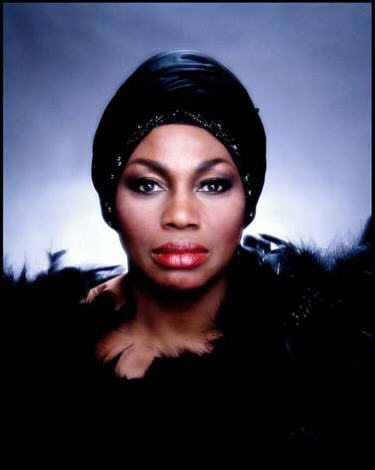
—Do you remember how music entered your life, in Laurel?
Laurel, Mississippi — a town where Jim Crow laws dictated even where you could sit. Yet it was there that I discovered the piano. I owe it partly to a white family, the Chisholms, who financed my first lessons and later supported my studies. In a state where they wanted us invisible, that gesture was almost a miracle, and I never hid it: I honored them whenever I could. People imagine the segregated South as a block of hatred. It often was. But there were also those outstretched hands, those people who saw in a little Black girl not a color but a voice. Without them, I would never have left Mississippi. You don't forget what gave you a leg up.
People imagine the segregated South as a block of hatred. It often was. But there were also those outstretched hands.
—What did leaving for Juilliard in 1948 mean for the young woman you were?
Leaving Laurel for the Juilliard School in New York was like crossing a continent and two worlds. I stayed there until 1952, training with the best teachers, and every day I discovered the extent of what I didn't know. New York wasn't just a school: it was the air you breathe when you finally stop wondering which door to enter. I forged my technical foundation there, but also my discipline — the one that never left me. I wasn't fooled, though. I knew where I came from and what it demanded. As I once said to Opera News: 'being Black meant you had to be twice as prepared to have half the opportunity.' That truth I carried from Juilliard to the stages of Vienna and Milan.
—In 1955, your televised Tosca on NBC wasn't broadcast everywhere. How did you experience that refusal?
1955: I portrayed Floria Tosca live on NBC, the first Black woman to sing the leading role in an opera on a national network. Think about it: millions of American homes discovered opera that evening, guided by a Black voice. But in the South, some stations refused to show me. I could be heard everywhere except where I was born. That hurt me — not for myself, but for the little girl in Laurel who might have wanted to see herself on screen and saw nothing. That day I learned that my voice would always be more than a voice: a political fact I hadn't chosen. You can't sing Puccini and ignore that. So I continued. Singing, for me, was already a refusal to be silenced.
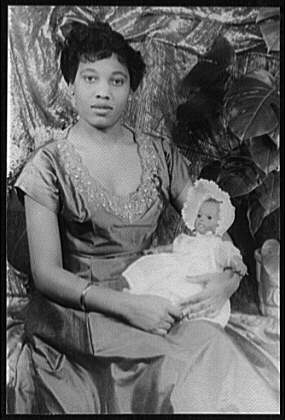
—What did it mean, in those years, to be a Black artist held up as a standard by your own country?
A constant paradox. I was awarded the Presidential Medal of Freedom in 1964, the same year the Civil Rights Act finally outlawed discrimination — the president decorated me with one hand while the country was still tearing itself apart with the other. I was also sent to sing abroad, during the Cold War, as if to prove that America knew how to honor its talents. I accepted that role without ever letting myself be locked into it. Because I knew the gap between the image exported and the reality of the Montgomery buses, the closed schools, the daily humiliations. My way of responding was not through speeches: it was through excellence. A note held higher, longer, more perfectly than thought possible. That was the weapon they couldn't take from me, and I used it to the end.
—In 1966, you were entrusted with inaugurating the new Metropolitan Opera House. What did such an honor represent?
September 16, 1966, I opened the new Metropolitan Opera House at Lincoln Center in the role of Cleopatra. Think about what that means: the first American opera to inaugurate a new house, and it was I who was asked to cross that threshold first. A vast hall, still fresh with plaster, thousands of eyes, and on my shoulders the weight of a building I was, in a way, to baptize with my voice. I felt a vertigo I will never forget — honor and fear mingled. Because to inaugurate is to have no rehearsal before history. Five years earlier, I was applauded as a triumphant intruder. That evening, I was placed at the very center of the house. The journey from Laurel was contained in that single evening.
To inaugurate is to have no rehearsal before history.
—Samuel Barber composed that Antony and Cleopatra for you. What is it like to have an opera written to your measure?
It's an immense and daunting gift. When Samuel Barber writes Cleopatra for your voice, he tailors a garment to your measure — every interval, every ascent matches what you do best. But a tailored garment fits no one else. You can't hide behind tradition or great predecessors: the score is virgin, and it's your flesh that is heard for the first time. I wore that Cleopatra like a crown that didn't exist the day before. On the night of the premiere, I understood that I wasn't just singing a role: I was bringing it into the world. Some evenings in the dressing room, I told myself that Verdi had taught me grandeur, but that Barber had entrusted me with something more intimate — the right to be, for an entire work, the sole reference.
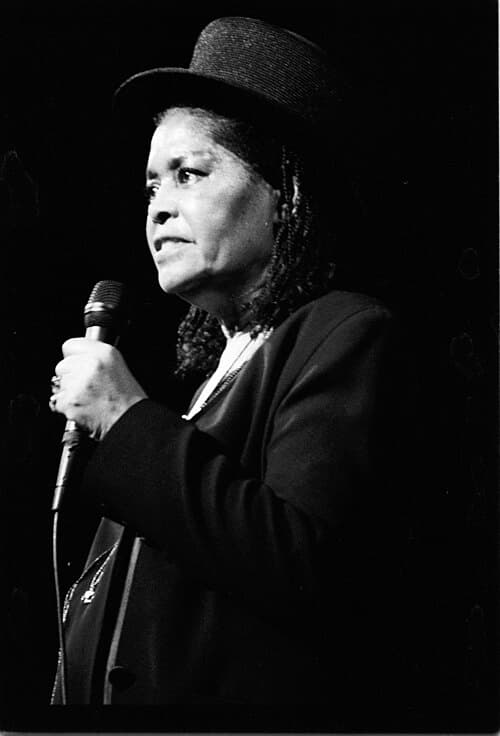
This imaginary interview was generated by artificial intelligence from sources documented in Leontyne Price's profile. It dramatises what the figure might have said based on what we know about them, but does not constitute attested historical testimony. For primary sources and factual documentation, refer to the full profile.