Imaginary interview with Li Bai
by Charactorium · Li Bai (701 — 762) · Literature · 6 min read
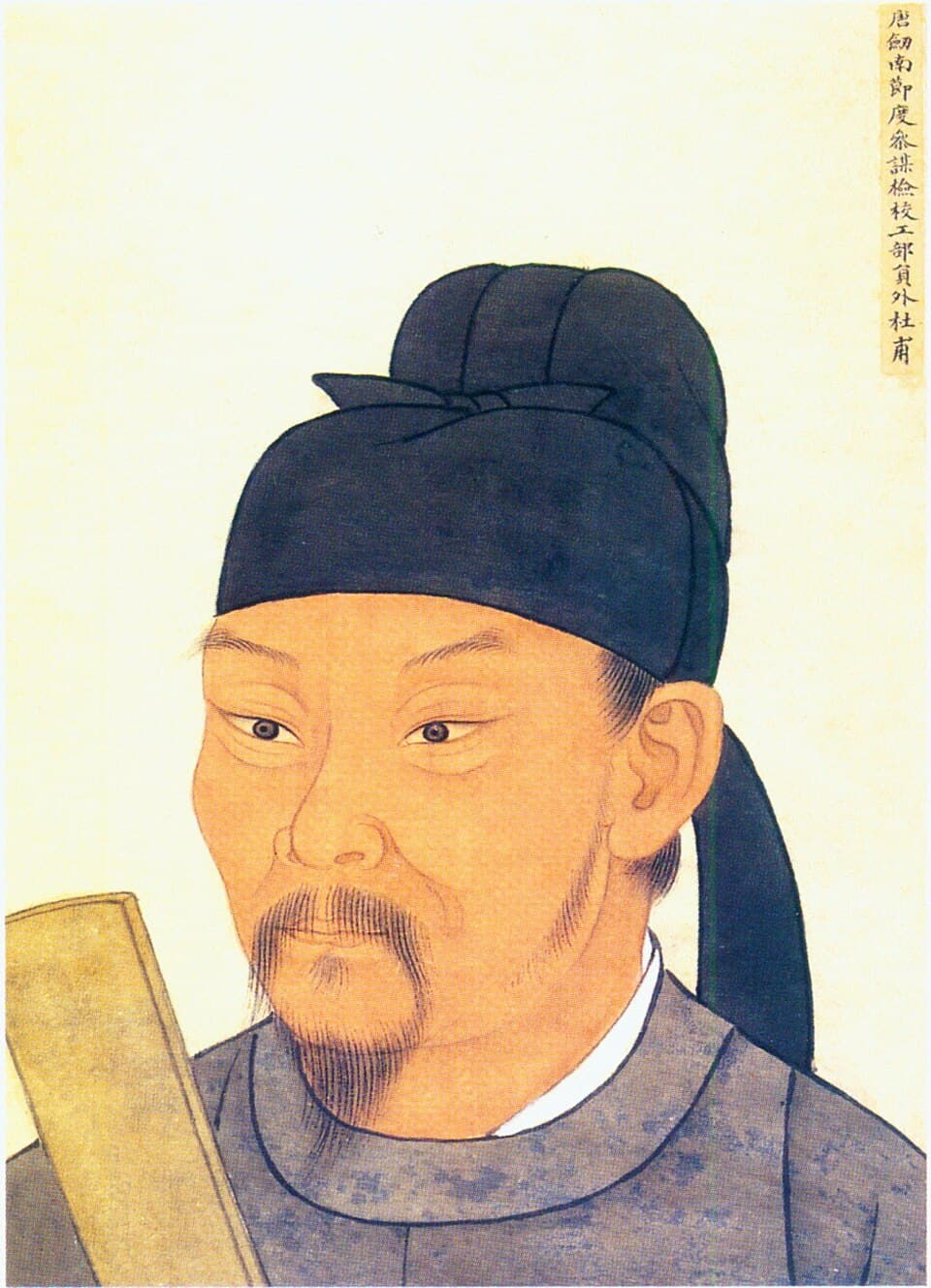
Late summer night, somewhere on a boat moored along the Yangtze River. A jar of rice wine warms under the moon, a brush dries on the edge of the hull. The man who receives us has the gaze of one who has looked too long at the sky: Li Bai, whom his friends already call the "Immortal Poet."
—They say your finest verses were born in drunkenness. How is a poem born in you?
It is not born: it falls, like mist falls from Mount Lu at dawn. I drink first — mijiu, that rice wine I raise to my lips in a jade cup — and when my head grows light, words stop lining up like officials at court. They come in disorder, burning. Then I call out: a servant hurries over, brush ready, and I dictate faster than he can write. I have been reproached for this disorder; I see in it the only discipline that matters. Consider these lines from my Jiang jin jiu: "Do you not see how the waters of the Yellow River descend from heaven, rushing to the sea never to return?" A sober man does not write that. One must have felt time slip through one's fingers.
A sober man does not write that. One must have felt time slip through one's fingers.
—Why does wine occupy such a place in your work, to the point of repelling some scholars?
Because wine abolishes white hair. In the morning it is black as silk, by evening white as snow — that is what I sing in Jiang jin jiu, and it is no drinker's joke. The Confucian sages want one to master one's heart; they call that the ideal of the junzi, the gentleman. I respect them, believe me, for the order of the world depends on such men. But I, with the jar at my side, refuse to weep over what flees. Herb-scented rice wine, a silver-chased cup, a few friends under lanterns: that is my temple. There I celebrate life precisely because it passes. Drinking, for me, is a way of praying to the sky that never answers.
Drinking is a way of praying to the sky that never answers.
—In 742, the emperor summoned you to court. What did that call to Chang'an mean to you?
The fulfillment of every scholar's dream — and the beginning of my disgrace. Chang'an, in that year 742, was the greatest city in the known world: markets bustling with foreign tongues, gardens crowded with artists, the palace of Emperor Xuanzong rising like a mountain. They wanted me to adorn imperial feasts, to make the throne shine with my verses. I never took the imperial examinations, that competition that produces zhuangyuan; my only recommendation was my poetry. That flattered my pride and stoked the courtiers' jealousy. A poet invited to amuse is but a phoenix in a cage. I drank more, no doubt, to bear the cage. Barely two years, and the wind would turn.
A poet invited to amuse is but a phoenix in a cage.
—Your dismissal from court in 744 was wrapped in rewards. How did you experience that gilded dismissal?
As a humiliation dressed in silk. In 744, the emperor thanked me with largesse — gold, gifts — the most courteous way to send a man away without losing face, or losing one's own. My excesses with wine and my frank speech had wearied the powerful; I knew it before I was told. From that wound were born my Xing lu nan, "The Difficulties of the Road." I put into them all the frustration of a man stumbling against invisible obstacles, and yet, believe me, a stubborn faith in what tomorrow holds. The road is hard when one is free; it is even harder when one understands that the palace has no room for freedom. I took up my walking stick almost relieved.
—You wandered for years from mountain to mountain, seeking Taoist hermits. What were you really searching for?
The Tao, the Way — that principle which orders the cosmos and which no palace can contain. I climbed trails to the waterfalls of Mount Lu, slept in monasteries, questioned old masters who claimed to know the secrets of long life. I am called Shi Xian, "Immortal Poet"; but the immortal, the xian, is not one who does not die — it is one who has merged so deeply with mountain and water, the shanshui, that he no longer fears death. I sought hermits who could teach me that. Many were charlatans; a few had in their eyes the silence of the peaks. What I brought back from those wanderings were not elixirs: they were poems where mist, pine, and moon are worth all the thrones of Chang'an.
The immortal is not one who does not die — it is one who has merged so deeply with the mountain that he no longer fears death.
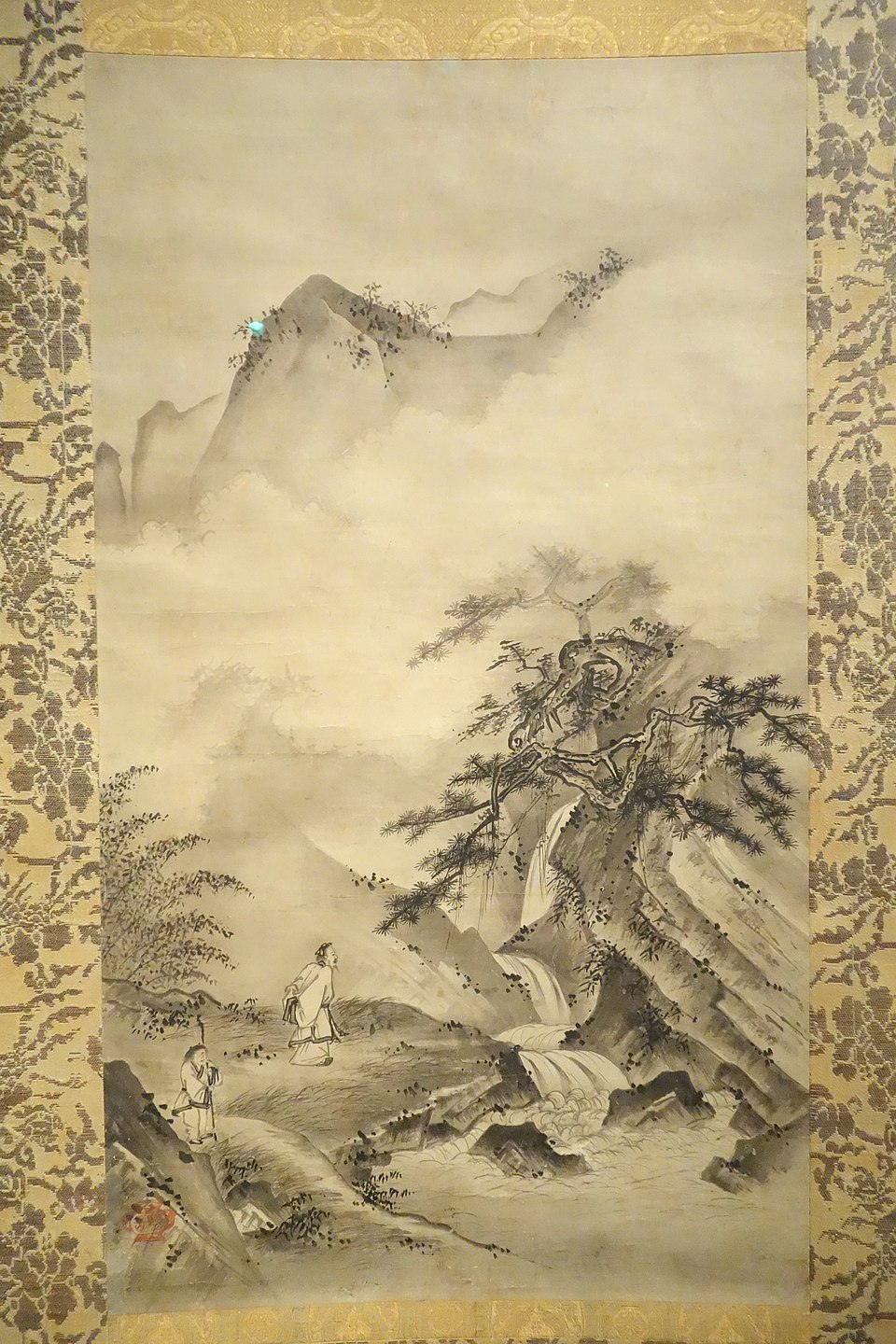
—The moon appears constantly in your verses. What does it represent to you as a Taoist adept?
She is my most faithful companion, more reliable than any emperor. See these lines that every child recites one day, my Jing ye si: "Before my bed, the moonlight bright — I think it is frost upon the ground. I lift my head, gaze at the bright moon; I lower my head, think of my homeland." From my boat, I watch it tremble on the river's water, and I seem to touch something eternal in that reflection that dissolves as soon as one approaches. The moon possesses nothing, claims nothing, yet it illuminates the whole world: that is the entire wisdom of the Tao. A wise man should learn from it to shine without possessing.
The moon possesses nothing, claims nothing, yet it illuminates the whole world.
—The An Lushan rebellion shook the empire. How did you become entangled in that turmoil?
Through imprudence, and perhaps the pride of an old man who still thinks himself useful. When the revolt broke out, in 755, the empire I thought eternal cracked like an overfull jar; Chang'an was taken, the emperor fled toward Sichuan. In that chaos, I joined the retinue of Prince Yong, convinced I was serving a just cause. I backed the wrong side. I was arrested, condemned for treason, thrown onto the roads of exile to the south. At my age, after a life of chosen wandering, to experience forced wandering was the bitterest of wines. All my life I had sung the freedom of the youxia, the wandering knight; now I was chained for having wanted, one last time, to take sides.
At my age, after a life of chosen wandering, to experience forced wandering was the bitterest of wines.
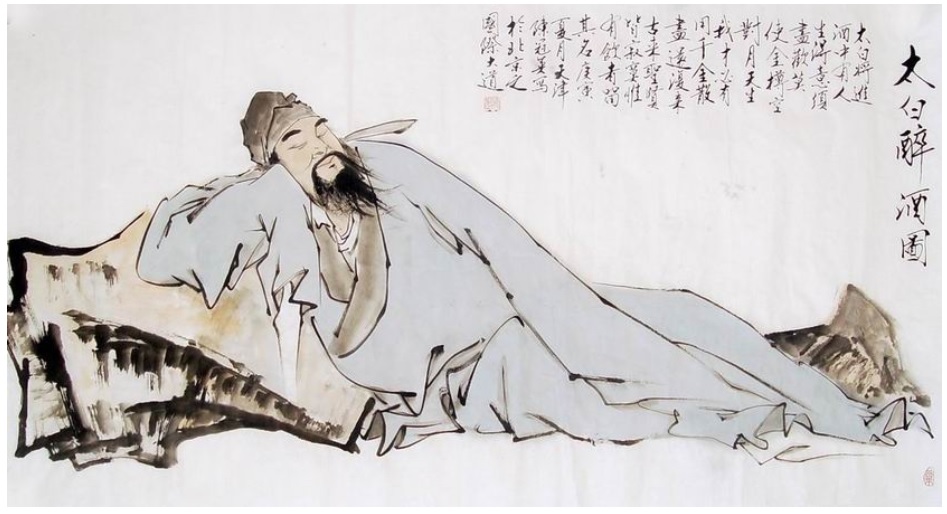
—Pardoned in 759, ill and impoverished, you nevertheless kept writing. Where did you still find beauty?
On the water, always on the water. My pardon came along the way, 759, through the kindness of a general who admired my verses — heaven sometimes sends its aid at the moment one no longer hopes. I wandered in the south, body worn, purse empty, but a boat moored one evening near the Jing River gave me back something. I composed there what some call my Ye bo Niuhu, "Night Boat on the Jing River." The misery outside, the empire's wars, all rumbled in the distance; yet in the lapping against the hull and the moon resting on the current, I found a peace the court had never given me. Serenity, you see, cannot be bought: it is wrested from misfortune.
Serenity cannot be bought: it is wrested from misfortune.
—Your friendship with Du Fu has become legendary. Do you remember your meeting?
It was in 744, the very year I left court, my heart still heavy from my gilded dismissal. We crossed paths on the eastern roads, two poets separated by everything: he, grave, tormented by the fate of the people and the empire; I, drunk on wine and mountains. And yet we walked together, drank together, sought old Taoist masters together. Du Fu was younger, more anxious than I; he carried the world's misfortune on his shoulders while I strove to drink it away. Rare are the men before whom one can drop the mask. He was one of them. They say today that the Tang heavens made two stars shine at once; I do not know if I am one of them, but I know he was my brother.
—What would you say about the way Du Fu saw you, he who dreamed of you even in his sleep?
He loved me better than I deserved. Long after our paths parted, he addressed a poem to me in which he confesses: "I often dream of you, my friend — a sign of the depth of my affection. You lived in forests and lakes, yet you haunted my thoughts." What can one answer to such tenderness? I spent my life on rivers and mountains, elusive, present nowhere; and this man, who stayed behind to bear the weight of the age, kept me alive in his dreams. That, I believe, is the only immortality that matters — not the hermits' elixir, but to remain in the dream of those one has loved. If I am still read a century from now, it will be in large part thanks to the affection of Du Fu.
The only immortality that matters: to remain in the dream of those one has loved.

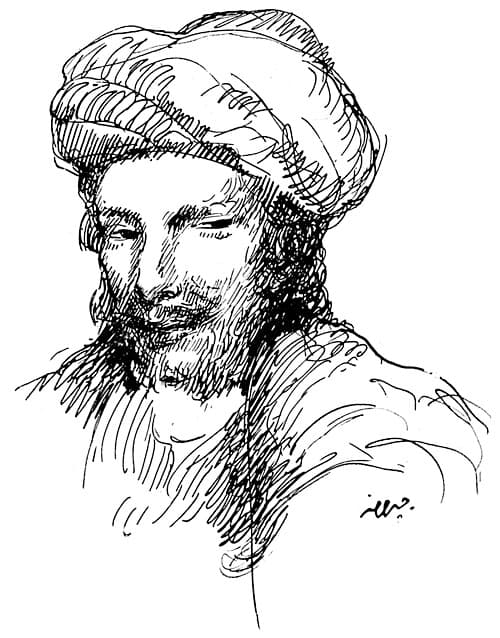
This imaginary interview was generated by artificial intelligence from sources documented in Li Bai's profile. It dramatises what the figure might have said based on what we know about them, but does not constitute attested historical testimony. For primary sources and factual documentation, refer to the full profile.