Imaginary interview with Lorraine Hansberry
by Charactorium · Lorraine Hansberry (1930 — 1965) · Performing Arts · Literature · Society · 6 min read
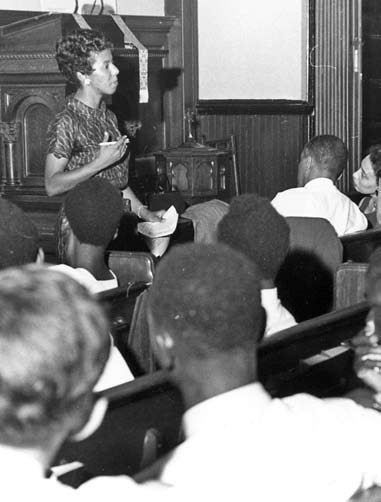
Winter 1964. In a Greenwich Village apartment cluttered with stacked manuscripts and activist magazines, a thirty-four-year-old woman receives us between hospital stays. The typewriter is still warm; Lorraine Hansberry, weakened by illness but sharp-eyed, agrees to trace the thread of a brief and blazing life.
—What is your earliest memory of what it meant to be Black in the America of your childhood?
I was eight years old, and I remember the noise above all — that shattering of glass in the living room of our house on the South Side of Chicago. A concrete block, thrown by a hand I never saw, had missed my head by inches. My family and I had had the audacity to live in a neighborhood where Black people were not wanted. The neighbors watched us as if we were a contagion; my mother kept watch at night, a gun within reach, while my father went to plead in Washington. You think childhood is told in games and laughter; mine was written in the screech of a broken window. I learned there, very early, that hatred had an address, a cadastre, a title deed — and that it could be fought through the law.
I learned very early that hatred had an address, a cadastre, a title deed.
—How did your father turn that harassment into a legal battle?
My father, Carl Hansberry, was not a man to throw in the towel. What the neighbors called a right, he called a restrictive covenant — a clause slipped into property deeds that forbade, in black and white, selling a house to someone of my race. He took the case all the way to the Supreme Court, and in 1940, in the decision Hansberry v. Lee, he won. The justices wrote without evasion: Black citizens of Illinois 'desire to purchase and occupy a dwelling in a neighborhood of Chicago in which they are prevented from doing so by the terms of a restrictive covenant.' A dream of brick and mortar, thwarted by a sentence. That victory exhausted him in money and energy, and I believe it slowly killed him. But it gave me, years later, the very substance of a play.
—Where did that strange title, A Raisin in the Sun, come from?
The title is not entirely mine; I borrowed it from Langston Hughes. In his poem A Dream Deferred, he asks what happens to a dream endlessly postponed: does it dry up like a raisin in the sun? That image haunted me. All of the Harlem Renaissance pulsed in that line, and I made it my own for the Younger family, my fictional family from the South Side. For this is what segregation produces: not just closed doors, but dreams pushed off year after year until they ferment, sour, explode. I wanted to show an ordinary Black family, with its insurance check and kitchen quarrels, daring to want a house. Nothing more ordinary, nothing more revolutionary. Hughes's deferred dream was not a metaphor for me; it was the air we breathed.
—How did you feel on opening night on Broadway?
On March 11, 1959, at the Ethel Barrymore Theatre, I was twenty-nine years old and as nervous as a child. Seeing a Broadway house full, mostly white, rise for a Black family from Chicago — I hardly dared believe it. Sidney Poitier carried Walter Lee on his shoulders; when he dreamed aloud about his liquor store — 'this little liquor store we got in mind cost seventy-five thousand' — you could hear all of Black America demanding its share. They tell me I was the first Black woman produced on Broadway, and the youngest to receive the New York Drama Critics' Circle Award. Those honors flattered and annoyed me at the same time: they spoke of exception, when I wanted to speak of the rule. That night, however, I understood that a theater could become a platform, and that they would listen to me there.
Those honors spoke of exception, when I wanted to speak of the rule.
—Do you remember that meeting with Robert Kennedy in May 1963?
May 1963. A handful of us were summoned by Robert Kennedy to an apartment in New York — James Baldwin had gathered us. The Attorney General expected, I think, polite thanks. He got something else. A young activist from the South hurled his raw anger in his face, and Kennedy stiffened, flustered, like a man discovering that dignity cannot be negotiated. I reproached him, to his face, for not lifting a finger when our young people were being arrested in Alabama. Power always thinks it is doing a favor by listening. That day, I was no longer the playwright being applauded; I was a Black woman who refused to lower her voice before the president's brother. We left without agreement, but I believe something in him cracked.
Power always thinks it is doing a favor by listening.
—Why did a successful author insist on meddling in politics?
I was often asked that question, as if art and struggle were two curtains that could not be drawn together. But I never separated the two. As early as 1950, I wrote for Freedom, Paul Robeson's newspaper, where segregation here and colonialism abroad were denounced with the same pen. Before Kennedy, I demanded not a favor but federal action — that Washington stop washing its hands while children were being beaten in the South. Art without commitment seemed to me an indecent luxury. A Black writer who looks away from his people is not an artist; he is a decorator. I have always believed that the beauty of a work is also measured by its courage. That is why my plays speak of rents, covenants, dignity — and not of cut flowers.
—What would you say about those letters you signed under a pseudonym?
In 1957, I wrote to a small magazine called The Ladder — the nation's first lesbian publication. I signed with only my initials, because a public woman could not then admit to her identity without losing everything. In one of those letters, I wrote: 'I think it is about time that equipped women begin to take on some of the ethical questions which a male-dominated culture has produced and dissect and analyze them quite closely.' I defended the idea that an educated woman had a duty to closely examine the moral questions a male culture had produced. I am known for the racial question; but oppression, you see, never comes alone. To be Black, female, and attracted to women in 1950s America was to carry three silences at once. Those pages, under a pseudonym, were one of the few places where I could set one down.
Oppression, you see, never comes alone.
—How do you connect these diverse commitments — race, women, the damned of colonialism?
I sometimes sum up my life in one sentence: 'I was born on the Southside of Chicago. I was born black and female. I was born in a depression after one world war, and came into my adolescence during another.' Everything is there — race, sex, era, piled up from the cradle. People want me to choose a single fight, as one chooses curtain colors. But I have never believed in those partitions. The same logic that refuses a house to a Black family on the South Side refuses a voice to a woman, an existence to those who love differently. I kept my notebooks, my letters, all that jumble of scribbled ideas, because I sensed that one day these threads would need to be connected. If I am still read in a century, I hope it will be for this stubbornness to never separate anything.
—How do you keep writing when illness sets in?
I was diagnosed with pancreatic cancer in 1963, at thirty-three. The news did not make me drop the pen — quite the opposite. Between hospital stays, I still scribble on my typewriter in this Greenwich Village apartment where I so often remade the world with Baldwin and others. The body betrays, but the mind persists. I have plays in progress, Les Blancs on the anti-colonial struggle in Africa, a thousand unfinished pages. I refuse to let the disease have the last word before the work. There is an insolence in writing when you are told the end is near; it is perhaps the purest form of hope. I do not have the leisure to wait — so I work as if time still belonged to me.
There is an insolence in writing when you are told the end is near; it is the purest form of hope.
—How did your second play survive so long, despite everything?
The Sign in Sidney Brustein's Window was my second play on Broadway, in 1964 — the story of a Jewish intellectual in New York grappling with his own betrayals. Audiences shunned it, box office collapsed, and the play should have closed twenty times. But my friends, my admirers, bought up tickets by the armful to keep it running, as one tends a sick person. They kept it alive while the disease consumed me. There is a symmetry here I would not have dared write myself: the theater and I failing together. I do not know how much time I have left, but I like to think that these stubborn spectators are giving me, without knowing it, the most beautiful of farewells — a full house, for as long as it takes.
This imaginary interview was generated by artificial intelligence from sources documented in Lorraine Hansberry's profile. It dramatises what the figure might have said based on what we know about them, but does not constitute attested historical testimony. For primary sources and factual documentation, refer to the full profile.