Imaginary interview with Luke Yuan
by Charactorium · Luke Yuan · Sciences · 6 min read
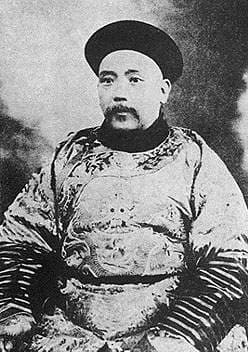
Long Island, a winter morning in 2003. In a suburban house near Brookhaven, an old man receives guests before a steaming teapot. Snow falls on the pines; a few miles away, the AGS ring sleeps under the frost. Luke Yuan, with the measured voice of an experimentalist who has spent his life listening to particles, agrees to trace back the thread.
—You were born in Beijing in 1912, into a family at the heart of Chinese power. How did this family name weigh on your choices?
I was born in Beijing in the very year the Republic of China was proclaimed — 1912, the empire had just fallen. My grandfather, Yuan Shikai, had been the first president of that Republic, and later tried to make himself emperor: suffice it to say that power, in my family, was a heavy and bitter thing. As a child, a political trajectory was expected of me, a place in state affairs. I looked at this heritage and felt the need to go elsewhere, toward something more verifiable than a man's ambition. Numbers do not betray; a measurement can be repeated. I chose the laboratory over the palace. It was not a renunciation, rather a way of remaining faithful to a requirement — understanding the world instead of governing it.
Numbers do not betray; a measurement can be repeated. I chose the laboratory over the palace.
—This great divide between the history of imperial China and American laboratories — did you experience it as a break?
Less a break than a displacement. I belong to a generation of Asians who went to the West when science was building its cathedrals there: the great accelerators, the institutes, the journals. I carried with me the memory of a country in upheaval — the 1911 revolution, wars, exiles — and I deposited it in a completely different setting, the control rooms of Brookhaven. For a long time I felt I belonged to two worlds without fully being of either. But physics does not ask for a passport. A hadron behaves the same way in Beijing, Berkeley, or Long Island. This universality reconciled me: I was at home wherever the same question was asked of matter.
—Tell us, concretely, what a day was like hunting the pion in the Cosmotron.
The Cosmotron was inaugurated at Brookhaven in 1952, the first accelerator to surpass a billion electronvolts — an enormous, noisy machine that had to be tamed. I arrived early and began by examining the previous day's data, those images of tracks left by collisions. We pushed particles to insane speeds to hurl them against each other, then read what burst forth. My work focused on pion-nucleon scattering: measuring, energy after energy, how this little meson discovered in 1947 clings to the heart of the atom. In the afternoon, we tuned the accelerator, monitored the detectors, scrutinized the tracks in the bubble chamber. It was as much a craft as a science: the patience of a watchmaker before a clock that ticks on the scale of a billionth of a second.
It was as much a craft as a science: the patience of a watchmaker before the infinitely brief.
—For a layperson, what is the real use of a bubble chamber, that instrument you mention so often?
Imagine a superheated liquid, on the verge of boiling. When a charged particle passes through it, it leaves behind a string of tiny bubbles — a wake, like that of an invisible boat. The bubble chamber, developed around 1952, made visible what is not: the trajectory of a hadron, its curvature in the magnetic field, its sudden decay into other particles. We photographed these tracks by the thousands, then measured them one by one. It was tedious, almost monastic. But each curve told a story: the mass of a particle, its charge, its brief life. Without these patiently accumulated images at Brookhaven, theorists would have had only fleshless equations. We gave them the facts; it was up to them to derive the law.
—In 1942, you married Chien-Shiung Wu, who would be called the 'Chinese Marie Curie'. What did this meeting represent?
We married in 1942, both physicists, both from China, both swept up by American nuclear physics. Much has been said about us being a singular couple; I would say above all that we shared the same hunger to understand. Chien-Shiung Wu had an experimental rigor I admired unreservedly — a hand of fearsome precision, a demand that never yielded. We did not always work on the same subjects, but we lived in the same language, that of experiments and results. In the evening, at home, our conversations would naturally slide from household matters to the latest detector data. It was, more than a marriage, a companionship of minds that lasted sixty years.
—In 1956, her experiment confirmed parity violation — without the Nobel Prize rewarding her. How did you experience that moment?
In 1956, Lee and Yang had dared a staggering idea: nature would not be symmetric in a mirror, parity violation. Many saw it as heresy. My wife designed the experiment that would decide — the decay of cobalt-60, cooled to extremes — and she showed they were right. It was an earthquake for all of physics. The following year, Lee and Yang received the Nobel Prize; she, who had provided the proof, was not associated with it. I will not hide that this left me with a taste of injustice. I was by her side in that work as in everything else. But she never begged for recognition: she said the truth of the experiment sufficed in itself. I learned that dignity from her.
She had provided the proof; the prize went elsewhere. I kept from that a taste of injustice.
—What was your home like, halfway between China and America?
We lived in a suburban house near Brookhaven, one of those ordinary postwar American homes, lawn and pines. But as soon as you stepped through the door, two worlds mingled. My wife, our son Vincent, and I spoke Chinese, and the kitchen often smelled of the dishes of our childhood; then, the next day, I would have lunch from a tray in the lab cafeteria between American colleagues. Our table constantly hosted visiting physicists — from Europe, Asia, the United States. The home was an extension of the lab: we would reimagine the particle world late into the night. I loved that crossroads. It expressed what I had become: a man of two shores, who had made scientific hospitality a second homeland.
—You maintained strong ties with your native culture while building your life in the West. How did you hold the two together?
You cannot cut the root without killing the tree. I built my career in the great laboratories of the West — Berkeley for training, then Brookhaven for most of my life — but I never stopped being Chinese. I corresponded with the Asian scientific community, followed what was being built there, and felt responsible, on my modest scale, for a bridge between continents. There was in this back-and-forth something I sensed as prophetic: science was ceasing to be a national affair to become everyone's. Collaborations crossed borders long before the world learned the word globalization. I felt, at Brookhaven, that I was already living in that future.
—It is said that your data were 'essential for theorists developing the quark model'. What does it feel like to contribute to a grand theory in this way?
A particular humility. At the AGS, that large synchrotron commissioned at Brookhaven in 1960, my group conducted years-long experiments on meson production, published in the Physical Review. We measured, tabulated, accumulated numbers that, in isolation, seem arid. Then, in 1969, the confirmation of the quark model gave meaning to all of it: our resonances, our cross-sections, were the bricks of an edifice others were building. The experimentalist rarely works alone and never for immediate glory. I provided solid facts; theorists drew from them the framework of what would be called the Standard Model. Knowing that my measurer's patience served that collective cathedral is enough for me.
Our arid numbers were the bricks of an edifice others were building.
—After so many years probing the infinitely small, what do you hope to leave to those who come after you?
If I allow myself, for once, to imagine being read in a century, I do not hope that my name will be remembered — discreet experimentalists end up drowned in author lists. I hope the method will be preserved: honest measurement, repeated, challenged, confirmed. All my life I recorded my observations in lab notebooks, protocol after protocol, with the conviction that a well-established datum outlives the one who recorded it. Particle physics then advanced like a long chain of artisans, each passing his result to the next. That Brookhaven, its accelerators, and its thousands of tracks were a link in that chain — that is what I am proud of. The rest, matter will take care of: it always has more to say than any single person can hear.
This imaginary interview was generated by artificial intelligence from sources documented in Luke Yuan's profile. It dramatises what the figure might have said based on what we know about them, but does not constitute attested historical testimony. For primary sources and factual documentation, refer to the full profile.