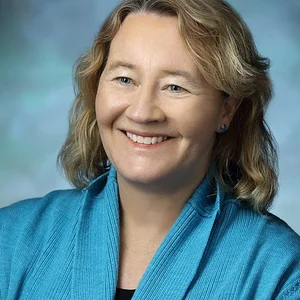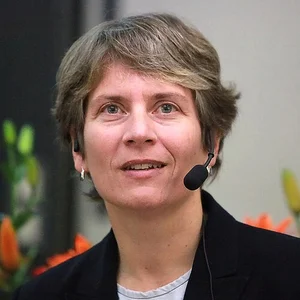

Alex Eskin is an American mathematician born in 1965, a specialist in dynamical systems and geometry. He is famous for the “Magic Wand Theorem” proved with Maryam Mirzakhani.
Alex Eskin(1965 — ?)
Alex Eskin
États-Unis
5 min read
Frequently asked questions
Key Facts
- Born in 1965 in Moscow (Soviet Union), he later emigrated to the United States
- Proved the “Magic Wand Theorem” on the dynamics of moduli spaces together with Maryam Mirzakhani (published around 2013-2015)
- Received the Breakthrough Prize in Mathematics in 2020 for his work in dynamical systems
- Professor of mathematics at the University of Chicago
Works & Achievements
Early work on dynamics and geometry, supervised by Peter Sarnak, laying the foundations for his career.
The “magic wand theorem,” a major result classifying the possible behaviors of translation surfaces.
A companion paper published in the Annals of Mathematics, extending the great theorem to all orbits.
Important contributions to the study of lattices and group actions, connecting algebra and geometry.
An award honoring the entirety of his contributions to the dynamics and geometry of moduli spaces.
Anecdotes
In 2013, Alex Eskin and Maryam Mirzakhani published a paper so dense — over 170 pages — that it took them about five years of work. Mathematicians nicknamed it the “magic wand theorem” because it allows you, as if by magic, to understand the shape of very complicated geometric objects.
Alex Eskin was born in Moscow in 1965, in the days of the Soviet Union, into a family of scientists. His family emigrated and he continued his studies in the United States, where he became one of the world's leading specialists in dynamical systems.
In 2020, Alex Eskin received the Breakthrough Prize in Mathematics, worth 3 million dollars, one of the most generously rewarded scientific prizes in the world. The jury specifically praised his famous theorem proved with Maryam Mirzakhani.
To study the motion of a billiard ball bouncing endlessly on a table, mathematicians like Eskin “unfold” the trajectory by gluing together copies of the table: in this way they obtain “translation surfaces,” which lie at the heart of his research.
His collaborator Maryam Mirzakhani was the first woman to receive the Fields Medal, in 2014. Their joint work, completed shortly before her untimely death in 2017, remains one of the most admired achievements in contemporary mathematics.
Primary Sources
We prove rigidity theorems for the action of the group SL(2,R) on the moduli space of translation surfaces, classifying the invariant and stationary measures.
Awarded for groundbreaking contributions to the dynamics and geometry of moduli spaces, including the proof, with Maryam Mirzakhani, of the “magic wand theorem”.
We show that every orbit of the SL(2,R) action on moduli space is equidistributed in an affine subvariety, which is itself a closed orbit.
Key Places
Alex Eskin's birthplace, then the capital of the Soviet Union, where he was born in 1965.
Where Eskin earned his PhD in mathematics in 1993 under the supervision of Peter Sarnak.
The university where Alex Eskin is a professor and carries out most of his research in dynamical systems.
The institution where Maryam Mirzakhani worked, his partner in their great collaboration.
The Institut des Hautes Études Scientifiques, whose prestigious journal published the foundational paper by Eskin and Mirzakhani in 2018.
Typical Objects

A mathematician's favorite tool for thinking and exchanging ideas by writing out equations and diagrams. Eskin, like most researchers, scribbles his proofs on it.

An abstract mathematical object obtained by gluing the edges of polygons together, central to Eskin's work. It is on these shapes that a billiard trajectory virtually bounces.

A lengthy document presenting a new proof, shared among researchers before official publication. Eskin and Mirzakhani's runs to over 170 pages.

A machine used to explore examples, test conjectures, and write up papers in LaTeX. Indispensable to the modern mathematician.

A prestigious award presented at a spectacular ceremony, symbolizing international recognition of a major discovery.
School Curriculum
Vocabulary & Tags
Key Vocabulary
Tags
Daily Life
Morning
The day of a mathematician like Alex Eskin often begins by reading articles and emails from collaborators scattered all around the world. He then prepares his lectures and makes progress on the proofs he is currently working on.
Afternoon
The afternoon is devoted to research: long sessions in front of a blackboard, discussions with doctoral students and colleagues. A single idea can occupy several days, or even several months.
Evening
In the evening, he sometimes continues writing a paper in LaTeX or holds video calls with researchers from other countries. Many problems ripen slowly, even far from the office.
Food
Like any contemporary American academic, his diet is ordinary: meals taken at the campus cafeteria, coffees shared during seminars where the best ideas are often born.
Clothing
Casual and practical attire typical of the academic world: a shirt or sweater, no required suit, comfort prioritized for long hours of reflection.
Housing
He lives in a house or apartment near the campus of the University of Chicago, a large American city, in a classic university living environment.
Historical Timeline
Period Vocabulary
Liens externes & ressources
Références
Œuvres
Thèse de doctorat (Princeton)
1993
« Invariant and stationary measures for the SL(2,R) action on Moduli space » (avec M. Mirzakhani)
2013-2018
« Isolation, equidistribution, and orbit closures » (avec Mirzakhani et Mohammadi)
2015
Travaux sur les marches aléatoires et les groupes
années 2000
Breakthrough Prize in Mathematics
2020