Kids interview Marguerite Yourcenar
by Charactorium · Marguerite Yourcenar (1903 — 1987) · Literature · 4 min read
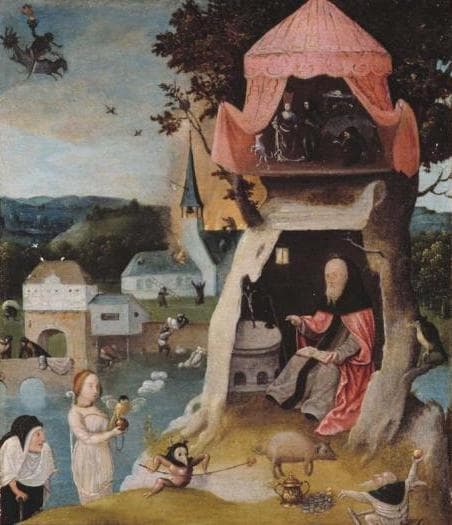
That morning, two middle school students visit a wooden house full of books, perched on an island. An old lady with a lively gaze welcomes them and invites them to sit down. Intimidated, then curious, they finally dare to ask their questions to Marguerite Yourcenar.
—What was it like, in the morning, in your house over there?
You know, my child, I lived far away, on a small island in Maine, in the United States. My house was called Petite Plaisance. I got up at dawn, when everything was still silent. Imagine a morning with no engine noise, just the wind and the cry of birds. I would go out for a walk in the forest. I watched the plants and animals, like a naturalist. Then I would come back and sit at my desk. Those first hours of the day were the most precious for writing. Silence, you see, is the best friend of the writer.
—Did you live all alone in that big house?
No, I was not alone. I shared that house with Grace Frick, my companion, for over forty years. In the evening, we read together, in the quiet. She translated my books into English: she was my first voice in another language. I also loved to translate. I put into French some American slave songs, those deeply moving negro spirituals, and pages by Virginia Woolf. Translating, you know, is entering another writer's home on tiptoe. You learn to think like him, to breathe like him. It is a very beautiful craft of patience.
—Is it true that you spent almost twenty years writing a single book?
It's true, almost twenty years! I had started that book, Memoirs of Hadrian, when I was young. Then I gave up. I couldn't manage it. The years passed. And one day, in 1948, I opened an old forgotten trunk. Inside, I found my notes from long ago. My heart leaped. I took it all up again, from the beginning. Imagine: finding a treasure you thought lost forever, at the bottom of a chest. That is how a book is sometimes born. Not all at once, but after a very long wait.
One must know how to wait for things to ripen within oneself.
—How do you write as if you were a dead emperor?
Ah, that is quite a secret! Hadrian was a Roman emperor who died long ago. To make him speak, I studied Roman coins bearing his likeness. Looking at his face engraved in metal, I tried to guess his gaze, his thoughts. I also went to Italy, to Tivoli, to walk among the ruins of his great villa, where he himself had walked. This is called apocryphal memoirs: writing 'I' by slipping into the skin of a character who really existed. It is a bit like putting on the cloak of a dead man to still feel his warmth.
—What was an alchemist?
An alchemist, my child, was a scholar of olden times. He sought to transform metals and unlock the secrets of nature. My hero was called Zeno, in my book The Abyss. He lived during the Renaissance, a dangerous time for those who thought freely. One could be punished, persecuted, simply for asking too many questions. Zeno wanted to understand the world by himself, without being told what to believe. This book received a major prize, the Femina, in 1968. For me, seeking truth by oneself is the most beautiful and the most risky of adventures.
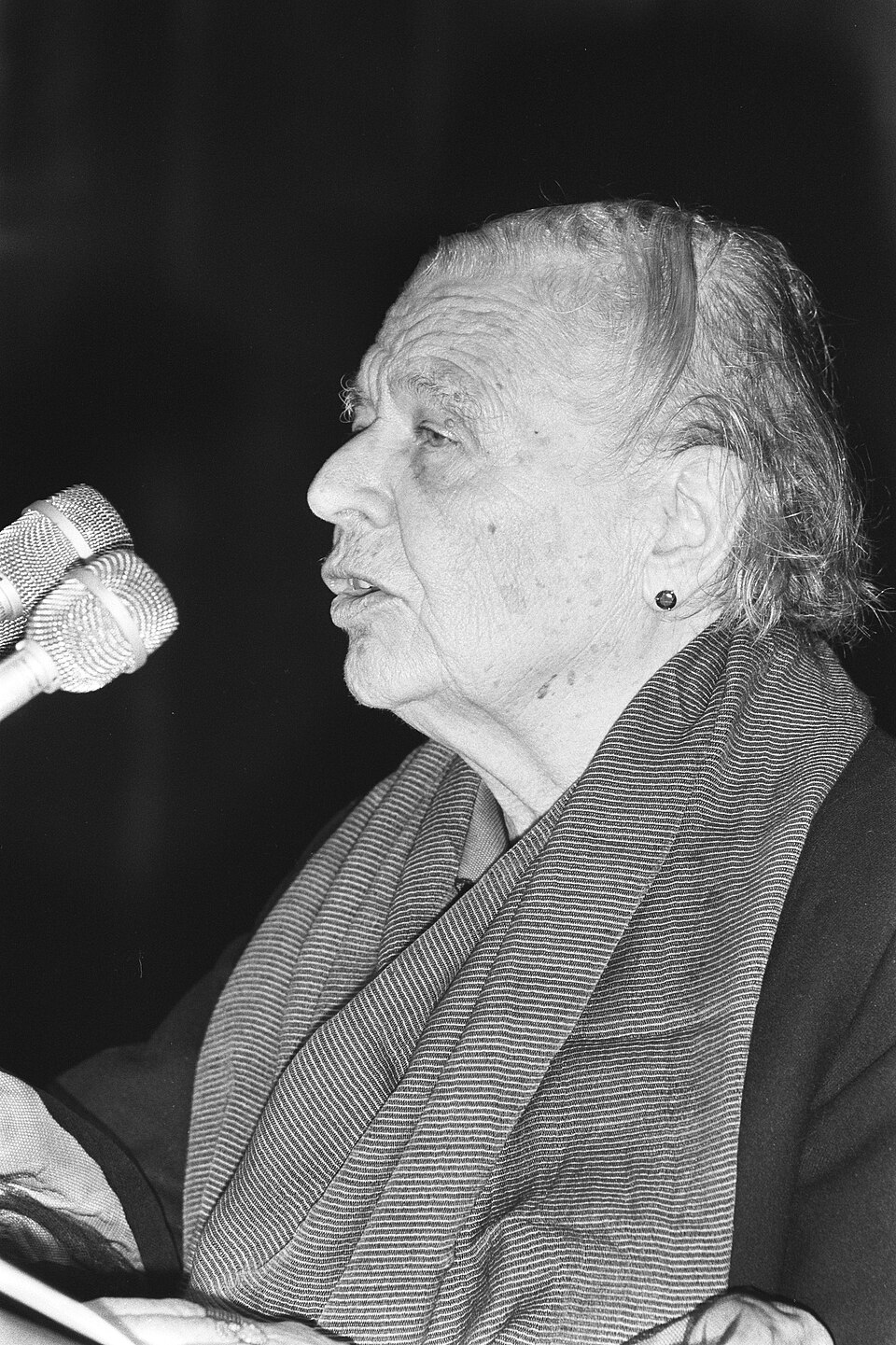
—Is it true you didn't eat meat?
It's true, little by little I stopped eating it. It came from the heart. I loved animals too much to accept that they be made to suffer. On my island in Maine, I ate vegetables from my garden, wild fruits, sometimes fish. I drank a lot of tea. You see, I thought that respecting a simple animal is already respecting the whole world. Everything is connected. If we damage nature, we damage ourselves. As early as the 1970s, I said it out loud, when very few people were thinking about it yet.
—Were you afraid for the planet, even in your time?
Yes, I was afraid for it. Very much. In a book of essays, The Dark Brain of Piranesi and Other Essays, published in 1984, I wrote that our world is destroying itself at full speed. No one before us had seen such haste. I liked to repeat a simple thing: “Nature is our mother and our sister, not our slave.” Do you understand? You don't treat your mother like an object to be thrown away. Imagine a forest cut down entirely: it takes centuries to grow back, sometimes never. Taking care of the world means taking care of those who will come long after you.
Nature is our mother and our sister, not our slave.
—Is it true that you were the first woman in a very famous place?
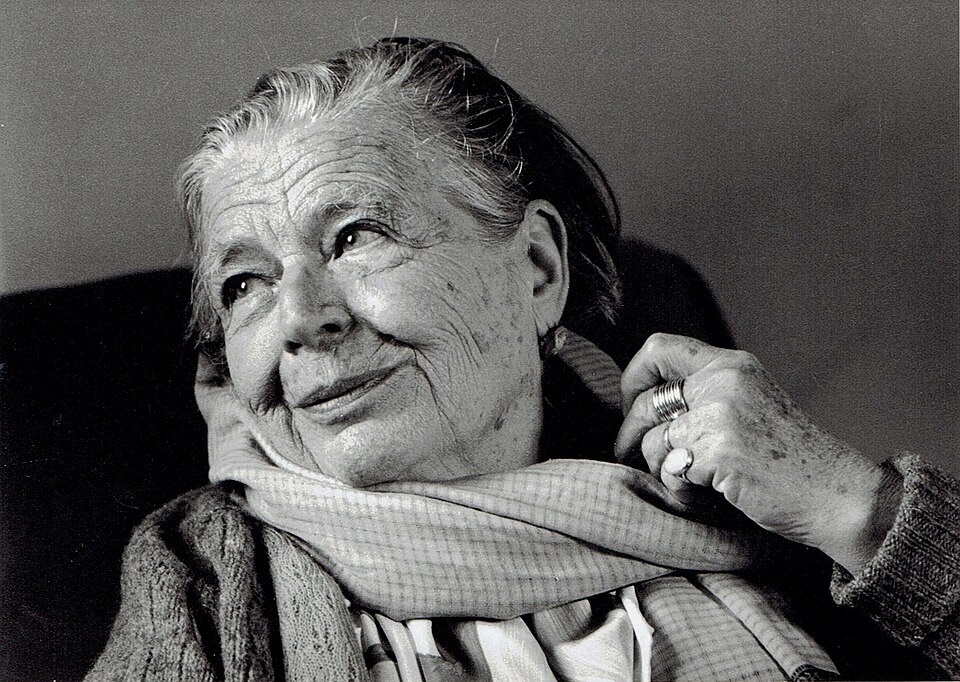
Yes. In 1980, I was elected to the Académie française. It is a very old assembly of writers, founded in 1635. Its members are called the Immortels, because their motto speaks of immortality. Well, in almost three hundred and fifty years, no woman had ever entered. I was the first. Imagine a large room full of men in embroidered robes, and suddenly, a lady among them. It had the effect of a small revolution. I had not sought this honor. But I was happy to open a door that other women would pass through after me.
—Were there people who didn't want you in there?
Oh yes! Some didn't want me at all. They said the rules only spoke of Immortels, in the masculine, never Immortelles. For them, a woman had no place under that venerable institution. It hurt me a little, I admit. But I did not respond with anger. I told myself: my best argument is my books. You can argue about the words of a statute. You argue much less about the work of a lifetime. Closed doors, you see, always end up opening, with patience and hard work.
—If we had to keep just one thing from you, what would it be?
If you had to keep just one thing from me? Keep this: look at the world with open eyes. See things clearly, without ever lying to yourself. That is what I sought in telling the life of Hadrian, then that of Zeno. To understand the humans of the past in order to better understand those of today. And then love nature, respect it, never think it is at your service. You are young. The world will soon be in your hands. Read a lot, travel if you can, and keep your heart attentive to others and to animals. That is all I have learned in a very long life.
Look at the world with open eyes, without ever lying to yourself.
This imaginary interview was generated by artificial intelligence from sources documented in Marguerite Yourcenar's profile. It dramatises what the figure might have said based on what we know about them, but does not constitute attested historical testimony. For primary sources and factual documentation, refer to the full profile.