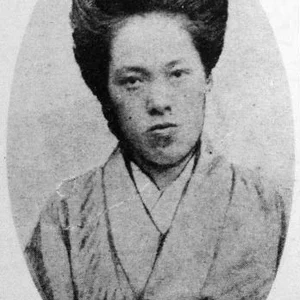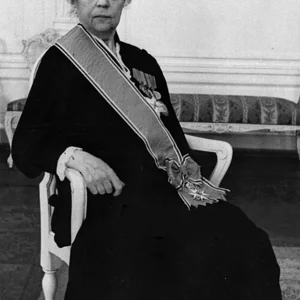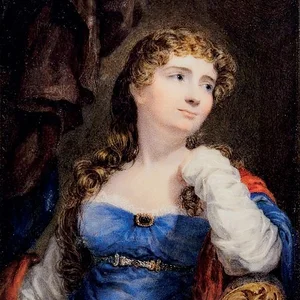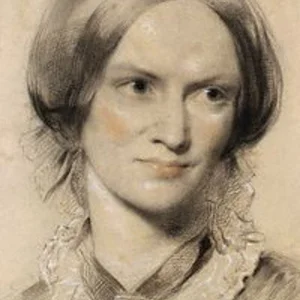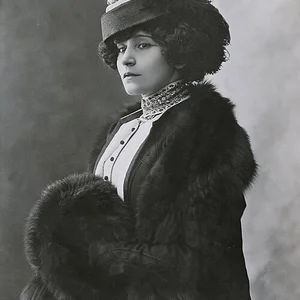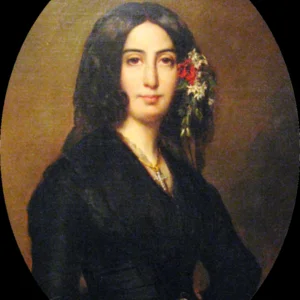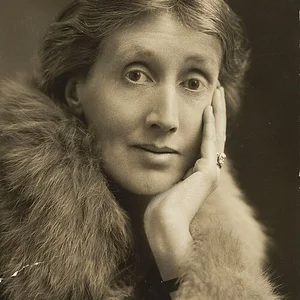

British author (1882–1941), Virginia Woolf is one of the most important figures in 20th-century modernist literature. Author of Mrs Dalloway and Orlando, she revolutionized the novel through her use of stream of consciousness and her pioneering reflections on feminism and the condition of women.
Frequently asked questions
Famous Quotes
« A woman must have money and a room of her own if she is to write fiction.»
« Lock up your libraries if you like; but there is no gate, no lock, no bolt that you can set upon the freedom of my mind.»
Key Facts
- 1915: Publication of The Voyage Out, her first novel exploring stream of consciousness
- 1925: Publication of Mrs Dalloway, a modernist masterpiece making use of interior monologue
- 1929: Publication of A Room of One's Own, a foundational essay in literary feminism
- 1928: Publication of Orlando, an innovative novel exploring identity and gender
- 1941: Death at Richmond, leaving a decisive legacy in modern literature
Works & Achievements
A pioneering novel using stream of consciousness to follow one day in the life of a London woman. This landmark work of modernism revolutionizes narrative technique and explores the inner thoughts of its characters.
A fantastical and satirical tale following a character who travels through centuries and changes sex. This experimental work questions identity, gender, and time in literature.
A major modernist novel centered on a family's attempt to reach a lighthouse. Woolf deploys her interior monologue technique to explore psychological time and human relationships.
A founding feminist essay arguing that women need financial and intellectual independence in order to create. This text became a manifesto of literary feminism in the twentieth century.
An experimental novel recounting a young man's life through fragments and multiple perspectives. Woolf abandons traditional linear narration throughout.
Her final published novel, fragmented and experimental, weaving together a theatrical pageant and reflections on British society. A testament to her late stylistic evolution.
An experimental and poetic novel presented as a collective monologue of six characters. In it, Woolf reaches the pinnacle of her stream-of-consciousness technique.
Anecdotes
Virginia Woolf suffered from significant mental illness throughout her life. After her mother's death in 1895, she experienced her first severe depressive episode at the age of 13, marking the beginning of a lifelong struggle with mental health. These painful experiences profoundly shaped the introspective, psychological nature of her novels.
In 1928, Virginia Woolf delivered a lecture to female students at Cambridge that would become her celebrated essay 'A Room of One's Own'. In this landmark feminist text, she argues that a woman needs financial independence and a private space of her own in order to create great literature. The essay remains a major reference in feminist studies to this day.
Virginia Woolf wrote her novel 'Orlando' as a tribute to her relationship with fellow writer Vita Sackville-West. The book follows a character who changes sex and travels through the centuries, making it a bold and avant-garde work for the 1920s. This creative friendship shows how Woolf's personal life fed her literary imagination.
During the Second World War, Virginia Woolf lived with deep anxiety brought on by the bombing of London and the turbulence of the political climate. She kept a diary throughout those dark years, documenting her thoughts and fears with a writer's eye. This journal offers a vivid record of how major historical events shaped the daily lives of ordinary British civilians.
Virginia Woolf was a member of the Bloomsbury Group in London, an intellectual circle where artists, writers, and thinkers gathered to debate literature, art, and new ideas. This creative community allowed her to develop her revolutionary thinking and publish her most important works. The Bloomsbury Group played a defining role in shaping British modernism in the first half of the twentieth century.
Primary Sources
Mrs Dalloway said she would buy the flowers herself. Lucy had her work cut out for her. The morning was fresh as if issued to children on a beach.
He—for there could be no doubt of his sex, though the fashion of the time did something to disguise it—was in the act of slicing at the head of a Moor which swung from the ceiling.
A woman must have money and a room of her own if she is to write fiction in the twentieth century.
I am not one and simple, but complex and many.
I feel certain that I am going mad again. I feel we can't go through another of those terrible times.
Key Places
The London neighbourhood where Virginia Woolf lived and worked at the heart of the famous Bloomsbury Group, a circle of modernist intellectuals and artists who profoundly shaped her thinking and literary work.
Virginia Woolf's birthplace in 1882, where she grew up in a family of Victorian writers and intellectuals, laying the foundations for her future critical thinking about society.
The village where Virginia Woolf settled with her husband Leonard Woolf and wrote several of her major works. It is also the place of her death in 1941 and the home of the Hogarth Press, their publishing house.
The university city Virginia Woolf knew well through her family; in 1928 she delivered lectures there to women students, which became the basis for her landmark feminist essay A Room of One's Own.
The London address where Virginia Woolf lived at number 52 and wrote several of her major novels, including Mrs Dalloway and The Years.
An important travel destination for Virginia Woolf that influenced her literary imagination and reflections on classical culture, as seen in her notebooks and correspondence.
Typical Objects

The preferred writing instrument of the early twentieth century, the fountain pen was Virginia Woolf's everyday tool for drafting her novels and essays. It symbolizes the meticulous literary work of that era.

Virginia Woolf recorded her ideas, drafts, and reflections in handwritten notebooks. These journals bear witness to her creative process and her stream-of-consciousness technique.

Although Woolf wrote primarily by hand, the typewriter was a symbol of modernity in the twentieth century, enabling faster literary production and representing the technological progress of her time.

Virginia Woolf and her husband Leonard founded the Hogarth Press, an avant-garde publishing house. The finely bound books it produced symbolize her commitment to publishing innovative works.

The flowing, elegant gowns of the early twentieth century that Woolf wore reflect the aesthetic of her era and stand in contrast to the restrictive Victorian dress that feminism was beginning to challenge.

The study furniture at which Woolf composed her works — most notably her celebrated private room, a symbol of her independence — illustrates the concept of personal space as a prerequisite for literary creation.

The novel published in 1925 by the Hogarth Press, which revolutionized the form by its use of interior monologue, embodies Virginia Woolf's most significant literary innovation.

The accessories of early twentieth-century London social life — in which Woolf participated despite her reservations — represent her involvement in the intellectual and artistic circles of the day.
School Curriculum
Vocabulary & Tags
Key Vocabulary
Tags
Mouvement
Daily Life
Morning
Virginia Woolf generally rose around 8 or 9 in the morning and had a light breakfast with her family. She then devoted her best morning hours to writing, working at her desk or in the sitting room — often still in her dressing gown — before social obligations or visitors could interrupt her.
Afternoon
In the afternoons, she would receive writer and intellectual friends from the Bloomsbury Group in her drawing room, where lively discussions on literature, art, and new ideas would unfold. She also took walks through London or the English countryside, placing great importance on these moments of rest to maintain her often fragile mental equilibrium.
Evening
Evenings were devoted to reading, family dinners, or literary gatherings in cultivated circles. Virginia Woolf kept up a regular correspondence with her writer friends and engaged in intellectual debates, sometimes late into the night.
Food
As a woman of the prosperous middle class, Virginia Woolf followed a classic British regime of a full breakfast, lunch, and formal dinner. She enjoyed afternoon tea and the refined dishes typical of her social milieu, while frequently preoccupied with her health and the effects of food on her physical and mental well-being.
Clothing
She wore the long, elegant dresses fashionable in the 1900s through 1930s, favouring simple, understated cuts and rejecting the excesses of corseting. Rather austere in her appearance, she was known for her intellectual bearing and relative indifference to beauty conventions — a reflection of her independent spirit.
Housing
Virginia Woolf lived in elegant London houses, notably in Bloomsbury and Chelsea, and at a country property in Rodmell, Sussex. These bourgeois homes, filled with books and works of art, reflected her social standing and served as retreats for her creative work and the periods of seclusion she needed.
Historical Timeline
Period Vocabulary
Visual Style
Un style visual mélangeant l'esthétique Art Déco britannique avec l'impressionnisme aquarellé, privilégiant les nuances subtiles et les formes fluides pour traduire l'univers introspectif et moderniste de Virginia Woolf. Les illustrations combinent des espaces intimes fragmentés et des paysages psychologiques abstraits, reflétant sa technique du monologue intérieur.
Sound Ambience
Une ambiance sonore raffinée et introspective, mêlant les bruits intimes d'un salon littéraire londonien aux sons urbains du début du XXe siècle, évoquant la vie mentale riche et la sensibilité moderniste de Virginia Woolf.
Liens externes & ressources
Références
Œuvres
Mrs Dalloway
1925
La Traversée des apparences (To the Lighthouse)
1927
Une chambre à soi (A Room of One's Own)
1929
La Promenade au phare (Jacob's Room)
1922
Entre les actes (Between the Acts)
1941
Les Vagues (The Waves)
1931