Imaginary interview with Marie Laveau
by Charactorium · Marie Laveau (1801 — 1881) · Spirituality · Culture · 6 min read
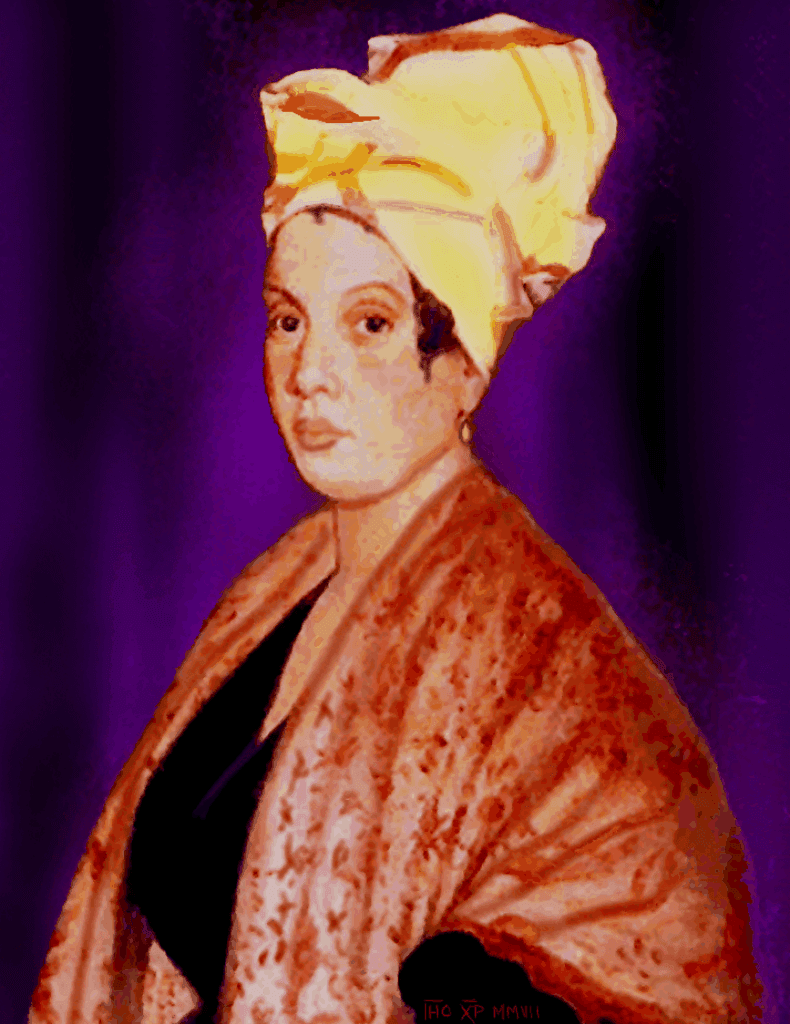
New Orleans, rue Saint-Ann, at the hour when the heat of the Vieux Carré settles like a prayer. Behind the covered gallery, a woman in a madras tignon ushers us into a room where the smell of dried herbs, candle wax, and incense mingle. The Voodoo Queen offers us a chair, a glass of bayou water, and agrees to speak.
—How would you define your place in this city, you who were born a free woman of color?
I was born around 1801, in a Louisiana that France had just sold to the Americans — the city I knew was changing language and masters at the same time. Free woman of color means I walk between two worlds: neither slave nor white, a knife blade laid on the table. The law forced me to wear the tignon, that headwrap invented in 1786 to distinguish us from white women and humiliate us. So I made it my crown. I tie it high, in madras, and when I enter a place, that's all anyone sees. They wanted a badge of shame; I made it a badge of authority. In a society built on the whip, a woman like me has only one weapon: knowing how to stand straight where they want you bent.
They wanted a badge of shame; I made it a badge of authority.
—You were a hairdresser by trade. How did this work nourish your reputation?
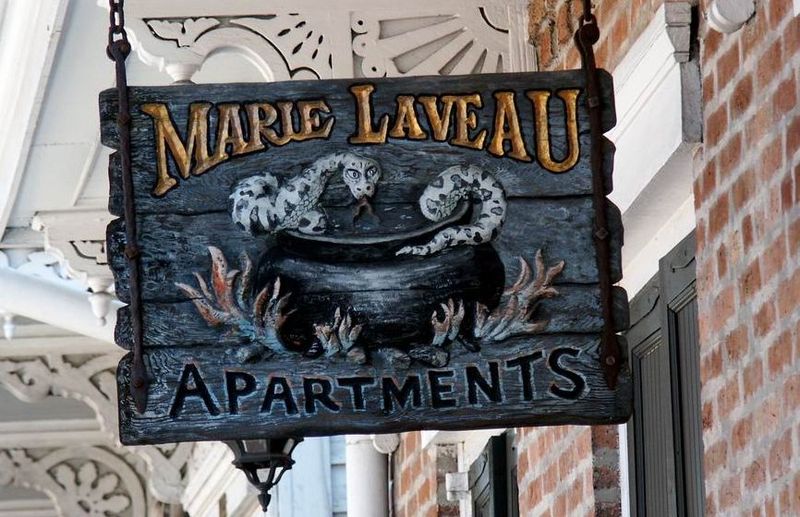
The comb opened more doors for me than any gris-gris. I dressed the hair of the ladies of the great Creole families of the Vieux Carré, and a woman sitting before her mirror, hands in her hair, talks. She confides her sorrows, her husbands, her debts, her lawsuits. I listened. I also had my maids and servants placed in those houses, who reported what was whispered behind the shutters. So when a judge or a notable came to consult me in the afternoon, thinking he was telling me his secret, I already knew it. They said I read souls. Above all, I read the city. My salon on Saint-Ann Street was the place of all secrets, and a well-kept secret is worth a thousand spells.
The comb opened more doors for me than any gris-gris.
—Many are surprised that you mix the Catholic crucifix with African spirits. How does that hold together?
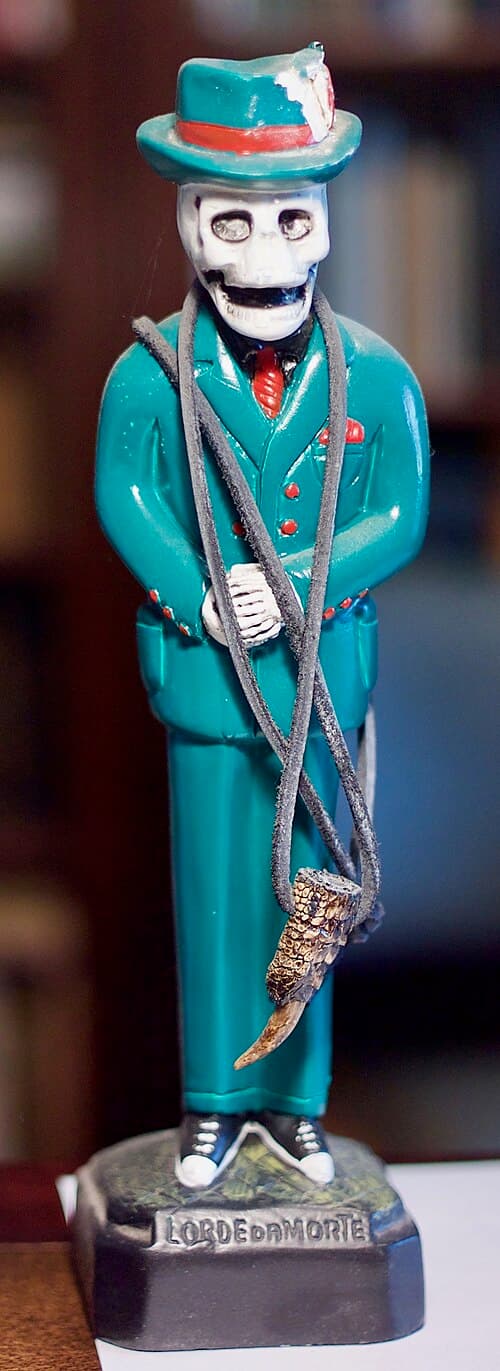
It holds because I see no wall between them. Every morning, I pray before my altar, between the crucifix, holy water, and images of the saints — I am a daughter of the Roman Church, baptized in it. Then I prepare my remedies with bayou plants and tie my gris-gris, those little sachets of herbs, bones, and earth in which I seal an intention. A red candle for love, black to punish, white to heal. The saint and the loa hear the same prayer, each in his own tongue. My ancestors crossed the sea with their spirits; the priests gave us theirs. I did not choose between the two: I made a single path from their two trails.
The saint and the loa hear the same prayer, each in his own tongue.
—Tell us about those great St. John's Eve nights by the lake.
Every June 23, when St. John's night falls, I lead the faithful to the shores of Lake Pontchartrain. Hundreds come — Black and White, free and enslaved, mingled under the torches as the city never mingles them by day. We light the fires, beat the drums, sing in the language of the old countries, and the water becomes a mirror for the spirits. That is where Li Grand Zombi dances, my great python snake, the spirit that undulates in my arms and makes those who have never seen anything sacred recoil. The authorities fear these nights; they spy on them from afar. Let them watch: on these shores, for a few hours, there are no masters, only the living before the mystery.
On these shores, for a few hours, there are no masters, only the living before the mystery.
—That snake you call Li Grand Zombi, what does it represent to you?
It is not a beast to frighten the curious, as they say in town. Li Grand Zombi is the spirit, the very form the divine takes when it consents to be touched. When I dance with him, it is not I who carry him, but he who moves through me. The python glides, coils, knows the patience of water and the secret of things hidden underground. The elders of Dahomey already carried this worship before they were chained, and it crossed the ocean in their memory. I am merely reopening a house for it here, on this bayou land. Those who see only a snake have seen nothing; those who kneel know that a god breathes in my arms.
—They say judges and politicians came discreetly to consult you. Why such high-placed clientele?
Because fear knows no color of skin. A powerful man has more to hide than a poor man from the faubourg: a lawsuit going wrong, a mistress, a disputed inheritance, an enemy he wants to see fall. These gentlemen came in the afternoon, through the back door, hats pulled low, and asked me for what the law could not give them. I received them, prepared a gris-gris tailored to their affair, spoke a word that — I already knew from my network — would hit home. In exchange, a gift of money or goods. They thought me omniscient; I was mostly well-informed. But no matter what name you give power, as long as it serves those who come knocking at my door.
—Did your reputation come only from your rituals, or from your acts toward the most destitute?
They know me for my spells, but it is my visits to the prisons that earned me lasting respect. I go to see the condemned to death, those the city has already forgotten. I bring them food, a little warmth, a prayer so they die less alone. They say I obtained pardons for a few by my prayers alone — believe what you will. As a free woman of color, I also reached out to my own: families broken by the sale of slaves, freedoms I sometimes managed to negotiate in the shadows. Charity and power are not two different things for me. Whoever relieves misery makes himself loved, and whoever makes himself loved becomes stronger than the whip.
Whoever relieves misery makes himself loved, and whoever makes himself loved becomes stronger than the whip.
—What does an ordinary day look like in your house on Saint-Ann Street?
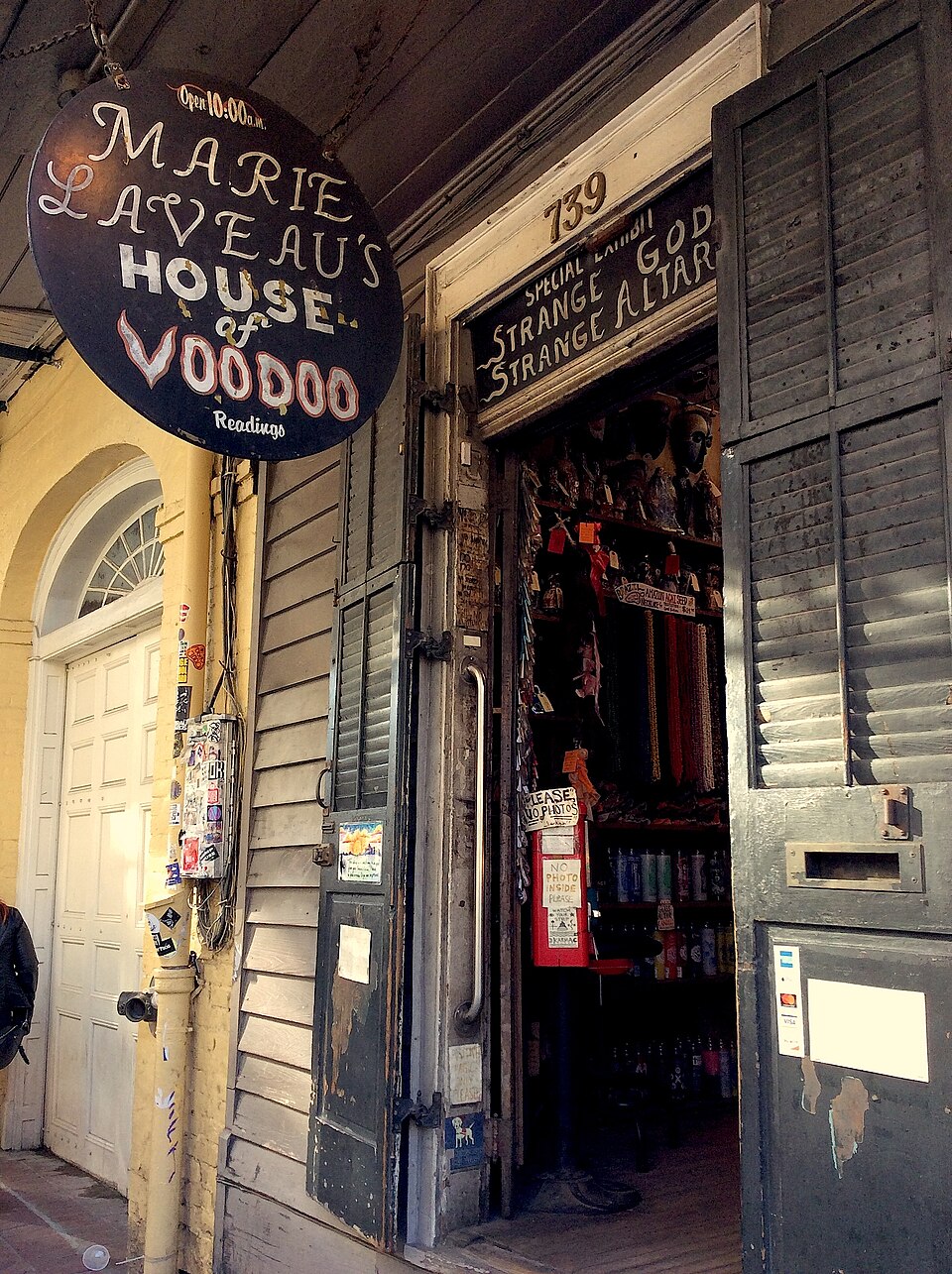
It begins in silence, before my altar, with morning prayer and the light of candles. Then the plants: I infuse roots and herbs from the bayou, for I am a healer as much as a priestess, and the body's ailment is treated before the soul's. Toward noon, the house opens — first the salon's clients, then the afflicted who come seeking advice, a remedy, a gris-gris. In the evening, it depends on the sky and the spirits: sometimes a discreet meeting with my initiates, around the altar laden with offerings; sometimes a larger ceremony. My Creole home, with its inner courtyard and hanging herbs, smells at once of gumbo soup and incense. There, one lives and prays without ever separating the two.
—Rumor has it that you are immortal, that you have been seen growing younger. What do you say to that?
They call me old and the next year find me young; they swear they saw me in two places at the same hour. I let them talk. The truth is simpler and more beautiful: my daughter, Marie Laveau as well, resembles me as water resembles its source. When my strength wanes, she takes my place at ceremonies, ties the same tignon, bears the same name. People then believe that time has no hold on me. Let them believe! A queen does not die in a single body. I have passed on what I received, as my ancestors passed on their spirits to me across the ocean. As long as a hand ties the gris-gris and calls the loas, the Voodoo Queen will walk the streets of this city.
A queen does not die in a single body.
—What will remain of you, do you think, when you rest in St. Louis Cemetery?
When I lie in St. Louis Cemetery, in the family tomb, I already know what the living will do: they will come. They trace crosses on the stone, leave flowers, a coin, a little rum, and whisper their wish. This city does not forget those who listened to it. I have left no book — I am not a woman of ink — but I have left a path: a way of tying the Catholic and the African, the drum and the rosary, into a single faith that is that of New Orleans. If they still speak of me in a century, it will not be for my spells, but because I showed that a woman born with nothing could restore a little dignity to her own. The rest is legend — and the legend, I gladly leave it.
I have left no book, but I have left a path.
This imaginary interview was generated by artificial intelligence from sources documented in Marie Laveau's profile. It dramatises what the figure might have said based on what we know about them, but does not constitute attested historical testimony. For primary sources and factual documentation, refer to the full profile.