Imaginary interview with Mary Golda Ross
by Charactorium · Mary Golda Ross (1908 — 2008) · Technology · Sciences · 5 min read
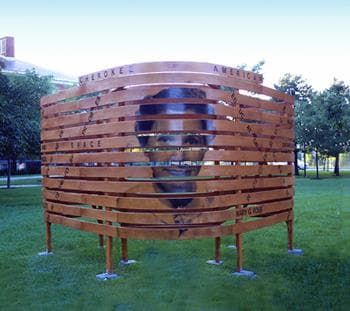
Los Altos, California, in the early 2000s. In a modest living room where a few scientific journals still lie on a coffee table, a petite woman over ninety receives visitors with measured politeness. Her voice is calm, precise—the voice of someone who has spent a lifetime double-checking her numbers.
—You were born in 1908 in Park Hill, at the heart of the Cherokee Nation. What did that childhood give you?
I was born in Park Hill, very close to Tahlequah, the capital of our nation in Oklahoma. What you need to understand is that in my family, there was no difference made: a girl had to learn as much as a boy, period. My great-great-grandfather was John Ross, the chief who led our people during the Trail of Tears; growing up with that memory teaches you that you don't bend before adversity—you move forward. By age twenty, I already had my bachelor's degree in mathematics from Tahlequah College. Numbers, very early on, were a neutral ground for me where my name, my gender, my origin didn't matter: only the correctness of the calculation counted. Perhaps that's where it all began.
Numbers were a neutral ground where only the correctness of the calculation counted.
—In your studies and later at Lockheed, you were almost always the only woman. How did you experience that solitude?
I'll say it simply, as I've always said: "I was the only girl in the class. I sat on one side of the room and the men on the other." That never intimidated me. I had learned at home that a Cherokee woman didn't have to ask permission to exist. Later, in technical meetings at Burbank, I was often the only woman, and sometimes the only Native American person in the room. I would sit down, put my calculations on the table, and the work spoke for me. People eventually stop looking at you sideways when your trajectories are correct. I never tried to make noise; I tried to be right.
A Cherokee woman didn't have to ask permission to exist.
—In 1952, you were chosen to join the famous Skunk Works. What do you remember about that team?
There were about forty of us engineers, handpicked, for this division nicknamed the Skunk Works—the most secret part of Lockheed, set apart from everything else. We designed what didn't yet exist. The secrecy was such that I couldn't talk about anything for decades, not even to my loved ones. My day began with security checks, then came reviewing the previous day's data. What I can say is that the work was both demanding and exhilarating: we were groping toward systems that no one had ever built. Being one of the founders of that team remains, I believe, one of the quietest prides of my career.
—Today it's hard to imagine the tools you worked with. Tell us about your nights of calculation.
Here's how it went: "Often at night, there were four of us working until 11 p.m. I was the one pushing the pencil, doing a lot of research. My state-of-the-art tools were a slide rule and a Friden calculator." That slide rule, graduated with logarithmic scales, never left me; the Friden, meanwhile, was a heavy electromechanical machine that clacked and vibrated on the desk. No computer, no screen. Every trajectory was earned by hand, line after line, double-checking everything because a decimal error could lose it all. Coffee often accompanied those long evenings. We didn't have speed, but we had rigor.
Every trajectory was earned by hand, because a decimal error could lose it all.
—How did you come to calculate routes to other planets?
The world changed in 1957, when the USSR launched Sputnik: suddenly, space was no longer a dream but a race. A year later, NASA was born. At Lockheed, I was entrusted with studies I wouldn't have dared imagine in my youth: charting paths to Mars and Venus. I had to calculate flyby trajectories for vehicles that existed only on paper, taking into account celestial mechanics, launch windows, propulsion. It was astronautics in its very first steps. I wielded my slide rule as others wielded a compass, except my sea was interplanetary void.
I wielded my slide rule like a compass, except my sea was interplanetary void.
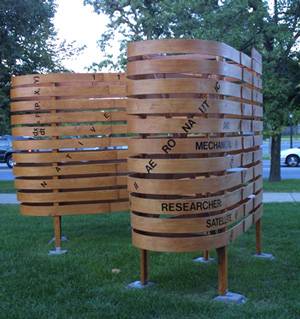
—In 1963, your name appeared in a NASA handbook on travel to Mars and Venus. What did that work represent?
I contributed to the third volume of the Planetary Flight Handbook of NASA, devoted to routes to Mars and Venus. A handbook may seem modest, but it was actually a map: we set down in black and white the mathematical foundations that others would follow to launch real missions. In those same years, I also worked on the Agena upper stage, that part of the rocket that ignites after liftoff to maneuver a payload in space. Think about it: I was born at a time when military aviation was taking its very first steps, and here I was calculating passages between planets. I didn't see those vehicles launch with my own eyes, but I knew the path was drawn.
A handbook may seem modest; it was actually a map.
—In 2004, you marched in the inaugural parade of the National Museum of the American Indian. Why did that moment matter to you?
I was ninety-six years old, and I was determined to be there. For the opening of the National Museum of the American Indian, in Washington, I wore a traditional Cherokee dress, green, which I had chosen myself. It wasn't a costume, understand: it was a statement. All my professional life, I had worn the sober suit expected of a woman in an engineering office. That day, on the National Mall, I could finally show both halves of myself together—the cutting-edge engineer and the Cherokee woman, descendant of John Ross. Marching in that dress, at that age, was closing a loop that had begun in Tahlequah almost a century earlier.
It wasn't a costume: it was a statement.
—You rarely speak of your Cherokee heritage in the context of your career. Did the two really meet?
People often think that science erases everything else. For me, it's the opposite. The value my Cherokee family placed on education—for girls as well as boys—is exactly what led me to my drafting table in Burbank. Our people have their own language and writing system, the syllabary; we have long known that a well-designed system of signs is a tool of power. My trajectories were, at bottom, just another language of precise signs. Descending from those who survived the Trail of Tears didn't make me bitter; it made me tenacious. I carried both worlds without ever feeling they contradicted each other.
My trajectories were, at bottom, just another language of precise signs.
—You earned your degrees in the midst of economic turmoil. What kept you going?
I earned my bachelor's degree in mathematics at Tahlequah in 1928, just before the crash of 1929 plunged the country into the Great Depression. Then, in the middle of the crisis, I went to get a master's degree at Greeley, Colorado, obtained in 1938. Studying mathematics when so many families struggled to eat might have seemed a luxury; I saw it as a necessity. A mind trained in numbers always finds work, because it knows how to solve problems that others don't even know how to name. That conviction never left me. Times were hard, but a theorem doesn't know the Depression: it remains true whether you're hungry or not.
A theorem doesn't know the Depression: it remains true whether you're hungry or not.
—If you had one piece of advice for young people who will read this, what would it be?
I would repeat what I've always said: "To function effectively in today's world, you need mathematics. The world is so technical that a background in math will allow you to go further and faster." This isn't an old person's speech wanting others to be like her. It's an observation. I saw, from my slide rule to the rockets, how everything became a matter of numbers. A young woman who masters mathematics holds a key that no one can take from her—not her era, nor those who doubt her. I know, because I was that young girl sitting alone on one side of the room—and numbers took me all the way to Mars.
A young woman who masters mathematics holds a key that no one can take from her.
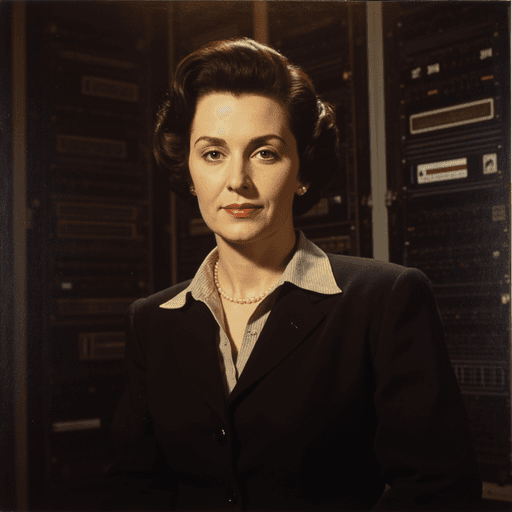
This imaginary interview was generated by artificial intelligence from sources documented in Mary Golda Ross's profile. It dramatises what the figure might have said based on what we know about them, but does not constitute attested historical testimony. For primary sources and factual documentation, refer to the full profile.