
Mary Golda Ross (1908-2008) was an American aerospace engineer, the first female engineer of the Cherokee Nation. A pioneer of astronautics, she took part in the founding work of the American space and defense programs at Lockheed.
Mary Golda Ross(1908 — 2008)
Mary G. Ross
États-Unis
6 min read
Frequently asked questions
Key Facts
- Born on August 9, 1908, in Park Hill (Oklahoma), great-great-granddaughter of Cherokee chief John Ross
- Earned a master's degree in mathematics in 1938
- Joined Lockheed in 1942 and became one of the 40 founding engineers of the secret Skunk Works group in 1952
- Contributed to spaceflight studies toward Mars and Venus and to NASA's space planning handbook
- Died on April 29, 2008, at the age of 99
Works & Achievements
Solving technical problems on one of the major fighter aircraft of the Second World War, among her first contributions at Lockheed.
Selected from about forty engineers for Lockheed's most secret innovation team, dedicated to cutting-edge projects.
Research on missile design and trajectories during the Cold War, at the heart of the arms race.
Contribution to the work on this upper rocket stage that would play a key role in American space programs.
Pioneering trajectory calculations for flyby missions to neighboring planets, at a time when space exploration was only just beginning.
Participation in a NASA reference manual detailing the space routes to Mars and Venus.
Anecdotes
Mary Golda Ross was the great-great-granddaughter of John Ross, the principal chief of the Cherokee Nation who led his people during the tragic “Trail of Tears.” She grew up in Tahlequah, the capital of the Cherokee Nation in Oklahoma, in a family that valued education for girls as much as for boys.
Throughout her studies and her career, Mary was almost always the only woman — and often the only Native American — in the room. “I was the only girl in my class. I sat on one side of the room and the boys on the other,” she recalled, never letting it intimidate her.
At Lockheed, Mary was part of an elite team so secretive that it was nicknamed the “Skunk Works.” She described her late-night work this way: “Often there were four of us working until eleven at night. My state-of-the-art tools were a slide rule and a Friden calculator.” The projects were so confidential that she couldn't talk about them, even decades later.
In 2004, at the age of 96, Mary took part in the opening procession of the National Museum of the American Indian in Washington, dressed in a traditional green Cherokee dress she had chosen herself. It was a public tribute to her dual identity as a cutting-edge engineer and a Cherokee woman.
In 2019, the United States honored Mary Golda Ross on a one-dollar coin in its Native American series. It depicts her portrait as she writes, an Atlas-Agena rocket lifting off, an astronaut, and symbols of the Cherokee writing system — a rare tribute to an engineer and mathematician.
Primary Sources
Often, at night, there were four of us working until 11 p.m. I was the one pushing the pencil, doing a lot of research. My state-of-the-art tools were a slide rule and a Friden calculator.
I was the only girl in the class. I sat on one side of the room and the men on the other.
A NASA technical manual devoted to flight trajectories to Mars and Venus, to which Mary Ross contributed, laying the mathematical foundations for interplanetary missions.
To function effectively in today's world, you need mathematics. The world is so technical that a background in math will let you go further and faster.
Key Places
Village near Tahlequah, in the heart of the Cherokee Nation, where Mary Golda Ross was born in 1908.
Capital of the Cherokee Nation, where Mary studied and earned her bachelor's degree in mathematics at Northeastern State Teachers College.
Home of the Colorado State College of Education, where Mary earned her master's degree in mathematics in 1938.
Historic site of the Lockheed aircraft company, where Mary worked for more than thirty years, notably within the famous Skunk Works.
City in the San Francisco Bay Area where Mary spent her final years and died in 2008, at the age of 99.
Museum inaugurated in 2004 on the National Mall; Mary marched there in a Cherokee dress and bequeathed part of her estate to it.
Typical Objects
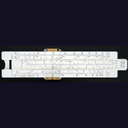
A sliding wooden or plastic instrument with graduated scales, used to multiply, divide and calculate before electronic calculators. It was Mary Ross's everyday tool for her trajectory calculations.
📷 CC BY-SA 3.0 · Wikimedia Commons ↗
A heavy electromechanical calculating machine capable of addition, subtraction, multiplication and division. Mary called it the “state-of-the-art” tool of her era at Skunk Works.

A tiltable work surface fitted with rulers and instruments for drawing engineering plans and diagrams by hand. Engineers used it to draft aircraft and rocket parts.

An iconic twin-engine fighter plane of the Second World War. Mary Ross solved technical problems related to this aircraft during her early days at Lockheed.

An upper rocket stage used to propel and maneuver craft in space, employed during the Gemini programs. Mary took part in the design studies for this type of system.
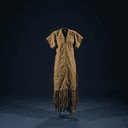
A long, ornate dress worn on important occasions by Cherokee women. Mary wore a green one for the opening of the National Museum of the American Indian in 2004.
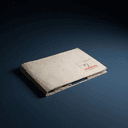
A technical document compiling calculations and trajectories for reaching other planets. Mary contributed to the volume devoted to travel to Mars and Venus.
School Curriculum
Vocabulary & Tags
Key Vocabulary
Tags
Daily Life
Morning
Mary would head to Lockheed's engineering design offices in California, where her projects were often classified for national defense. The morning began with passing through security checks, then reviewing the previous day's data and calculations.
Afternoon
The afternoon was spent bent over her calculations: slide rule in one hand, a Friden mechanical calculator within reach, designing the trajectories of missiles or rockets. She also took part in technical meetings where she was frequently the only woman.
Evening
Her days often stretched late: Mary recalled working with others until 11 p.m. to push a project forward. Once home, she sometimes kept reading scientific journals to stay at the cutting edge.
Food
Like many middle-class Americans of the mid-20th century, she ate simple, practical food, mixing home-cooked meals with everyday postwar products. Coffee gladly accompanied her long evenings of work.
Clothing
At the office, Mary wore the professional women's attire of her time: a plain dress or suit, suited to a heavily male engineering environment. For major occasions tied to her heritage, she proudly wore a traditional Cherokee dress.
Housing
Single, Mary lived in a modest home in California, close to her work. She later settled in Los Altos, in the San Francisco Bay Area, where she spent her retirement.
Historical Timeline
Period Vocabulary
Liens externes & ressources
Références
Œuvres
Travaux sur le chasseur P-38 Lightning
années 1940
Membre fondateur du Skunk Works de Lockheed
1952
Études de systèmes de missiles balistiques
années 1950
Conception de l'étage de fusée Agena
années 1950-1960
Études de vols interplanétaires vers Mars et Vénus
années 1950-1960
Contribution au NASA Planetary Flight Handbook (vol. III)
1963