Erna Schneider Hoover (1926-2025) was an American mathematician and computer scientist. In the 1960s she invented a computerized stored-program-controlled telephone switching system, revolutionizing the way calls were handled in telephone exchanges.
Erna Schneider Hoover(1926 — ?)
Erna Schneider Hoover
États-Unis
6 min read
Frequently asked questions
Key Facts
- Born on June 19, 1926 in Irvington (New Jersey), died in 2025
- Earned a doctorate in philosophy and the foundations of mathematics from Yale University in 1951
- Joined Bell Labs in 1954
- Received one of the very first software patents in 1971 for her stored-program-controlled telephone switching system
- Her invention regulates the call load to prevent telephone exchanges from becoming overloaded
Works & Achievements
A principle that allows a computer to manage call routing in a telephone exchange. It replaced cumbersome electromechanical devices with programmed logic that was more flexible and more reliable.
An invention that continuously measures call traffic and regulates how calls are accepted to prevent exchanges from being overloaded. It is one of the first software patents in history.
Her work made possible the reliable operation of the first large electronic telephone exchanges deployed in the United States.
A work of logic and philosophy defended at Yale, which forged the rigorous reasoning underlying her future technical inventions.
Anecdotes
Erna Schneider Hoover sketched out the principles of her invention on a notepad while she was in the hospital, shortly after the birth of one of her daughters. While the doctors urged her to rest, she was thinking about how to keep telephone exchanges from collapsing during peak hours.
Her patent, filed in 1967 and granted in 1971, was one of the very first software patents ever issued anywhere in the world. At a time when people thought mainly in terms of machines and cables, she was protecting an idea: a clever way to make a program work.
Before becoming an engineer, Erna was a philosopher and logician: she had defended a doctoral dissertation at Yale on the foundations of mathematics. It was her mastery of logic, more than electronics, that allowed her to imagine a switching system controllable by computer.
When a telephone exchange received too many calls at the same time, it could freeze up completely. Erna's invention constantly measured the flow of calls and slowed down the acceptance of new requests to avoid overload — a “feedback” idea that modern networks still use today.
In 2008, Erna Schneider Hoover was inducted into the United States National Inventors Hall of Fame, alongside the greatest American inventors, in recognition of an invention that transformed telephony worldwide.
Primary Sources
A feedback control monitor designed to regulate the rate at which a stored-program data processing system accepts work requests, in order to prevent the telephone exchange from becoming overloaded.
The system periodically samples the rate of incoming calls and inhibits the acceptance of new requests when the exchange approaches saturation.
Erna Schneider Hoover is recognized for inventing a stored-program control principle that enabled computers to handle telephone switching reliably.
Key Places
Town in the suburbs of Newark where Erna Schneider was born in 1926 and where she grew up.
Women's college where Erna earned a degree in medieval history and philosophy in 1948.
Where she defended her doctorate on the philosophy and foundations of mathematics in 1951.
Major research center where Erna worked from 1954 until her retirement and designed her switching system.
Institution where she taught logic and mathematics before joining Bell Labs.
Suburban town near Murray Hill where Erna Schneider Hoover lived with her family during her career.
Typical Objects
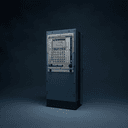
A huge machine replacing electromechanical switches, able to route thousands of calls thanks to a computer. This is the kind of installation that Erna's invention made reliable.

A computer whose behavior is defined by a program held in memory rather than by fixed wiring. Erna showed that it could be entrusted with regulating a telephone exchange.

An official text describing an invention through diagrams and claims, and granting its author an exclusive right. Erna's was one of the first to protect a software process.
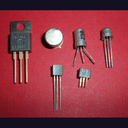
A tiny component invented at Bell in 1947 that amplifies or switches an electrical signal. It made possible the computers and electronic exchanges of Erna's work.
📷 CC BY-SA 3.0 · Wikimedia Commons ↗
A diagram made of boxes and arrows representing the steps and decisions of a program. It is the thinking tool of a logician like Erna for designing an algorithm.

A household device of 20th-century homes whose number was dialed by turning a disc. Every call passed through the exchanges that Erna helped to perfect.
School Curriculum
Vocabulary & Tags
Key Vocabulary
Tags
Daily Life
Morning
Erna's morning blends family life and science: after breakfast with her daughters, she sets off for Murray Hill. Like many working mothers in the 1960s, she juggles household responsibilities with a demanding career still largely reserved for men.
Afternoon
Her afternoon is spent at Bell Labs, among the engineers and the machines. She draws flowcharts, discusses problems of switching-center overload, and tests her ideas on the new electronic systems.
Evening
In the evening, she returns home to the New Jersey suburbs, divided between reading, reflection, and family. She sometimes keeps thinking about her logic diagrams long after leaving the office.
Food
Her diet is that of a well-off American family in the postwar years: home-cooked meals, the canned and frozen foods that were becoming widespread, meat, vegetables, and coffee. The modern kitchen with its electrical appliances is part of everyday suburban life.
Clothing
At work, she wears the professional attire of women of the time: a tailored suit, a plain skirt or dress, and low-heeled shoes. This understated elegance contrasts with the very male world of the laboratories.
Housing
She lives in a single-family house in the New Jersey suburbs, typical of the American dream of suburban home ownership: a garden, a garage, modern household appliances, and proximity to the major research centers.
Historical Timeline
Period Vocabulary
Liens externes & ressources
Références
Œuvres
Système de commutation téléphonique à commande par programme enregistré
années 1960
Brevet US 3 623 007 — moniteur de contrôle par rétroaction
1971
Contribution au central électronique 1ESS
années 1960-1970
Thèse de doctorat sur les fondements des mathématiques
1951