Imaginary interview with Mazu
by Charactorium · Mazu (960 — 987) · Spirituality · Mythology · Culture · 6 min read
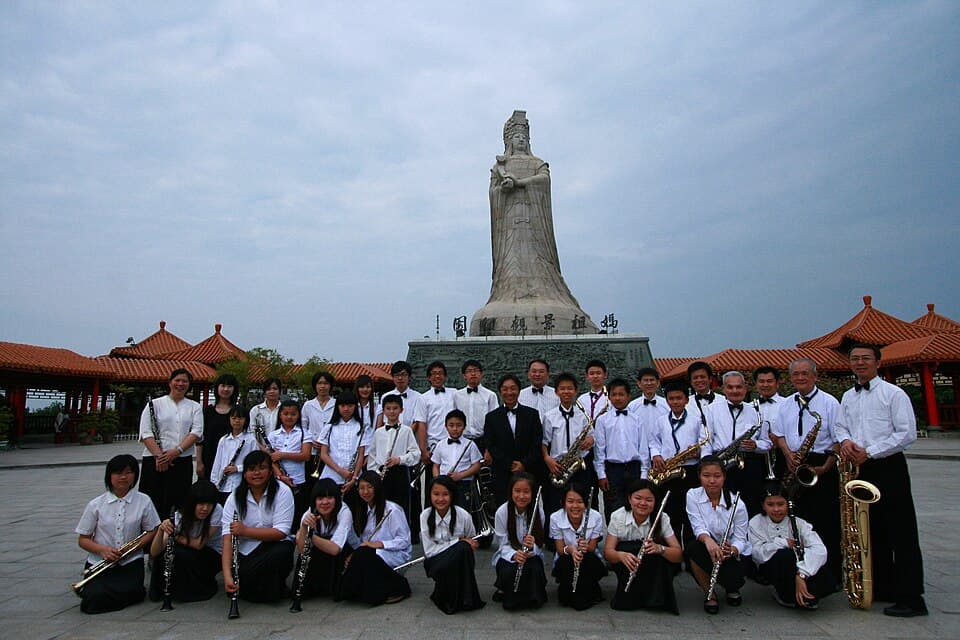
On the island of Meizhou, facing the China Sea, incense still rises from the great bronze incense burner where fishermen place their prayers. It is there, between the mother shrine and the shore where the junks set sail, that the goddess agreed to speak. She remembers having been Lin Mo, the girl from Fujian, before becoming the one they call the Holy Mother of the Seas.
—They say it all began one day when you were weaving. What happened that afternoon?
I had the shuttle between my fingers and the loom sang under my hands, but my mind was already far away, on the raging waves where my brothers fought the storm. I held their boats, one in each hand, one between my teeth — that is how I guided them toward the coast of Fujian. Then my mother, seeing me in a trance, shook me awake. I opened my mouth to answer her, and the boat I held between my teeth slipped away. My father was swallowed. They say it was my first miracle; I, above all, know that it was my first grief, that of a hand opened at the wrong moment.
They say it was my first miracle; I, above all, know that it was my first grief.
—Did you ever overcome that sorrow?
No. And I believe that is where everything else comes from. The people of Meizhou wanted a goddess who could ward off shipwrecks with a wave of her hand; they forget that the one who watches over sailors is first the one who could not save her own father. When a fisherman prays to me before setting sail, I do not hear him as a devotee imploring an idol. I hear him as a daughter who would have given her life to open her mouth one second later. That is why I never sleep: the sea does not give back what it takes, and I no longer have the right to close my eyes at the wrong moment.
The one who watches over sailors is first the one who could not save her own father.
—Sailors tell of seeing a red light at the top of the masts. How would you describe that sign?
They call it the 'fire of Mazu.' When the hull creaks and the helmsman can no longer tell sky from water, a red glow settles at the top of the mainmast, and the waves calm. I saw that off the coast of Korea, when Ambassador Xu Jing led his mission: the storm wanted to swallow his ships, and that red light appeared at the mast. He recorded it so the Emperor would know. Other peoples, they say, name these fires differently and see only a whim of the air. No matter what name they give them: those who return to port know which hand held the lantern.
No matter what name they give them: those who return to port know which hand held the lantern.
—Why are the temples dedicated to you always adorned with red lanterns?
Because the red lantern is not an ornament; it is a promise. Every temple, from the humblest to the great sanctuary of Meizhou, hangs one to recall that fire that shone on the masts. A believer who pushes open the temple door finds, suspended from the ceiling, the same light that his grandfather may have glimpsed one night of averted shipwreck. The flame says: wherever you go on the water, this brightness can follow you. Men need to see with their own eyes what they hope for in the dark. The temple lantern is only the reflection, lit on dry land, of the one I carry on the sea.
The red lantern is not an ornament; it is a promise.
—Even in your lifetime, they said you could read the sky. How did you predict storms?
I would rise before dawn and go down to the water's edge to observe the color of the clouds and the direction of the winds. The sea always warns, provided you listen early enough: a coppery tint on the horizon, a swell that changes rhythm, and I knew not to go out that day. The fishermen of Meizhou refused to set sail without first burning incense in my name, not only out of superstition, but because I told them when the sea would be treacherous. They also say that at sixteen I found a magic mirror at the bottom of a well, which gave me the gift of seeing far away. The mirror or the clouds — the patient gaze, at bottom, was the same.
The sea always warns, provided you listen early enough.
—That gesture of fishermen burning incense before leaving — what does it represent in your eyes?
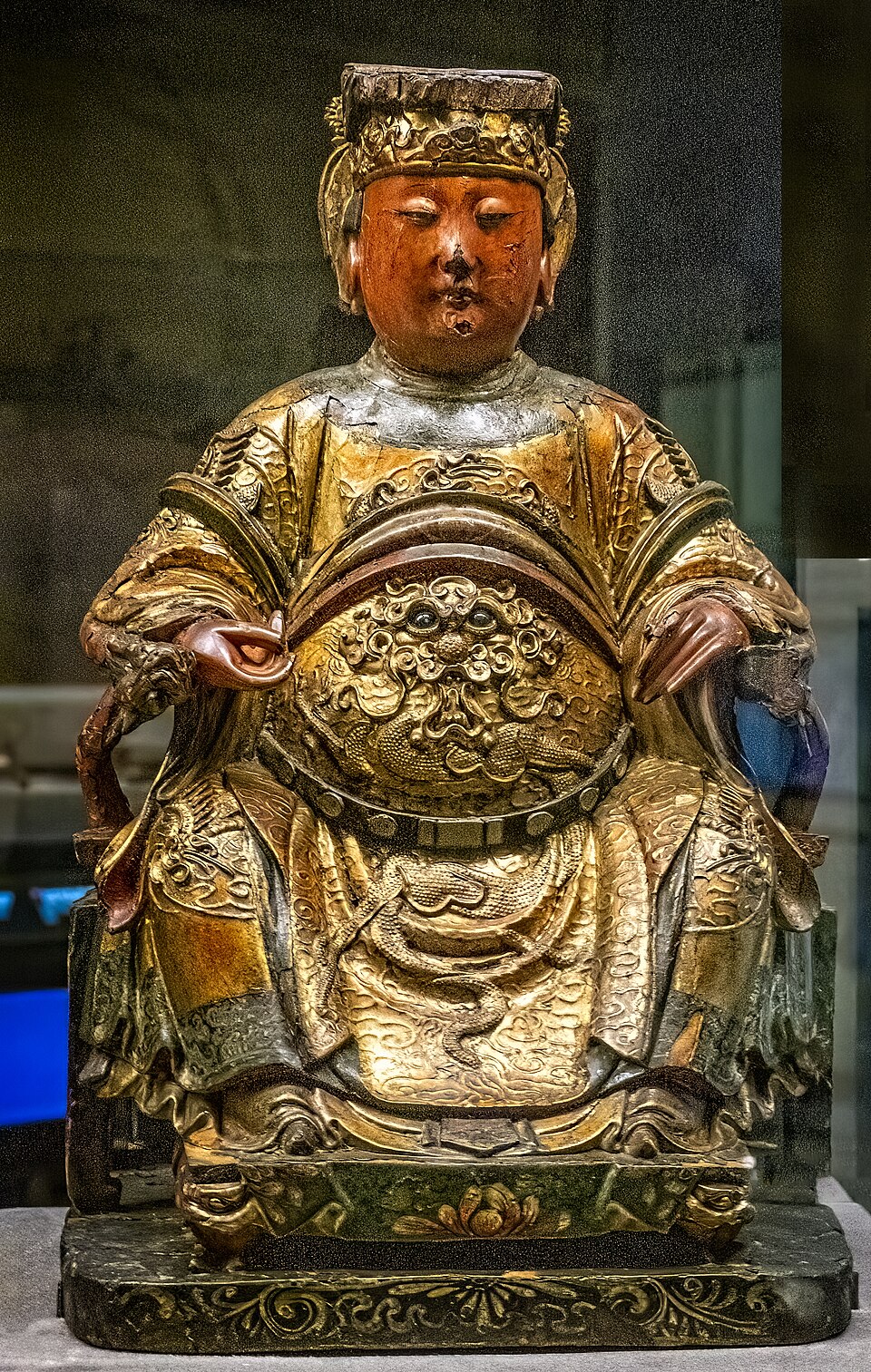
Before every temple stands a great bronze incense burner, and since the time of the Song no sensible man puts to sea without letting his smoke rise there. It is not a toll I demand. It is a moment when a man stops, looks at the vastness that could swallow him, and admits he is not master of the waters. The incense that burns is the time he grants himself to weigh his crossing. Many, by drawing the divination sticks in the temple, have given up leaving on a day of bad omen — and lived. The rite does not command the winds; it only compels the sailor to listen to the prudence he already carries within him.
The rite does not command the winds; it compels the sailor to listen to the prudence he already carries within him.
—Tell us about the junks of your time, the ones you were supposed to protect.
The junk with its mat sails was the whole world of those people: their home, their livelihood, often their coffin. Under the Song, after the capture of Canton, maritime trade swelled like a tide, and the holds set out laden with silk and porcelain toward shores whose names I did not even know. In every cabin, they nailed a votive tablet of lacquered wood bearing my titles — a talisman against the black water. The merchants never left without it. I watched those fragile hulls sail away from Fujian and thought: here are men who entrust an entire empire of goods to a few planks and a prayer. It was to those planks that I had to hold.
Here are men who entrust an entire empire of goods to a few planks and a prayer.
—Did the rise of commerce change the nature of your cult?
Certainly. At first, I was only the island girl who brought the fishing boats back. Then the compass guided navigators farther, trade routes stretched to the Southern Seas, and my name traveled in the holds with the bales. Every port where a junk dropped anchor wanted its temple; every community of expatriate Fujian merchants carried my tablet as one carries a clod of native soil. I did not seek this expansion — it was the men who, venturing ever farther, needed to take a familiar hand with them. The goddess of one shore became the goddess of all crossings, not by ambition, but by the length of the routes.
They carried my tablet as one carries a clod of native soil.
—The emperors covered you with titles over the centuries. How did you experience this ascent?
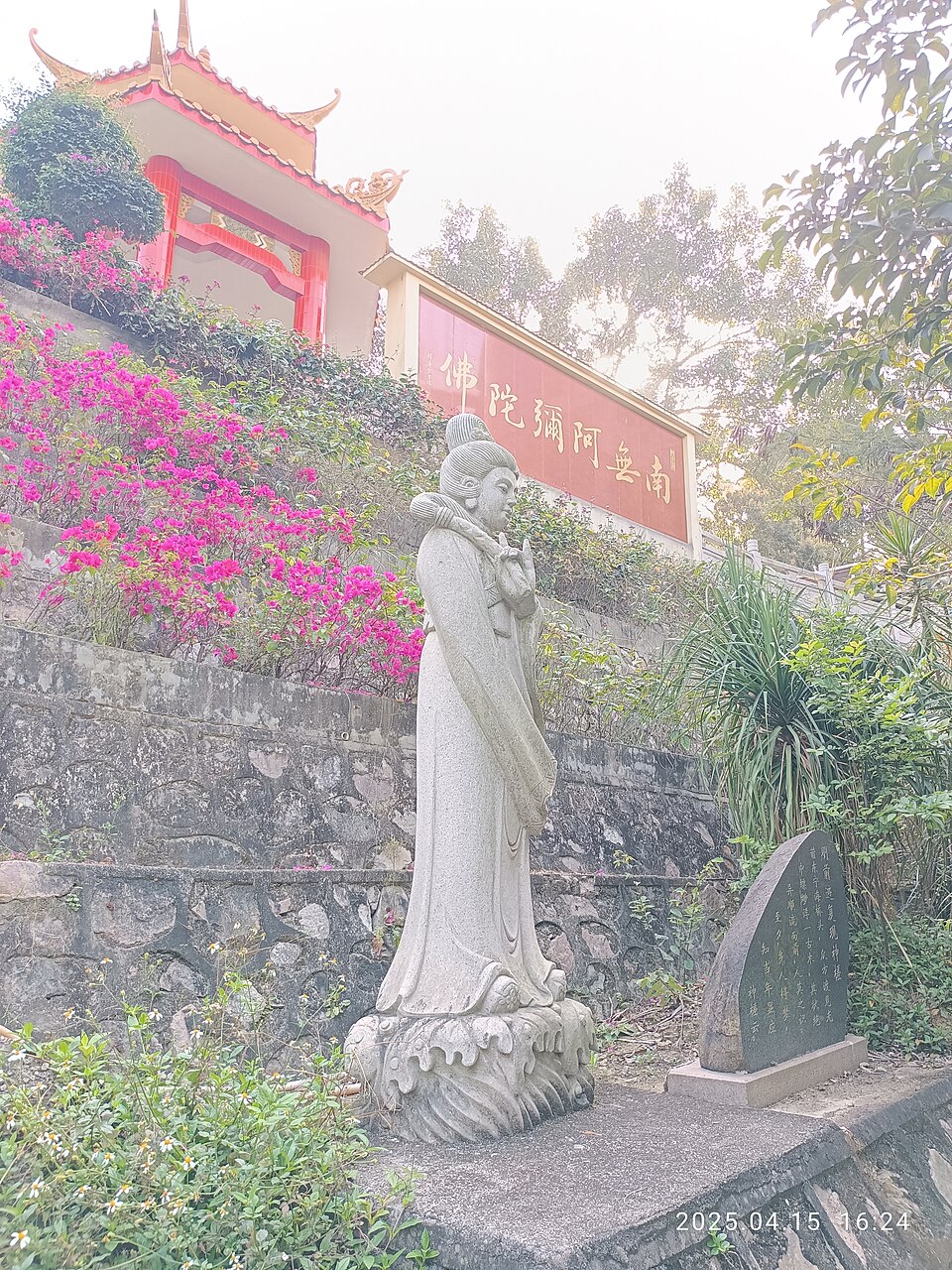
The Yuan first named me Tianfei, Celestial Princess; then, much later, Emperor Kangxi elevated me to Tianhou, Queen of Heaven, after Admiral Shi Lang took Taiwan under my protection. They crowned me with a phoenix crown and draped me in red imperial robes. I do not deny these honors, but I sometimes smile: the fisherman of Meizhou who simply called me Shengmu, Holy Mother, was closer to my heart than all those sealed parchments. Emperors dress a goddess; fishermen love her. A phoenix crown does not warm a man thrown into the water — but a mother does.
Emperors dress a goddess; fishermen love her.
—They say Admiral Zheng He owed you his life. Do you remember that storm?
His fleet was immense, the greatest the sea had ever borne, and yet it was but a straw when the sky opened. Zheng He implored me from the depths of his cabin, and the fleet survived the crossing. In gratitude, Emperor Yongle had the temple of Meizhou restored and strengthened my cult, so that my name accompanied his ships to the distant seas of South Asia. I learned then that the great ones of this world never pray to me as well as in the storm: their pride finally falls silent, and only a man on the water remains, like my father. I make no distinction between the admiral and the fisherman. The sea makes none either.
The great ones of this world never pray to me as well as in the storm.
—After so many centuries, what do you think makes people still pray to you?
Because the sea has not changed, and the heart of those who fear it has not changed either. The first temple was built on my island shortly after my death; today, they say, they number in the thousands around the world, and the great pilgrimage crosses Taiwan over hundreds of li, carried by an immense crowd. But the fervor of that multitude is contained entirely in a single very ancient gesture: a woman lighting a lantern for a man who does not return. As long as a son sets out on the water and a mother waits for his return at the shore, they will need me. I am not the goddess of great calms. I am the goddess of the nights when one dares not sleep.
I am not the goddess of great calms. I am the goddess of the nights when one dares not sleep.
Read further


This imaginary interview was generated by artificial intelligence from sources documented in Mazu's profile. It dramatises what the figure might have said based on what we know about them, but does not constitute attested historical testimony. For primary sources and factual documentation, refer to the full profile.