Agatha Southeil is a legendary character associated with Arthurian folklore and tales of medieval witchcraft. Portrayed as a sorceress or prophetess, she belongs more to legendary tradition than to documented history.
Agatha Southeil
Agatha Southeil
5 min read
Frequently asked questions
Key Facts
- A character belonging to legendary tradition, with no documented historical existence
- Associated with the marvelous and with magic in medieval European tales
- A figure passed down through oral and literary tradition rather than through documentary sources
Works & Achievements
Like Merlin, female soothsayer figures are credited with prophecies foretelling the fate of kings. These oracles served to give meaning to political events.
In the Arthurian romances, sorceresses (such as Viviane learning from Merlin) pass on their knowledge. This motif explains how magical power circulates throughout the tales.
Legendary healers cure with plants and incantations. These tales reflect the real role women played in folk medicine during the Middle Ages.
The power to change one's appearance or to conjure illusions is a classic trait of the sorceresses in the romances, like Morgan le Fay. It symbolizes power and cunning.
Anecdotes
In the Arthurian tradition, sorceress figures like Agatha Southeil are often linked to the cycle of Merlin and the fairy Morgan le Fay. The character embodies the medieval belief that certain women could read the future or command invisible forces, on the border between the sacred and the forbidden.
In the Middle Ages, people made little distinction between the prophetess inspired by God and the witch bound to the devil. A single legendary figure like Agatha could be venerated in one tale and condemned in another, depending on whether the storyteller sought to edify or to frighten the audience.
Tales of folk magic circulated mainly by word of mouth, from one evening gathering to the next. A character like Agatha Southeil probably never existed: she would have taken shape through the accumulation of motifs (the woman living apart from the village, the healer, the soothsayer) passed down and reshaped from one generation to the next.
In the medieval imagination, female prophecy harked back to ancient models such as the sibyls of Antiquity, christianized by clerics. Agatha belongs to this long line of oracle-women whom learned culture tolerated, provided they were tied to a divine purpose.
Primary Sources
His mother answered: “As surely as your soul lives and mine, I never knew a man who fathered this child.” This passage on Merlin's birth nourished the entire tradition of Arthurian wizards and enchantresses.
The narrative recounts how the demons resolve to father a being endowed with their knowledge, a tradition to which the figures of medieval prophets and enchantresses belong.
Morgan learned so much astronomy and necromancy that she was called Morgan le Fay. This archetypal portrait serves as a model for the many minor enchantresses of the Arthurian cycle.
The treatise describes the powers attributed to women accused of witchcraft, bearing witness to the medieval fear of popular enchantress figures.
Key Places
Legendary forest of Brittany, the heart of Arthurian tales and the setting for the enchantments of Merlin and the fairy Viviane. A typical backdrop for medieval sorceress figures.
Mythical island of Arthurian legend where Morgan and her sisters heal the wounded King Arthur. A place of magic and the afterlife in the medieval imagination.
Legendary city where Arthur's court gathered, the stage for the intrigues of wizards and sorceresses. A symbol of the Arthurian world.
The name given to Arthur's kingdom in the Matter of Britain. An imaginary realm through which tales of prophecy and witchcraft circulate.
Typical Objects
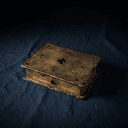
Handwritten book believed to contain formulas, incantations and magical recipes. An emblematic object of legendary sorceresses, often described as dangerous and forbidden.
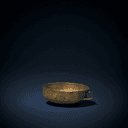
Reflective surface used in folklore to read the future or see distant places. A symbol of the power of foresight attributed to prophetesses.
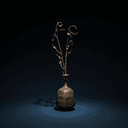
Medicinal and magical plants gathered to heal or cast spells. The healers of medieval folklore used them in both a real and a ritual way.

An everyday feminine object (the spinning distaff) reinterpreted as a magical attribute in legends. It marks the sorceress's power and her separate status.
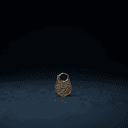
A small object worn against curses, demons or illness. Very widespread in medieval popular culture, blending Christianity and ancient beliefs.
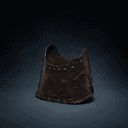
A vessel associated with brewing potions and remedies in the popular imagination of witches. A household object that became a symbol of feminine magic.
School Curriculum
Vocabulary & Tags
Key Vocabulary
Tags
Daily Life
Morning
Like the healers of folklore, her morning begins early, gathering plants still covered in dew, believed to be the most potent. She prepares her remedies and welcomes the first villagers who come seeking advice or healing.
Afternoon
The afternoon is devoted to caregiving, to preparing ointments and herbal teas, and sometimes to foretelling the future. The legendary sorceress lives apart, watched with a mixture of respect and fear.
Evening
In the evening, by firelight, she is said to have studied her formulas or told ancient tales. In legend, it is at night that rituals and encounters with the unseen take place.
Food
Her diet would have been that of a medieval peasant: dark bread, grain porridge, garden vegetables, wild herbs, and rarely meat. The plants she gathers serve as much to feed her as to heal.
Clothing
We imagine her dressed in a simple, dark woolen gown, with a veil or headdress covering her hair, like any woman of the **Middle Ages**. In legend, the ample cloak strengthens her mysterious aura.
Housing
She is said to have lived in an isolated cottage, at the edge of the forest, far from the village. This remoteness, real for marginal healers, feeds in the stories the image of the strange and dreaded woman.
Historical Timeline
Period Vocabulary
Liens externes & ressources
Références
Œuvres
Prophéties attribuées aux magiciennes arthuriennes
tradition médiévale
Enseignement de la magie à des disciples
tradition légendaire
Sorts de guérison et de protection
folklore médiéval
Métamorphoses et illusions
tradition arthurienne