Imaginary interview with Nancy Wake
by Charactorium · Nancy Wake (1912 — 2011) · Military · 6 min read
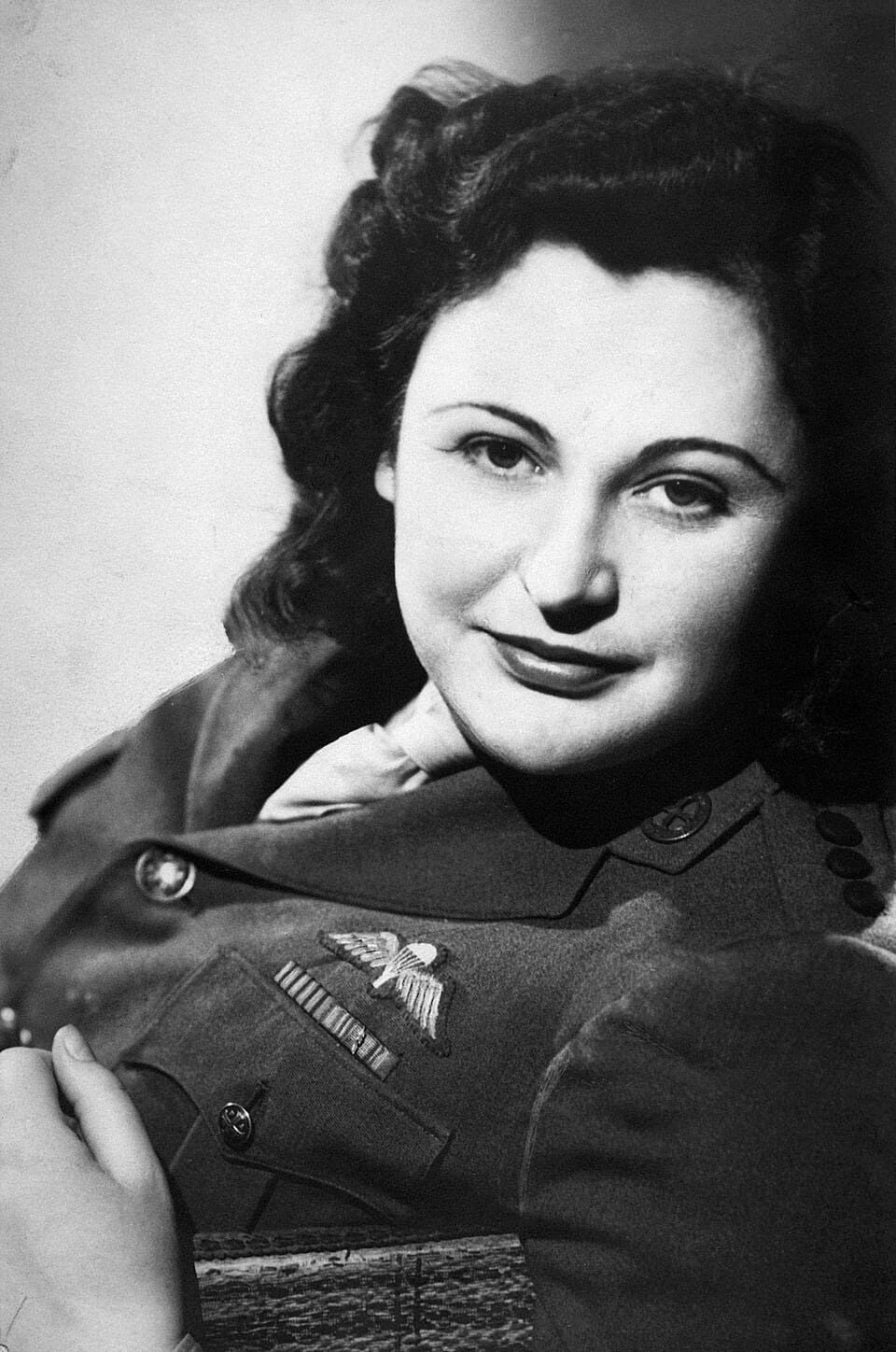
London, a grey afternoon in the early 2000s. Nancy Wake receives us in a hotel lounge, a glass of gin within reach, her eyes bright despite the decades. She has the easy laugh of those who have been too close to death to fear it, and a brusque way of cutting off compliments.
—How did a young New Zealand journalist raised in Sydney end up in Marseille on the brink of war?
I had traveled around Europe in the 1930s, pen in hand, and I had seen with my own eyes what was rising in Vienna, in Berlin — brutes beating people in the street, laughing. That you don't forget. Then I married Henri Fiocca, a wealthy industrialist from Marseille, in 1939, and for a time I became an elegant socialite, dresses and dinners, a bourgeois apartment on the Vieux-Port. Let me tell you, I wasn't cut out to sit at that kind of table while the country was collapsing. When the armistice came and the Germans set their boot on France, I knew right away which side I was on. Henri let me do it. He knew nothing would stop me.
I had seen those brutes beating people in the street, laughing. That you don't forget.
—What exactly did you do in those early years of the Resistance in Marseille?
I served as a courier. They trusted me with messages, money, sometimes a man to hide, and I moved around with my forged papers and my proper-lady smile — no one suspects a well-dressed woman taking the tram. I worked for those escape lines, the networks that got shot-down Allied airmen and prisoners across to Spain. Hundreds of men, snatched from camps, set back on the road to freedom. It wasn't glory, it was logistics and steady nerves: a missed rendezvous, one too many checkpoints, and it was over. The Gestapo was already sniffing me out. They knew a woman was slipping through their fingers, without yet knowing which one.
—The Gestapo gave you a nickname. Do you remember what it meant to you?
Die weiße Maus. The white mouse. They called me that because I always escaped them, slipping from one hole to another just before they closed their hand. Frankly, I rather liked it. They put a price on my head — five million francs, can you imagine, I was at the top of their most-wanted list in southern France. A fortune. I sometimes thought that if I'd been dumber, I could have turned myself in and taken the money! But you see, the more they looked for me, the more I knew I was bothering them. A mouse you can't catch drives you crazy. And driving the Gestapo crazy was already a small victory every morning.
A mouse you can't catch drives you crazy.
—In 1943, you had to flee. How did you cross the Pyrenees?
On foot, in the dead of winter, snow up to my knees. The Pyrenees give no quarter when you cross them secretly, at night, dodging German patrols. I tried several times before succeeding — turned back, hidden, forced to start over. We walked bent double, the cold seeping into your bones, no fire allowed, no sound allowed. I had left Henri behind in Marseille, thinking I'd see him soon. I didn't yet know the Gestapo would arrest him, torture him, and shoot him because he refused to say where I was. I learned of his death after the war. That mountain, I have crossed it twice in my mind since: once with my legs, once with the weight of what it cost me.
—After England and the SOE, you returned to France by air. Tell us about that night.
Night of April 29-30, 1944. I was parachuted over the Auvergne, in the Massif Central, with the mission to arm the maquis before D-Day. An SOE parachute, black France below, and me falling into it like a stone. I ended up caught in a tree — a maquisard made a silly remark about the fruit France was receiving from the sky; I put him in his place pretty quickly. I had to organize these men, thousands of them, often brave and poorly armed, teach them to use a Sten that came by the crate. The maquis wasn't a regular army: it was farm boys and city folk, hidden in the woods, waiting for the means to fight. That's what I came to do.
Black France below, and me falling into it like a stone.
—What was a day like in that camp, deep in the forest?
We got up early, in a makeshift camp under the trees of the Massif Central. In the morning, I checked positions, organized parachute drops — everything depended on night drops, weapons, explosives, equipment. Afternoon, we trained the men, handed out Sten guns and plastic explosive, planned sabotage: depots, railways, anything that could pin down the Germans away from Normandy. I moved around a lot, often by bicycle, to link up groups. And in the evening, we listened to the BBC spitting out its coded personal messages that announced the drops. Food was frugal — bread, cheese, soup, what the farms would give us. I was happy to share a drink with the men. They respected me the day they realized I could hold my liquor and my fatigue better than they could.
—There's a story about a brutal episode, an SS guard killed by your own hands. What really happened?
I was trained for that, in London, before being parachuted in: close combat, killing quickly and silently. During a raid on a factory, there was an SS guard who would have raised the alarm and doomed the whole operation, costing my men their lives. I dealt with him with a blow to the throat, with my bare hands, as I had been taught. Does it haunt me? No. I'm not one of those who pretend to regret. It was war, him or us, and I never confused pity with weakness. People expect a woman to shudder telling that. Me, I tell you the raw truth: I would have done it again without hesitation the next morning.
I never confused pity with weakness.
—You once said that a certain bicycle ride was your greatest pride. Why that one?
Because it nearly killed me more surely than any bullet. We had lost our radio codes during a fight — without codes, no contact with London, no drops, the maquis cut off from the world. I had to reach another operator and bring back what was needed. So I got on a bicycle and pedaled, through German checkpoints, something like five hundred kilometers in a few days. A woman alone on a bicycle doesn't arouse suspicion — once again, my best disguise was being what they thought harmless. When I arrived, I could barely sit, or walk, or cry. But the message got through. Of all my war, that's what I'm most proud of: not of killing, but of holding on to that saddle until the end.
My best disguise was being what they thought harmless.
—That clandestine radio, the set you protected so much, what did it mean to you?
The transceiver was our lifeline. A maquis without a radio is a man shouting in the desert: no one hears him, no one sends him weapons. Every transmission was a risk — the Germans had direction-finding trucks that picked up signals, so we talked fast, moved constantly. That's why losing the codes was a disaster, and why I pedaled until I dropped. People imagine the Resistance as heroic gunfights. The truth is, half our survival depended on shortwave, on batteries, on an operator bent over his dials in a barn, translating the personal messages the BBC broadcast into the night. Without those fragile frequencies, we were nothing.
—After all that, the decorations came. What do you think of those medals?
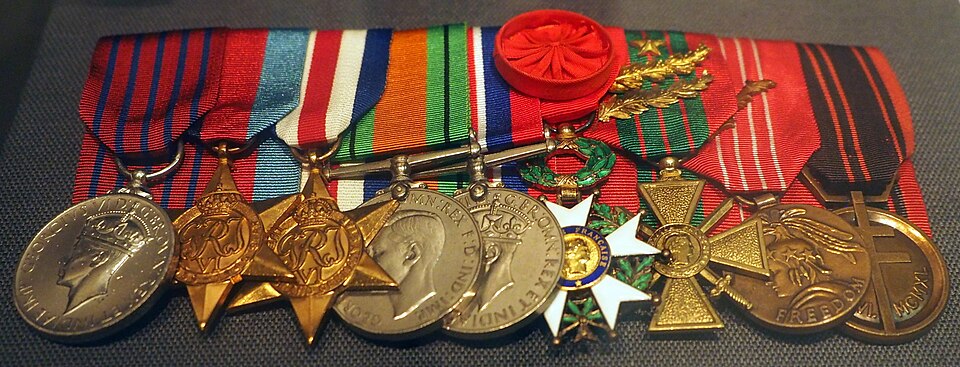
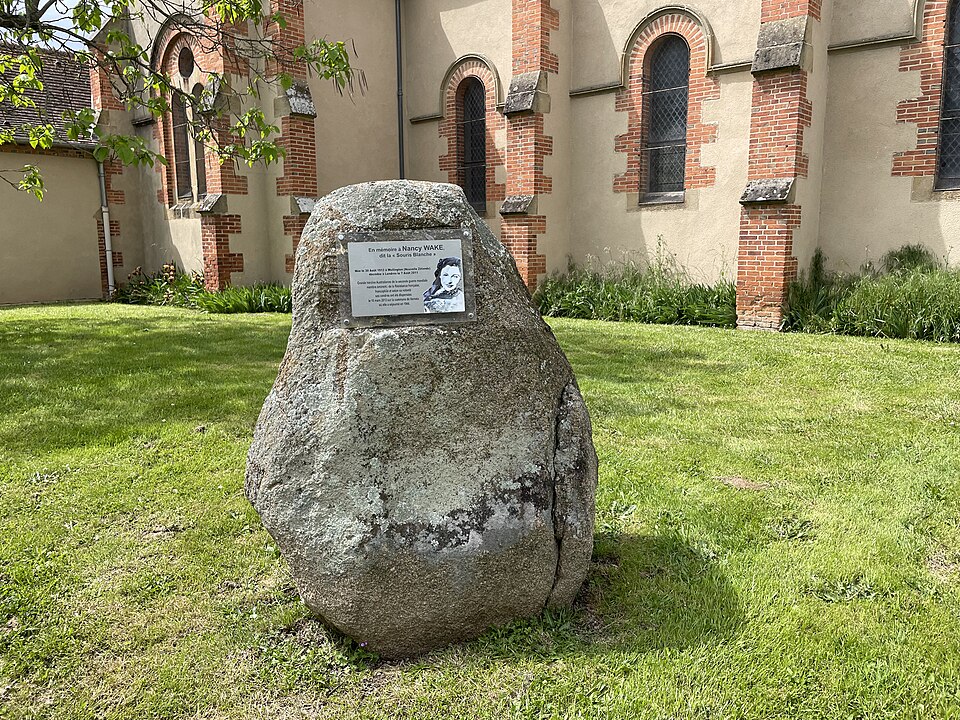
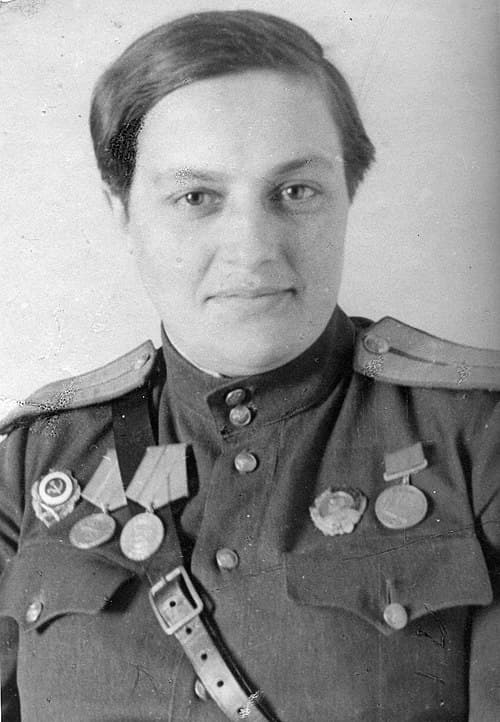
Oh, they covered my chest — the British George Medal, the French Resistance Medal and Legion of Honour, the American Medal of Freedom. They told me I was one of the most decorated women of the war. I won't spit on them, but I'll tell you something: medals don't bring back Henri, or the maquis lads who fell in the woods of the Auvergne. I've asked, for the end, that my ashes be scattered there, near Montluçon, on the land where we fought together. That's my real decoration. The rest are bits of metal. What matters is that I did my part when so many others looked away — and that I can say it without lying.
Medals don't bring back the maquis lads who fell in the woods of the Auvergne.
This imaginary interview was generated by artificial intelligence from sources documented in Nancy Wake's profile. It dramatises what the figure might have said based on what we know about them, but does not constitute attested historical testimony. For primary sources and factual documentation, refer to the full profile.