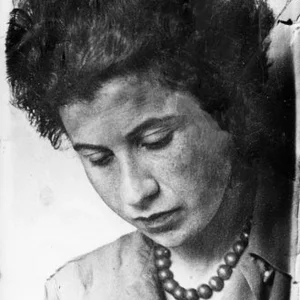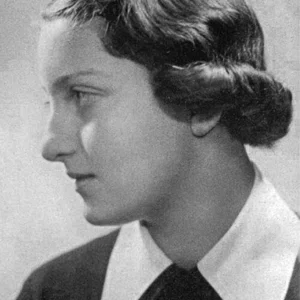

Hungarian Jewish poet and resistance fighter. After emigrating to Mandatory Palestine, she enlisted as a paratrooper in the British army to rescue the Jews of Hungary. Captured, tortured, and executed by the Nazis in 1944, she became a national heroine in Israel.
Hannah Senesh
Hannah Senesh (Szenes Anikó)
6 min read
Frequently asked questions
Famous Quotes
« Blessed is the match consumed in kindling flame»
Key Facts
- Born on July 17, 1921, in Budapest into an assimilated Jewish family
- Emigrated to Mandatory Palestine in 1939 and joined a kibbutz
- Enlisted in 1943 as a paratrooper in the British army (SOE)
- Parachuted into Yugoslavia, then arrested at the Hungarian border in June 1944
- Executed by the Nazis in Budapest on November 7, 1944, at the age of 23
Works & Achievements
A poem that became one of Israel's most famous songs. It evokes the beauty of the sand, the sea, and human prayer.
A poem written shortly before her mission, a metaphor for a life that is brief yet lights up others. It became a symbol of sacrifice.
A personal diary kept from her teenage years until prison, published after her death. A major testimony about Jewish youth confronting Nazism.
A military commitment within the British SOE to rescue the Jews of Hungary. She was one of the only women among this mission's 37 paratroopers from the Yishuv.
Texts written during her captivity, including her final verses hidden in her clothes. They extend her literary work right up to her death.
Anecdotes
At 17, Hannah had been keeping a diary since the age of 13, recording her doubts, her hopes, and her decision to leave Hungary. This diary, found after her death, is today one of the most moving testimonies of Jewish youth confronting the rise of Nazism.
In 1939, she settled at an agricultural school in Mandatory Palestine to learn how to farm the land. This well-bred young woman from Budapest, who loved poetry, deliberately chose the harsh life of the fields and stables of a kibbutz.
In 1944, she was one of the few women parachuted by the British army behind enemy lines. Before jumping over Yugoslavia, she wrote the poem “Blessed Is the Match,” which compares a short but useful life to a match that bursts into flame to light a fire.
Captured at the Hungarian border, she was tortured but refused to hand over the Allies' radio code. The Nazis brought in her own mother to make her talk, but Hannah held firm and protected her comrades to the very end.
A few hours before her execution, she is said to have refused a blindfold, wanting to look her executioners in the eye. Her final poems, scribbled in prison, were found hidden in her clothing.
Primary Sources
There are stars whose light reaches the Earth even though they themselves have already vanished. There are people whose memory lights up the world even though they are no longer among the living.
My God, my God, may these things never end: the sand and the sea, the rush of the waters, the lightning of the sky, the prayer of man.
Blessed is the match that is consumed in kindling the flame. Blessed is the flame that burns in the secret places of the heart.
Dear Mother, I have no words; I can only say this: a million thanks, and forgive me if you can.
Key Places
Hannah Senesh's hometown, where she grew up in a cultivated Jewish family. It is also the place of her imprisonment and execution in 1944.
An institution in Mandatory Palestine where Hannah learned farming after her emigration in 1939. There she prepared for her life as a pioneer.
An agricultural community near Caesarea where Hannah settled in 1941 and composed several of her poems. A house-museum there preserves her memory.
The territory where Hannah was parachuted in March 1944 and where she joined Tito's partisans before attempting to enter Hungary.
Israel's national cemetery, where her remains were transferred in 1950. There she rests among the national heroes.
Typical Objects

Notebook in which Hannah recorded her thoughts from adolescence until prison. Found after her death, it became a famous text translated into many languages.
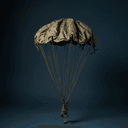
Equipment used during her jump behind enemy lines in Yugoslavia in 1944. It symbolizes her commitment as one of the few women paratroopers on the mission.
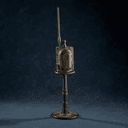
Clandestine device used to communicate with the Allies through a secret code. Hannah refused to surrender this code despite being tortured.
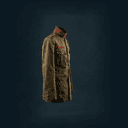
Military attire she wears as a soldier enlisted in the British forces. It marks her official status as a combatant rather than a mere resistance fighter.

Her poems in Hebrew and Hungarian, including “Eli, Eli” and “Blessed Is the Match.” Several were set to music and are still sung in Israel today.
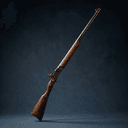
A tool for working the land that she learns to handle at agricultural school and then on the kibbutz. It embodies her choice of a pioneer's life in Palestine.
School Curriculum
Vocabulary & Tags
Key Vocabulary
Tags
Daily Life
Morning
On the kibbutz, Hannah rises early for the fieldwork: she digs, plants and tends the henhouses or the communal laundry. The early wake-up call and the sharing of chores set the rhythm of the pioneers' community life.
Afternoon
The afternoon continues out in the fields under the Palestinian sun, or in classes on farming and Hebrew. Hannah is learning a new language and a new trade, far from the bourgeois comfort of Budapest.
Evening
In the evening, the members of the kibbutz gather to talk, sing and debate the future. Hannah then writes in her diary or composes poems by the light of a lamp.
Food
Food is simple and communal: bread, vegetables from the garden, cheeses, olives and fruit from the region. Everything is shared in the common dining hall, in keeping with the kibbutz's egalitarian ideal.
Clothing
She trades the dresses of the young Budapest girl for sturdy work clothes: shirt, trousers or shorts, solid shoes. Later, she wears the khaki uniform of the British army.
Housing
On the kibbutz, she lodges in a modest shared room, within a community where few belongings are private. It is a spartan life, very different from the comfortable apartment of her childhood.
Historical Timeline
Period Vocabulary
Liens externes & ressources
Références
Œuvres
Eli, Eli (Halikha LeKesariya / Une promenade vers Césarée)
1942
Ashrei HaGafrur (Heureuse l'allumette)
1944
Journal de Hannah Senesh
1934-1944
Mission de parachutage en Europe occupée
1944
Pièce de théâtre et poèmes de prison
1944