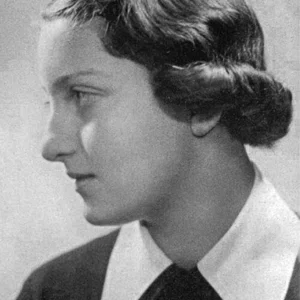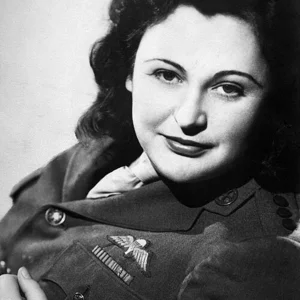

Resistance fighter of New Zealand and Australian origin, an agent of the British SOE during the Second World War. Nicknamed “the White Mouse” by the Gestapo, she was one of the most decorated women of the conflict for her work in the French Resistance.
Nancy Wake(1912 — 2011)
Nancy Wake
Australie, Nouvelle-Zélande
6 min read
Frequently asked questions
Key Facts
- Born on 30 August 1912 in Wellington (New Zealand), she grew up in Australia
- From 1940 onward, she helped Allied airmen and refugees escape occupied France through escape networks
- Recruited by the British SOE, she was parachuted into Auvergne in April 1944 to lead the Maquis fighters
- Nicknamed “the White Mouse” by the Gestapo, who hunted her without success
- Died on 7 August 2011 in London, among the most decorated women of the war (George Medal, Medal of the Resistance, Legion of Honour)
Works & Achievements
She served as a courier and helped smuggle hundreds of Allied prisoners and downed airmen to Spain, saving many lives.
An SOE agent, she armed, trained, and coordinated several thousand maquisards, playing a key role in the guerrilla warfare before and after the D-Day landings.
Under her coordination, the maquis attacked depots, communication routes, and factories, tying down German troops far from the Normandy front.
An account of her life in the Resistance, which became a key reference on the role of women and the SOE in the French Resistance.
One of the most decorated women of the war: the George Medal (United Kingdom), the Resistance Medal and the Legion of Honour (France), and the Medal of Freedom (United States).
Anecdotes
The Gestapo nicknamed her "the White Mouse
(die weiße Maus) because she kept slipping out of their grasp. At one point she topped their list of most wanted persons
with a bounty of 5 million francs on her head.
To reach Spain and escape occupied France in 1943, she crossed the Pyrenees on foot in the dead of winter. She succeeded after several attempts, narrowly evading the German patrols.
In 1944, with the Auvergne maquis, she is said to have killed an SS sentry with a karate chop to the throat to stop him from raising the alarm during a raid on a factory.
When essential radio codes were lost during a battle, she cycled roughly 500 km in a few days, through German checkpoints, to deliver a vital message. She later called this feat the thing she was most proud of.
She died in London in 2011 and asked that her ashes be scattered near Montluçon, in central France, on the land where she had fought alongside the maquisards.
Primary Sources
I was never afraid. I would rather have died than live under the yoke of a regime I despised.
For outstanding bravery and devotion to duty in the service of clandestine operations in occupied enemy territory.
I was asked why I did it. I hated the Nazis and I wanted to do my part.
Key Places
Birthplace of Nancy Wake, where she was born in 1912 before her family emigrated to Australia.
City where she lived with her husband Henri Fiocca and where she joined the Resistance at the start of the war.
Mountainous region of the Massif Central where she was parachuted in 1944 to arm and coordinate the maquis. Her ashes were scattered here.
Mountain range she crossed on foot in 1943 to flee occupied France and reach Spain.
City where she was trained by the SOE and where she died in 2011 at the age of 98.
Typical Objects
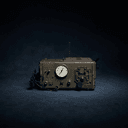
Shortwave radio used by SOE agents to communicate with London and coordinate weapons parachute drops. Losing its codes forced Nancy Wake into a heroic bicycle ride.
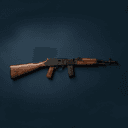
Lightweight, cheap automatic weapon parachuted en masse to the Resistance fighters by the Allies. Nancy Wake taught the resistance fighters how to use it.
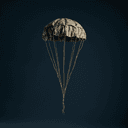
Parachute used to drop agents, weapons and supplies over occupied France. Nancy Wake herself was parachuted into Auvergne in 1944.
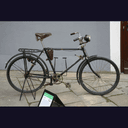
A discreet means of transport in occupied France, escaping fuel checks. Nancy Wake rode hundreds of kilometres by bicycle to deliver a vital message.
📷 CC BY-SA 4.0 · Wikimedia Commons ↗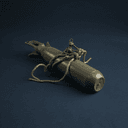
Explosive charges parachuted in for sabotaging German railways, bridges and factories. A key tool of the guerrilla warfare waged by the Resistance fighters.
Falsified documents allowing agents and resistance fighters to move around under a false identity. Indispensable for evading the Gestapo and Vichy checkpoints.
School Curriculum
Vocabulary & Tags
Key Vocabulary
Tags
Daily Life
Morning
In the Auvergne maquis in 1944, her day began early, often in an isolated forest camp. She checked the positions, organized the reception of parachute drops, and coordinated the groups of fighters.
Afternoon
The afternoon was devoted to training the maquisards, distributing the parachuted weapons, and planning sabotage operations. She moved around a great deal, sometimes by bicycle, to connect the different groups.
Evening
In the evening, she listened to the coded messages from the BBC announcing the nighttime drops. Renowned for her stamina, she gladly shared a drink with the men of the maquis, earning their respect.
Food
The maquisards' food was frugal and irregular: bread, cheese, soup, game, or produce supplied by the surrounding farms. Provisions depended on the support of the local population.
Clothing
She wore practical field clothing — trousers, a sturdy jacket, and walking shoes — suited to life in the woods. Before the war, an elegant Marseille socialite, she also knew how to mind her appearance in order to go unnoticed.
Housing
During the clandestine war, she lived in makeshift camps, isolated farms, and forest shelters of the Massif Central. Before 1943, she lived in a bourgeois apartment in Marseille with her husband.
Historical Timeline
Period Vocabulary
Liens externes & ressources
Références
Œuvres
Filières d'évasion d'aviateurs alliés (Marseille)
1940-1943
Organisation des maquis d'Auvergne
1944
Raids et sabotages contre les forces allemandes
1944
The White Mouse (autobiographie)
1985
Décorations militaires alliées
1945-1970