Imaginary interview with Naomi Ōsaka
by Charactorium · Naomi Ōsaka (1997 — ?) · Sports · Society · Culture · 5 min read
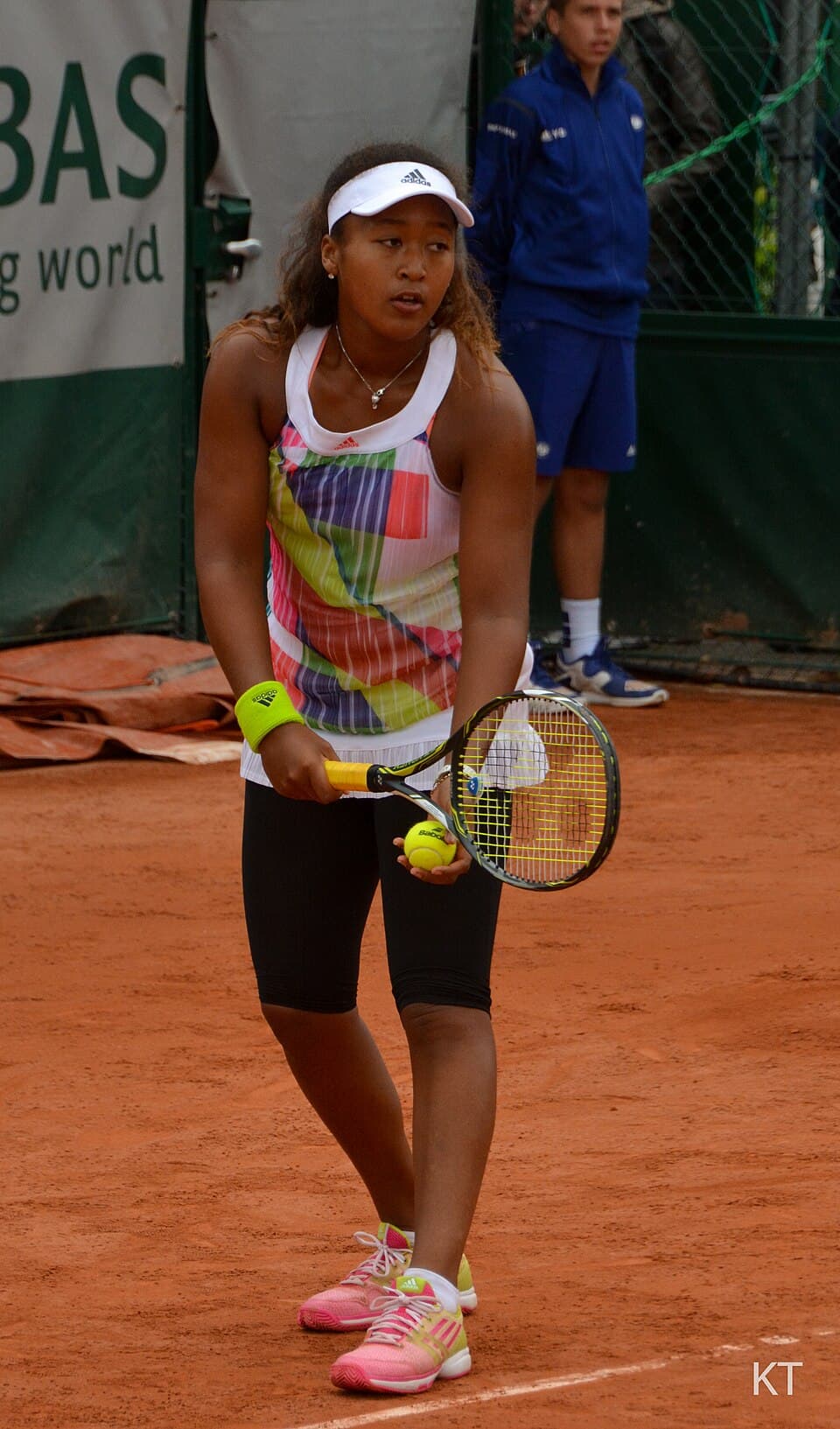
A quiet lounge in a Melbourne hotel, a few hours before practice. Naomi Ōsaka enters in a tracksuit, headphones around her neck, a game controller still sticking out of her bag. She speaks softly, choosing her words like one chooses a shot placement: unhurriedly, with a precision that hints at everything she leaves unsaid.
—Where are you really from? You were born in Japan, grew up elsewhere, and compete under a flag that isn't the one on your childhood passport...
I get asked that a lot, and the answer lies as much in my first name as in my last. My father is Haitian-American, my mother Japanese; I was born in Osaka in 1997, and then, when I was about four, the family crossed the ocean to Florida. I grew up between two languages, two cuisines, two ways of sitting at the table. When I had to decide, in 2016, which flag to play under, I chose Japan — not against America, but because that's where the little girl I had been was sleeping. For a long time I thought I had to pick one side, belong to only one. I eventually understood that I could be all of it together, and that it wasn't a tearing apart but an extra address.
I eventually understood that I could be all of it together: not a tearing apart, but an extra address.
—How do you approach a Grand Slam final at twenty years old, facing the idol of your childhood?
September 2018, the Arthur Ashe Stadium, twenty thousand people on their feet, and on the other side of the net, Serena Williams. As a kid, I hung her posters; playing against her was like playing against my own memories. I had prepared a very simple plan: serve hard, stay in my bubble, don't look up at the stands. The strange thing is, the more the match turned in my favor, the more I felt like I was committing a faux pas, as if winning that night was somehow rude. Tennis teaches you to hit the ball without trembling; no one teaches you what to feel when you beat the woman because of whom you're here.
—That evening ended in an electric atmosphere, and you in tears. What remains of that moment?
The boos. That's what I hear first. The umpire had penalized Serena several times, the crowd was rumbling, and me, in the middle, I no longer understood whether I had won a title or broken a party that wasn't meant for me. On the podium, I pulled my cap down over my eyes to hide that I was crying, and I almost apologized for winning. People saw a fragile kid; I think mostly I hadn't yet learned to separate my victory from the noise around it. That night, without knowing it, something cracked inside me — something I wouldn't speak about openly until much later.
I no longer understood whether I had won a title or broken a party that wasn't meant for me.
—In 2020, you arrived on the New York courts with seven different masks. Where did that idea come from?
The summer of 2020 was unbreathable, literally and figuratively: a pandemic emptying the stands, and in American streets, anger after the deaths of George Floyd and Breonna Taylor. I was asked to play as if nothing was happening. I couldn't. So I had seven masks printed, one per round, each bearing the name of a Black person killed. Each victory became a reason to stay in the tournament and bring one more name out of oblivion. It wasn't a calculated gesture to make noise; it was the only way I had found not to feel complicit in silence. A piece of cloth on my face, and suddenly the court became something other than a court.
—After the tournament, you were asked about the message you wanted to convey. What did you want people to remember?
A journalist asked me what message I hoped to send. I turned the question back, because it already contained its answer. I remember saying, in essence: 'I wanted people to know who I was talking about. I wanted those names to be heard.' That was it. I wasn't pretending to fix the world from a tennis stadium; I just wanted seven lives to stop being statistics. The beauty of sport, when billions of eyes are on you, is that for a moment you hold their attention like you hold a match point. I chose to use it to speak names rather than to talk about myself.
I wasn't pretending to fix the world from a stadium; I wanted seven lives to stop being statistics.
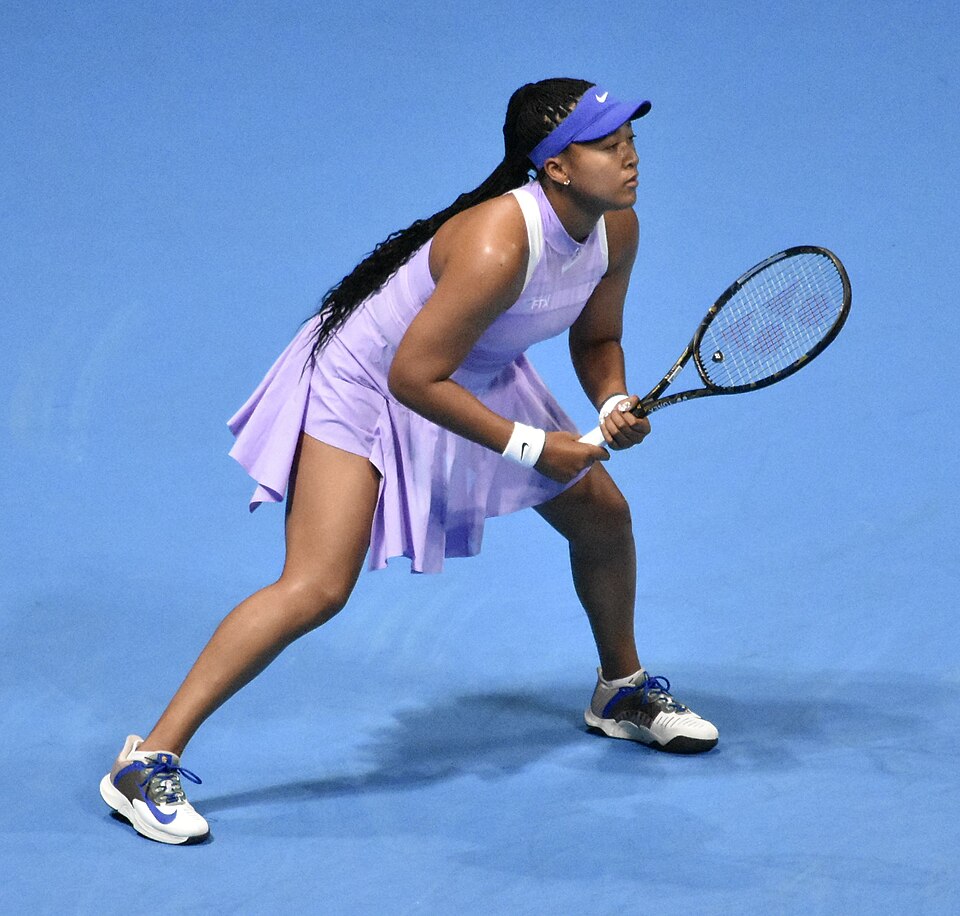
—In 2021, you decided to stop attending press conferences, then you withdrew from Roland Garros. How does one get to that point?
The mandatory press conference, in Paris, became for me a room where you are summoned to justify every loss in front of twenty microphones, with your stomach still in knots. I announced I would no longer comply, I was fined, and I understood that the tug-of-war would swallow tennis itself. So I withdrew. I simply wrote that 'the best thing for the tournament, for the other players, and for my well-being is that I withdraw.' It wasn't a champion's tantrum. It was an admission: I no longer had the resources to pretend. Leaving Roland Garros was the hardest and healthiest decision I ever made on a court.
—That withdrawal surprised many people. What was really going on behind the champion at the top?
What few saw was that the crack went way back. On the BBC, I finally said it outright: 'I am someone who has suffered long bouts of depression since the 2018 US Open.' So since that final against Serena — at the precise moment the world was celebrating my rise, I was descending somewhere inside. People imagine that a number one ranked player is safe from those tides; it's not true. I wear big sunglasses, I'm introverted, I'm not good at talking about these things. Publicly acknowledging that dark side wasn't weakening myself: it was stopping lying to others as much as to myself.
At the precise moment the world was celebrating my rise, I was descending somewhere inside.
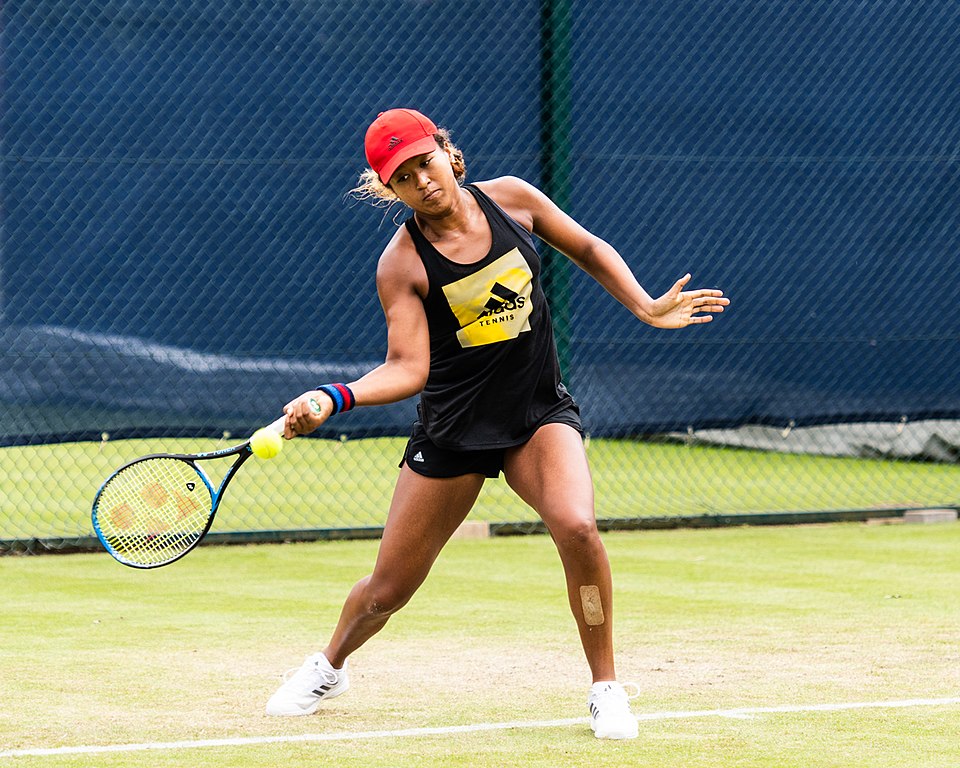
—You took up the pen in Time magazine. Why go through writing rather than a press conference?
Because the page doesn't interrupt me. In my essay It's O.K. Not to Be O.K., published in Time in July 2021, I could put the words in the order I thought them, without the crossfire of questions. I wrote a sentence I hold dear: 'We ask athletes to be brave on the field, but we forbid them to admit they are suffering off it. I want to change that.' That sums up my whole fight. They want us invincible under the spotlight and silent in the locker room. Writing gave me a place to be whole — the player and the tired young woman, in the same paragraph.
—Is this public speaking part of your daily routine, like training?
More than people think. In the evening during tournaments, after ice baths and physiotherapy, I give myself quiet hours: a little video game, an episode of anime, and often a notebook. I prepare my statements there, I scribble, I search for the right word like I'd search for an angle on the court. That discipline doesn't show on any WTA ranking, but it matters as much as my serve. Because weighing my sentences in advance is refusing to let others speak for me. A champion is built by hitting balls; a woman is also built by learning to name what moves through her.
Weighing my sentences in advance is refusing to let others speak for me.
—In 2021, you were entrusted with lighting the Olympic cauldron in Tokyo. What does that gesture mean to you?
Standing in the Tokyo Olympic Stadium, in July 2021, the flame in my hands, before billions of eyes — I still can't find words big enough. Japan doesn't choose just anyone to light its cauldron. By choosing me, the child of a Haitian father and a Japanese mother, my country said something about itself: that it could be plural without ceasing to be itself. I climbed those steps thinking of the little girl from Osaka who had been taken so far away, and who was returning, an adult, to carry the fire in the name of all those who feel they belong nowhere and, therefore, everywhere. That night, my multicultural identity was no longer a question: it was a light.
Carry the fire in the name of all those who feel they belong nowhere and, therefore, everywhere.
This imaginary interview was generated by artificial intelligence from sources documented in Naomi Ōsaka's profile. It dramatises what the figure might have said based on what we know about them, but does not constitute attested historical testimony. For primary sources and factual documentation, refer to the full profile.