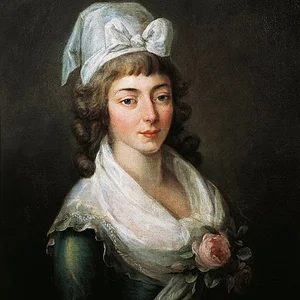

A legendary hero of French medieval literature, Roland is Charlemagne's paladin immortalized in the Song of Roland. A central figure of the medieval epic, he embodies the values of chivalry, loyalty, and sacrifice.
Frequently asked questions
Key Facts
- Battle of Roncevaux Pass (778): Roland's legendary death during Charlemagne's retreat from Spain
- Composition of the Song of Roland (late 11th century): a verse epic that transforms Roland into an idealized hero
- Durendal: Roland's legendary indestructible sword, a symbol of his valor
- Oliphant: Roland's wondrous horn, whose blast was said to carry all the way to Charlemagne's ears
- Influence on European literature: Roland became the prototype of the medieval knight in French, Italian, and Spanish traditions
Works & Achievements
A major poetic epic of French medieval literature that immortalizes Roland as a legendary hero. This chanson de geste tells the story of his heroic death at Roncevaux and stands as the founding text of French literature.
The historical event in which Roland, according to legend, dies defending the rearguard of Charlemagne's army against the Basques. This battle became the heart of the medieval epic.
Roland's legendary instrument, this magical horn symbolizes the paladin's honor and courage. Its use in the Song of Roland makes it one of the most iconic objects in medieval epic literature.
Roland's legendary sword, said to be indestructible and to contain holy relics. Durendal became one of the most famous blades in European medieval literature.
The body of continuations and adaptations of the Roland legend across various European literatures — Italian, Iberian, and German. This expansion reflects the character's pan-European influence.
Roland stands as the most illustrious of Charlemagne's twelve paladins, an elite group of knights embodying Carolingian chivalry and the ideal warrior virtues.
Anecdotes
Roland was a legendary character inspired by a real officer of Charlemagne, mentioned in Carolingian chronicles as having died at the Battle of Roncevaux Pass in 778. This historical event was transformed by poets into a heroic epic, the Song of Roland, composed several centuries after the events it describes.
The Song of Roland, written around the 11th century, tells of Roland's heroic death while crossing the Pyrenees. According to the text, Roland blew his horn (the oliphant) so powerfully to call for Charlemagne's help that he burst his own temples — a gesture that symbolizes the hero's ultimate sacrifice.
Roland gradually became the symbol of chivalric loyalty to one's lord during the Middle Ages. Medieval knights admired him as a model of courage and devotion, and his story was taught to pass on the moral and military values of the nobility.
The Song of Roland, dated to the early 11th century, is one of the oldest major literary works in the French language. The text has been preserved in several manuscripts and profoundly influenced European epic literature.
The various versions of the Roland legend illustrate how a real historical battle in 778 was transformed into an epic: the Basques and Pyrenean peoples mentioned in Carolingian chronicles become Muslim Saracens in the poetic version, reshaping the story to reflect the religious concerns of the 11th century.
Primary Sources
Roland is brave and Oliver is wise, / Both are knights of marvellous valour; / Once they are on horseback and in arms, / They will never flee battle even unto death.
Karoli vero magni milites, inter quos Rolandus praefectus Britannici limitis, in castello Roncisvalle obsessi sunt et in bello fusis inimicis, acerrime decertantes, cum resistere nequissent, ad unum omnes interempti sunt.
Hoc tempore Carolus magnus rediit ex Hispania, et Rolandus comes et praefectus limitis Britannici in proelio apud Roncisvallenses montes a Sarracenis occisus est.
Charlemagne's knights, most notably Roland, prefect of the Breton March, were slain at Roncevaux — a testament to the martial virtues of the Franks as they stood against the infidels.
Key Places
Mountain pass in the Pyrenees where Roland is said to have met his death, according to the Song of Roland. This is the site of the famous Battle of 778, in which Charlemagne's rearguard was destroyed, making it the heart of the epic narrative.
Capital of the Carolingian Empire and residence of Charlemagne. It is here that Roland serves as paladin and warrior in the king's name, embodying the ideals of the imperial court.
Spanish city besieged in the Song of Roland. The expedition against Zaragoza forms the backdrop of the military campaign that leads to the Battle of Roncesvalles.
Town in the Gironde where, according to legend, the relic of Roland's Oliphant horn and his sword Durandal were kept. A memorial site associated with the hero's relics.
Symbolic site of royal coronations, where the figure of Roland is woven into the continuity of Carolingian and medieval French power, a testament to his legendary importance.
A region at the heart of the Carolingian Empire where Roland is said to have been militarily active, and where the military campaigns recounted in the medieval epic took place.
Typical Objects
Roland's legendary sword, renowned for being indestructible and forged with a holy relic embedded in its hilt. It is the hero's emblematic weapon in the Song of Roland, a symbol of his might and his loyalty to Charlemagne.
📷 Domaine public · Wikimedia Commons ↗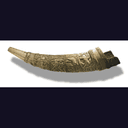
Roland's ivory horn, used to call for help during the Battle of Roncevaux. It is a mythic object representing the hero's courage and despair as he faces the enemy.
📷 CC BY-SA 4.0 · Wikimedia Commons ↗
The typical war equipment of the Carolingian era, including a coat of chainmail, a helmet, and a shield. It illustrates Roland's status as a paladin and the protection afforded to the medieval warrior in service of the king.

The powerful horse trained for battle, the noble and essential mount of the medieval knight. Roland's inseparable companion, it symbolizes the warrior's mobility and strength.

Charlemagne's standard or banner, which Roland carries with pride. It represents royal authority and the honor of following the great emperor on his military campaigns.

Decorated and ornamented copies of the medieval epic recounting Roland's heroic deeds. These manuscripts are precious records of how the legend was passed down through the Middle Ages.

A personal devotional object worn by Roland, containing a holy relic. It symbolizes the hero's deep Christian faith and his connection to the divine.

Combat attire forming the primary protection of a knight in the 12th century. Heavy and costly, it reflects Roland's high standing and martial readiness as one of Charlemagne's foremost paladins.
School Curriculum
Vocabulary & Tags
Key Vocabulary
Daily Life
Morning
Roland rises at dawn after hearing the bells of the Carolingian palace chapel. He attends morning mass with Charlemagne's court, then prepares for military drills and weapons training — essential daily activities for a paladin.
Afternoon
The afternoon is devoted to mounted combat training, and to practicing with sword and lance. Roland also takes part in war councils or Charlemagne's audiences, where military strategies and the affairs of the Frankish kingdom are discussed.
Evening
In the evening, Roland dines in the great hall of the palace alongside the other paladins and court officers. Entertainment may follow: poetry recitations, songs from jongleurs, or conversations by the fire before retiring for the night.
Food
Roland's diet includes meat (poultry, game, and fish on lean days), white bread reserved for the nobility, vegetables, and fruit. Wine and ale are his main drinks, consumed at court meals.
Clothing
Roland wears a fine-cloth tunic and cloak with leather shoes. As a warrior, he is clad in iron armor consisting of a chainmail hauberk and helmet — symbols of his standing as a high-ranking paladin.
Housing
Roland resides at Charlemagne's imperial palace, the principal Carolingian residence. He occupies apartments reserved for court dignitaries, with comfortable chambers and direct access to the common spaces of royal power.
Historical Timeline
Period Vocabulary
Visual Style
Un style visuel inspiré des manuscrits enluminés du Moyen Âge et de l'art roman, combinant la noblesse guerrière carolingienne avec la richesse ornementale des arts liturgiques médiévaux. L'atmosphère est épique et solennelle, dominée par des tons précieux et une lumière dorée.
Sound Ambience
Une ambiance épique et médiévale mêlant les sons d'un champ de bataille (entrechoc d'épées, chevaux, armures), les fanfares guerrières des paladins de Charlemagne, et une tonalité mélancolique évoquant le sacrifice légendaire de Roland à Roncevaux.
Liens externes & ressources
Références
Œuvres
La Chanson de Roland
vers 1080
La Bataille de Roncevaux (778)
778
L'Olifant (le cor de Roland)
VIIIe-XIIe siècles
L'épée Durandal
VIIIe-XIIe siècles
Le cycle de Roland
XIIe-XIVe siècles
Les Douze Pairs de Charlemagne
VIIIe-XIIe siècles