Character Catalog

Historical Library

CollectionGalaxy
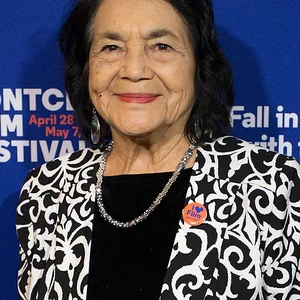
Portrait de Dolores Huerta

Dolores Huerta

Dolores Huerta

1930 — ?

États-Unis

SocietyRévolutionnairePolitique20th Century

Émotions disponibles (6)

N

Neutre

par défaut

I

Inspirée

P

Pensive

S

Surprise

T

Triste

F

Fière

Key Facts

    Works & Achievements

    Co-founding of the National Farm Workers Association (NFWA) (1962)

    Together with César Chávez, Dolores Huerta created the first effective union for American farmworkers, forming the foundation of all her subsequent activist work.

    National California Grape Boycott (1965-1970)

    A five-year boycott campaign she organized and coordinated at a national scale, culminating in the signing of the first collective bargaining agreements in California agriculture.

    Negotiation of the Agricultural Labor Relations Act (1975)

    Huerta played a decisive role in the negotiations leading to this landmark California law, the first in the world to fully recognize the union rights of farmworkers.

    Popularization of the slogan 'SĂ­, se puede' (1972)

    Born during a campaign in Arizona against an anti-strike ballot measure, this phrase became the rallying cry of the Chicano movement and would later inspire Barack Obama.

    Founding of the Dolores Huerta Foundation (2002)

    An organization dedicated to training young community activists in disadvantaged agricultural regions, carrying on her legacy of grassroots organizing.

    Campaigns for Latino Voting Rights and Voter Registration (1980-2000)

    Huerta led numerous campaigns to encourage Latino communities to register to vote, transforming union engagement into lasting political power.

    Anecdotes

    In 1965, Dolores Huerta played a key role in triggering the famous California grape boycott. She convinced thousands of American consumers to stop buying grapes for five years, ultimately forcing landowners to sign collective contracts with farmworkers. This boycott is one of the longest and most effective in American history.

    It was Dolores Huerta who popularized the slogan 'SĂ­, se puede' ('Yes, we can') during the union struggles of the 1970s in Arizona. Decades later, Barack Obama would draw inspiration from it for his famous 'Yes We Can' during the 2008 presidential campaign, publicly paying tribute to Huerta.

    Mother of eleven children, Dolores Huerta reconciled activism and motherhood throughout her life, often bringing her children to picket lines. She said that fighting for justice was the best education she could give them, concretely teaching them the values of solidarity and dignity.

    In 1988, during a peaceful demonstration in San Francisco against George H.W. Bush's agricultural policy, Dolores Huerta was violently struck by riot police. She suffered several broken ribs and a ruptured spleen. This event, filmed and broadcast, caused a national outcry and led the city to reform its policing procedures.

    In 2012, at the age of 82, Dolores Huerta received the Presidential Medal of Freedom from Barack Obama, the highest civilian honor in the United States. She continues to actively advocate for workers' and women's rights, demonstrating that commitment to justice knows no age.

    Primary Sources

    Dolores Huerta's Speech before the AFL-CIO Labor Congress (1974)
    We must use our votes and our voices to insist that our government fulfill its obligations to all Americans, not just the privileged few. Farm workers are not begging for charity — they are demanding their rights.
    Interview with Dolores Huerta in Ms. Magazine (1973)
    Every moment is an organizing opportunity, every person a potential activist, every minute a chance to change the world.
    Testimony before the United States Commission on Civil Rights (1969)
    The women who pick the grapes, who plant the lettuce — they are invisible. They have no voice, no recourse, no protection. We are here to give them back their dignity.
    Open Letter from the United Farm Workers to the Governor of California (1966)
    Our members work from dawn to dusk under a blazing sun, without drinking water, without restrooms, without protection from pesticides. We demand respect for the law and recognition of our union.

    Key Places

    Delano, California

    City where the great grape pickers' strike began in 1965, epicenter of the farmworkers' movement co-founded by Huerta and Chávez.

    Sacramento, California

    State capital, destination of the historic 1966 march, where strikers arrived after walking 400 km to deliver their demands to the governor.

    Keene, California — UFW headquarters (La Paz)

    Headquarters of the United Farm Workers in the hills of Kern County, where Huerta worked, negotiated, and trained union activists.

    Dawson, New Mexico

    Mining town where Dolores Huerta was born in 1930; now vanished, it symbolizes the working-class and Chicana roots of her activism.

    San Francisco, California

    City where Dolores Huerta was violently injured by police officers in 1988 during a peaceful rally, an event that left a lasting mark on the movement.

    Typical Objects

    Megaphone

    An indispensable tool on picket lines, the megaphone allowed Dolores Huerta to rally crowds and organize protesters across the vast California fields.

    United Farm Workers (UFW) Flag

    The black, white, and red emblem featuring the stylized Aztec eagle, designed by César Chávez, was carried at every march and strike Huerta participated in — a symbol of Chicano identity and workers' resistance.

    Petition Booklet and Membership Rolls

    Dolores Huerta tirelessly recruited new union members in the fields; her booklets filled with signatures were tangible proof of the movement's collective strength.

    Farmworker's Straw Hat

    A symbol of the agricultural workers she championed, this hat appears in numerous photographs of Huerta alongside workers in the grape and lettuce fields.

    'Boycott Grapes' Sign

    These placards, carried by thousands of protesters and picketers across the country, are the most iconic image of the campaign led by Huerta and Chávez throughout the 1960s and 1970s.

    Portable Typewriter

    Used to draft the flyers, open letters, and union press releases that allowed the UFW to spread its demands to the public and national media.

    School Curriculum

    LycéeHistoire
    LycéeEspagnol

    Vocabulary & Tags

    Key Vocabulary

    Tags

    Dolores HuertasocieterevolutionnaireRévolutionnairepolitiqueHomme/femme politiquedroits-de-l-hommeDroits de l'Homme, droits civiquesfeminismeFéminisme, droits des femmes

    Daily Life

    Morning

    Dolores Huerta rises before dawn, like the farmworkers she defends. She joins workers at the entrance of farms as early as 5 or 6 in the morning to hand out flyers and talk with them before the foremen arrive. Black coffee in a cardboard cup is her only breakfast during the long days of mobilization.

    Afternoon

    Afternoons are devoted to negotiation, drafting union press releases, or organizing meetings in parish halls and workers' homes. Huerta travels constantly between the farms of the San Joaquin Valley, stopping to listen, persuade, resolve conflicts, and maintain solidarity among the strikers.

    Evening

    Evenings often bring large community gatherings where Dolores Huerta takes the floor, galvanizing crowds with her natural eloquence. She comes home late, shares a simple meal with her children when she is passing through, answers union correspondence, and prepares arguments for upcoming negotiations or appearances before authorities.

    Food

    Simple and modest food, typical of Chicano communities: tortillas, frijoles (beans), rice, seasonal vegetables. On the road, she eats whatever working-class families generously offer her, sharing their meals as a sign of brotherhood and solidarity with the movement.

    Clothing

    Dolores Huerta dresses simply and practically: sturdy jeans, a plaid shirt or colorful blouse, a light jacket for cool nights in the fields. She often wears a headband or a scarf in her hair, and durable shoes suited for the long walks along California's roads.

    Housing

    During the major years of struggle, Huerta lives precariously, often housed by workers' families or in union offices. Her home is not a fixed dwelling but a succession of modest lodgings shared with other activists, reflecting her choice to devote most of her energy and resources to the collective cause.

    Historical Timeline

    1930Naissance de Dolores Fernández à Dawson, Nouveau-Mexique, dans une famille chicana modeste.
    1942Les États-Unis lancent le programme Bracero, faisant venir des travailleurs mexicains dans les champs californiens dans des conditions très précaires.
    1955Rosa Parks refuse de céder sa place dans un bus à Montgomery, Alabama — début du mouvement des droits civiques afro-américain qui inspire les militants chicanos.
    1962Dolores Huerta et César Chávez cofondent la National Farm Workers Association (NFWA) à Fresno, Californie.
    1965Début de la grève des cueilleurs de raisin de Delano et lancement du boycott national du raisin californien.
    1966Grande marche de 400 kilomètres de Delano à Sacramento pour exiger la reconnaissance syndicale des ouvriers agricoles.
    1968Assassinat de Martin Luther King Jr. et de Robert Kennedy, dont Huerta était proche — choc majeur pour le mouvement des droits civiques.
    1970Les grands propriétaires viticoles de Californie signent les premiers contrats collectifs avec la United Farm Workers après cinq ans de boycott.
    1973Violentes confrontations lors des grèves dans les champs de raisin ; Dolores Huerta est arrêtée à plusieurs reprises.
    1975La Californie adopte l'Agricultural Labor Relations Act, première loi américaine reconnaissant le droit de grève et de négociation collective aux ouvriers agricoles.
    1988Dolores Huerta est blessée gravement lors d'une intervention policière à San Francisco, relançant le débat sur les violences policières.
    1993Elle est intronisée au National Women's Hall of Fame, reconnaissance nationale de son rôle pionnier.
    2002Fondation de la Dolores Huerta Foundation pour former de nouvelles générations de militants communautaires.
    2012Remise de la Médaille présidentielle de la Liberté par Barack Obama.

    Period Vocabulary

    Huelga — Spanish word meaning 'strike', the rallying cry of Mexican and Chicano farmworkers during union mobilizations of the 1960s–1970s.
    Chicano / Chicana — A term of political and cultural identity adopted in the 1960s by Americans of Mexican descent to assert their pride and commitment to the civil rights struggle.
    Boycott — A collective and organized refusal to buy a product or use a service in order to exert economic pressure on an employer or company; the UFW's primary weapon against grape growers.
    Picket line — A gathering of striking workers at the entrance of a workplace to prevent the hiring of strikebreakers and to make the labor dispute visible to the public.
    Strikebreaker (Scab) — A pejorative term for a worker who agrees to work during a strike, thereby breaking collective solidarity and weakening the union's bargaining power.
    Sí, se puede — A slogan created by Dolores Huerta meaning 'Yes, we can', expressing the conviction that the oppressed can, through collective organization, achieve social justice.
    Bracero — A Mexican agricultural worker who came to work legally in the United States under the Bracero Program (1942–1964), often exploited and without social protections.
    Negociación colectiva — Collective bargaining between a union representing workers and an employer to establish contracts setting wages, working conditions, and employee rights.
    Corrido — A Mexican musical genre of narrative ballads recounting stories of folk heroes and social struggles; widely present at gatherings of the farmworkers movement.
    La Causa — 'The Cause' in Spanish: the name given by Chicano activists to the broader movement for farmworkers' rights and the dignity of Latino communities.

    Gallery

    
Federal Register 2000-03-02: Vol 65 Iss 42

    Federal Register 2000-03-02: Vol 65 Iss 42

    Dolores Huerta by Gage Skidmore

    Dolores Huerta by Gage Skidmore

    Kamala Harris and Dolores Huerta DXkfWoLUQAEG-J4

    Kamala Harris and Dolores Huerta DXkfWoLUQAEG-J4

    Dolores Huerta and Kamala Harris

    Dolores Huerta and Kamala Harris

    Cesar-chavez-arch

    Cesar-chavez-arch

    Dolores Huerta (33552046043) (1)

    Dolores Huerta (33552046043) (1)

    Dolores Huerta

    Dolores Huerta

    4E8A2363 (10481702104)

    4E8A2363 (10481702104)

    4E8A2414 (10481879583)

    4E8A2414 (10481879583)

    Delores Huerta (10481702104) (1)

    Delores Huerta (10481702104) (1)

    Visual Style

    Esthétique du photojournalisme américain des années 1960-1970, entre noir et blanc documentaire et couleurs chaudes des champs californiens, dominée par les rouge et noir du drapeau syndical UFW.

    #C8202A
    #1A1A1A
    #D4A853
    #7A5C35
    #F5F0E8
    AI Prompt
    Documentary photography style of 1960s-1970s American civil rights movement. Black and white and early color photographs with high contrast and grain. Vast flat California agricultural fields under a bleached sky, rows of grapevines stretching to the horizon. Close-up portraits of weathered farmworker faces with intense, dignified expressions. Protest banners in red, black and white with bold graphic eagle emblem. Crowds of marchers on dusty roads under the California sun. A determined Chicana woman at a microphone, fist raised. Warm earthy tones of sun-baked soil contrasted with vivid red union flags.

    Sound Ambience

    Un mélange des sons des champs agricoles californiens sous le soleil brûlant et de l'énergie militante des piquets de grève et des grandes marches syndicales des années 1960-1970.

    AI Prompt
    Sounds of 1960s California agricultural fields: rustling grape vines in warm dry wind, rhythmic thud of fruit dropped into wooden crates, distant tractor engines, workers calling to each other in Spanish and English, cicadas in the heat, boots crunching on dry earth. Transition to protest sounds: chanting voices 'Huelga! Huelga!', a megaphone amplifying a woman's passionate speech, shuffling feet of marchers on a long road, union songs and corridos played on a guitar, paper leaflets being handed out, car horns honking in solidarity.

    Portrait Source

    Wikimedia Commons — CC BY 2.0 — Montclair Film — 2017