Imaginary interview with Nur Jahan
by Charactorium · Nur Jahan (1577 — 1645) · Politics · Visual Arts · 6 min read
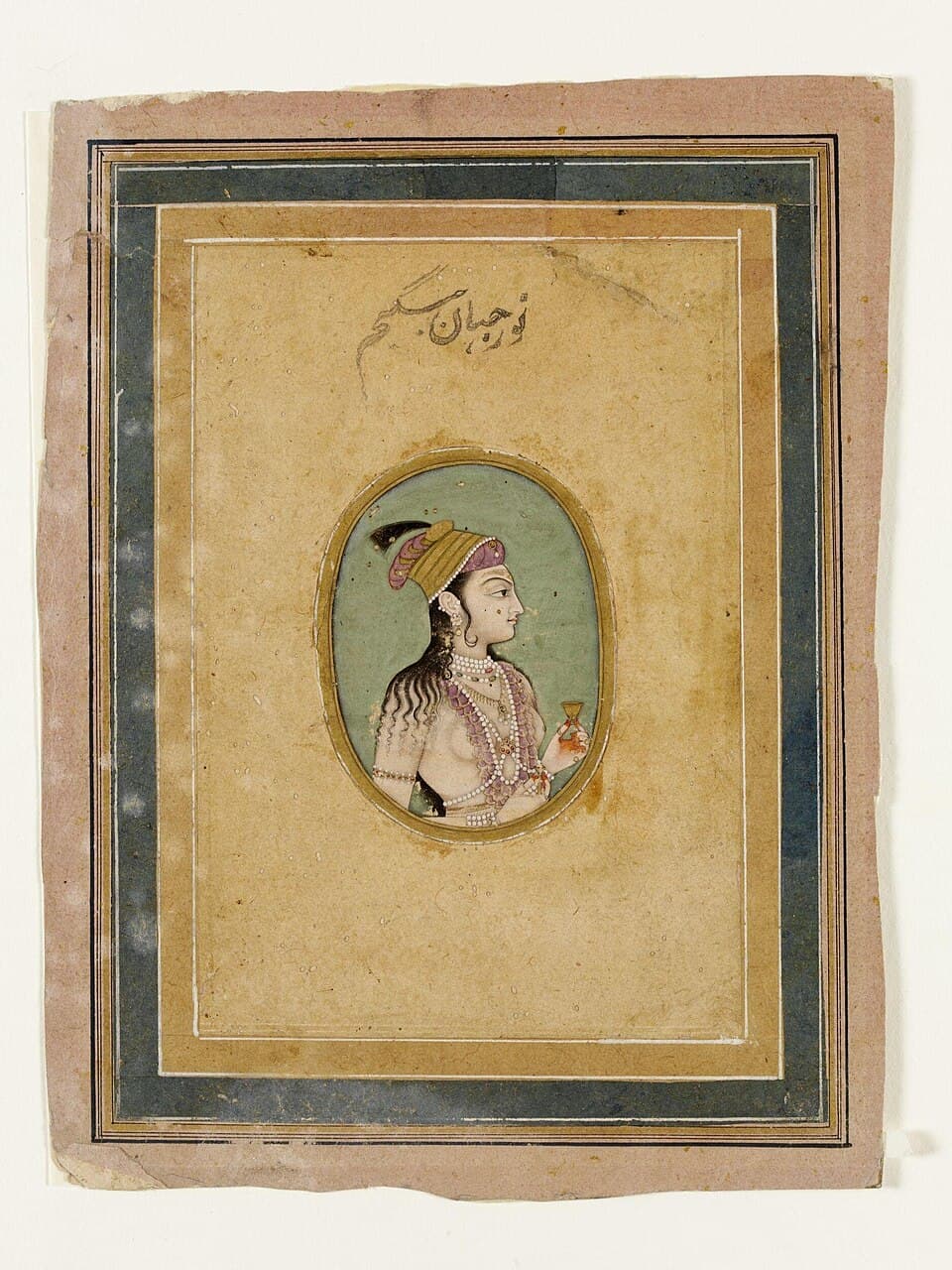
Lahore, an afternoon in the year 1643. In a rose sandstone room where the water of an interior fountain murmurs among the lamp niches, an elderly woman receives, draped in a dupatta of gold tarnished by the years. She had coins struck in her name, ruled an empire from behind the shadows of grilles, then chose silence — and she agrees, for the first time, to tell her story.
—They say your name appeared on the empire's gold coins. How did such a privilege come to you?
A sovereign is recognized by two things: the Friday sermon delivered in his name, and the coin struck with his effigy. The gold mohur, that heavy coin passing from hand to hand from Bengal to Kabul, bore my name alongside the seal of Jahangir. No woman before me in our house had known this honor. My husband recorded it himself in his memoirs: besides the imperial seal, all firmans and deeds of grant bore my name. Understand: it was not vanity. A coin travels farther than a decree, lasts longer than a reign. By leaving my name on gold, I left something that neither Jahangir's death nor the anger of a stepson could entirely erase.
A coin travels farther than a decree, lasts longer than a reign.
—What did you answer to those who murmured that a woman should not govern?
I did not answer. I signed. Every morning, before the empire officially opened its eyes, the secretaries brought me the governors' dispatches right into the zenana, those apartments where women are believed to be confined. I affixed my seal, appointed an official in Gujarat, granted land in Kashmir. Murmurs fall silent before a sealed firman. My husband's health declined, opium stole his days, and someone had to hold the helm. They thought me invisible behind my pierced sandstone grilles; in truth, I saw everything and was not seen. It was there, in that space supposedly reserved for silence, that the decisions of the state were made.
They thought me invisible behind my grilles; in truth, I saw everything and was not seen.
—You dealt directly with the English envoys. Tell us about that encounter with the foreigner.
Ambassador Thomas Roe arrived at our court in 1615, with his stiff manners and mediocre gifts — I remember we laughed at his presents. But behind the man was that East India Company, eager for trading posts and privileges. I led the negotiations myself, granting firmans that opened our ports to their merchants in exchange for fabrics, curiosities, and above all good silver. I was later reproached for letting the wolf in. Perhaps. But from my zenana window, I saw an empire vast enough to absorb a few merchants from their cold island. I negotiated taxes, not a kingdom. What they would do with their trading posts after me no longer belonged to my reign.
—Why did you insist on supervising these trade matters yourself, rather than entrusting them to your ministers?
Because trade is the blood of the empire, and you do not entrust your blood to distracted hands. I managed several karkhanas, those imperial workshops where silk was woven, gold was chased, stones were set. I knew what a roll of cloth was worth at the market of Lahore as well as at Surat. When the English spoke of prices, I was not a princess to be flattered, but someone who knew the thread and its true value. I even left my name to a fabric, that blend of gold and silver threads on light silk that the court ladies snatched up. A woman who knows what a veil costs also knows what a treaty is worth.
A woman who knows what a veil costs also knows what a treaty is worth.
—They tell of your hunting feat: four tigers killed with two shots. Do you remember it?
Ah, that story will haunt me longer than my firmans! We were in the forest, the full court present, and the villagers begged us to rid them of beasts devouring their cattle. I was placed in the howdah, that swaying basket on the elephant's back — believe me, aiming from an animal breathing beneath you is no easy thing. I steadied my musket, held my breath between two sways. Four tigers, two shots. Jahangir was so moved that he composed verses, he the emperor, to say he had never seen such skill in a woman. It was engraved. I confess I drew more pride from that than from many decrees: there, at least, no one could claim I had aimed in my place.
Aiming from an animal breathing beneath you is no easy thing.
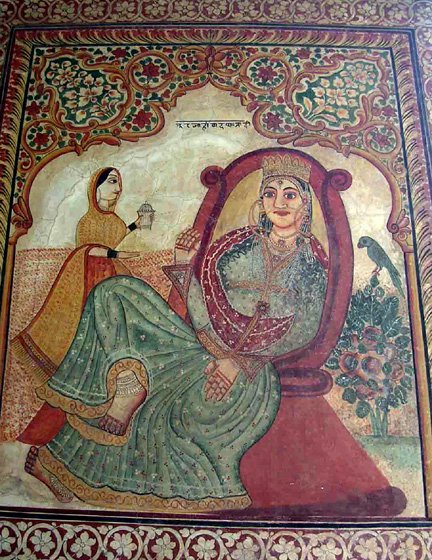
—Did this mastery of arms clash with the image people had of an empress?
They wanted from me the embroidered veil, the flower sherbet, the verses murmured at dusk — and I gave all that, I never denied it. But my hunting musket, inlaid and polished like a jewel, said something else: that a hand can hold the pen, the seal, and the stock without trembling. In 1626, when General Mahabat Khan captured my husband in a coup, I did not weep behind a grille. I mounted the elephant, directed the men, organized his release. The tiger hunt was but a game in comparison; but it had taught the court that I did not avert my eyes from the beast, be it a rebel in arms.
A hand can hold the pen, the seal, and the stock without trembling.
—Let us speak of the tomb you built for your parents. What did you wish to build in Agra?
My father, Ghiyas Beg, had come from Persia almost with nothing and risen to the top of the state. When he died in 1622, I wanted for him and my mother a monument unlike any other. I brought artisans capable of inlaying white marble with flowers of carnelian, lapis, jade — that technique of parchin kari never before attempted on such a scale in our land. Today it is called the little jewel box, the Baby Taj. I did not know it then, but I had drawn a grammar: translucent marble, stone flowers, light trapped in inlay. Others, later, would build larger with these same principles. I had only wanted the tomb of a Persian exile to shine like a garden.
I wanted the tomb of a Persian exile to shine like a garden.
—Would you say that architecture was, for you, a way of writing history?
Writing fades, marble remains. I loved the charbagh, those four-part gardens inherited from Persia, where water runs in a cross like in the tales of paradise; I had them laid out in Lahore and contributed to those in Kashmir, in Srinagar, where we went each summer to escape the heat. A garden, a tomb, a fountain in a sandstone room: these are sentences that cannot be burned. My father's mausoleum inlaid with stone flowers will speak of us when our names have worn out in memories. I ruled by the seal, but I wished to endure through stone — for a decree dies with the reign, and a carnelian flower crosses the centuries without fading.
A decree dies with the reign, a carnelian flower crosses the centuries.
—After Jahangir's death, everything changed. How did you experience the loss of power?
Jahangir passed away in 1627, and with him my reign passed away. His son Shah Jahan, whom I had fought when he was but the rebel prince Khurram, did not forgive. I was granted a pension and sent to Lahore — a queen yesterday, a pensioner the next day. I will not cry injustice: such is the law of courts, one rises and falls, and I had struck enough coins to know the weight of fate. But there is a particular bitterness in seeing your husband's son close upon you the door you held open for the entire empire. I put away my seal. I kept my verses. And I learned that silence, too, can be a choice rather than a defeat.
A queen yesterday, a pensioner the next day.
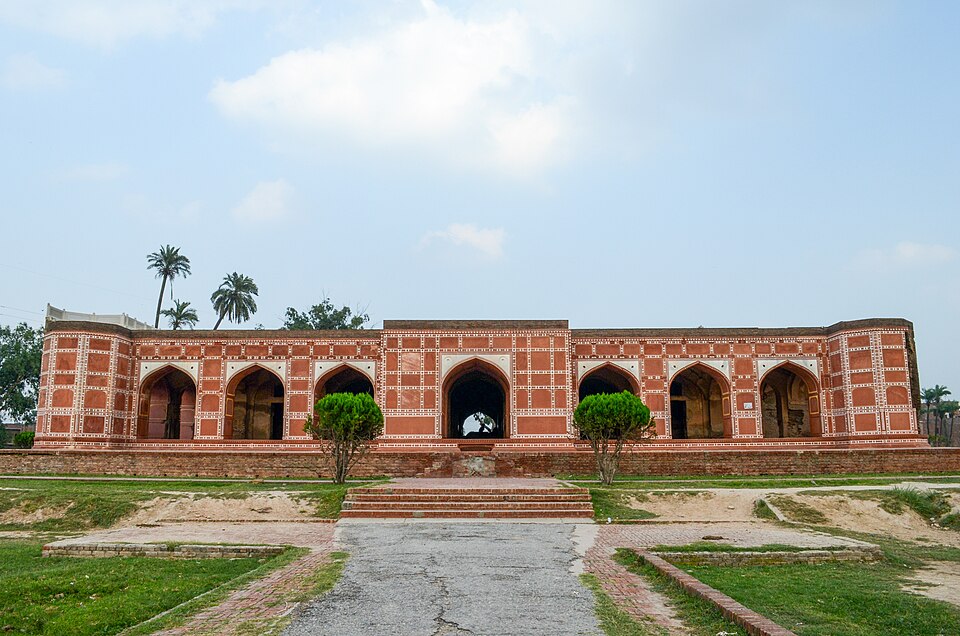
—You designed your own tomb, plain, far from Mughal splendor. Why this sobriety?
I built for my father a jewel box of inlaid marble; for myself, I wanted bareness. Here, in Lahore, not far from my husband, rises a tomb without gilding, without carnelian flowers, almost austere — and I willed it so, during my lifetime, stone by stone. What remains of a woman who signed firmans, struck gold, killed tigers, negotiated with the English? Light, in the end, no longer rests on inlays but on what one has understood of oneself. Under the pen name Makhfi, the hidden one, I write ghazals in Persian, I care for the poor, and I watch this sober wall rise. Splendor I have had; it is bareness, now, that tells me the truth.
Light, in the end, no longer rests on inlays but on what one has understood of oneself.
This imaginary interview was generated by artificial intelligence from sources documented in Nur Jahan's profile. It dramatises what the figure might have said based on what we know about them, but does not constitute attested historical testimony. For primary sources and factual documentation, refer to the full profile.