Imaginary interview with Oshun
by Charactorium · Oshun · Mythology · 6 min read
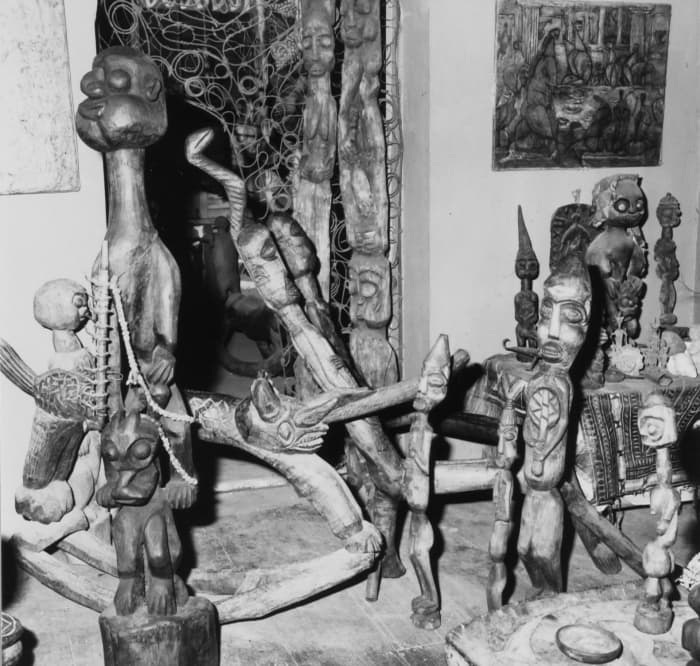
We met her at dawn, on the banks of the Osun River, where the branches bend over the flowing water and the brass of the altars catches the first rays. Dressed in yellow, a golden calabash beside her, she laughs before we have even spoken — as if the water had already whispered our questions to her.
—It is said that you were the only woman among the orishas sent to Earth. How did that happen?
Olodumare had dispatched us to order the world, and my brothers divided the task among themselves without even turning their heads toward me. I was the only woman, and they thought they could build without my waters. So nothing prospered: the land remained dry, projects crumbled like sand between fingers. They had to come back to me, heads bowed, to understand that no sweetness flows where I am forgotten. I hold no grudge — water does not hold wounds, it washes them away — but I taught them that day that fertility cannot be commanded; it must be asked for. Since then, I am called Yeye, the benevolent mother, and it is known that nothing blooms without my consent.
No sweetness flows where I am forgotten.
—And this story of the peacock ascending to heaven — what really happened?
A drought was devouring humanity, and no orisha dared go back up to Olodumare to plead. The path between the waters and the sky is long, and the sun there burns without mercy. I took the form of a peacock and rose, feather by feather, until my wings blackened and my head grew bald from fatigue. But I arrived. I begged, and the rain returned to nourish the earth. That is why the peacock is my bird, and its feathers adorn my altars and the fans of my priestesses. When you see that bird spread its tail, remember that it was once burned to save the living. The beauty attributed to me is not an ornament: it is a scar of tenderness.
The beauty attributed to me is not an ornament: it is a scar of tenderness.
—You often hold a mirror. What do you see when you lean over the water?
My brass mirror, the digi, is not made for vanity — it is made for truth. I was the first to teach humans the art of reading the future in rivers, of gazing at the current until it returns your own face and the path that awaits you. To know oneself: that is the first healing; the rest follows. When my devotees lean over the water of their calabash, they seek not their reflection but their truth. The golden brass I wear on my wrists, the ide, shines like the sun on the surface: it connects me to precious metals and to everything in this world that dares to reflect light. To look at the water is already to begin to pray.
To know oneself: that is the first healing; the rest follows.
—Honey holds a special place in your offerings. Why that sweetness?
Honey, oyin, is my preferred offering, and it has more than once disarmed anger. It is said that I sweetened the fierce spirit of warriors with it, turning bitterness into peace as one turns salt into sugar. For my strength lies not in the spear but in the seduction of what soothes. Bright yellow, the color of gold and sun on water, is my sacred hue: my priestesses wear it, and yams, oranges, honey are placed before me in the golden calabash, the igba, which holds my healing powers. Yet beware: sweetness is not weakness. Honey sticks to the fingers of those who think they can take it without deserving it.
Sweetness is not weakness. Honey sticks to the fingers of those who think they can take it without deserving it.
—You speak of the river as a home. What does it truly represent to you?
The Osun River, in Yoruba land, is my earthly dwelling — not an image, but my very flesh flowing. On its banks lies the sacred grove of Osun-Osogbo, that forest where altars, sculptures, and temples stand beneath leaning trees. That is where I live, between water and shade. Whoever bathes in my waters with a pure heart may receive healing and fertility; women who could no longer bear children have returned as mothers. For generations, my priestesses, the Iyalorisha, have come to leave their offerings there, and their mothers before them. On these shores I am called: Yeye o, Yeye o, mother of waters, you who dance with the current. And I always answer those who call me with an open heart.
The river is not an image of me: it is my very flesh flowing.
—Every August, tens of thousands of devotees gather in your honor. How do you feel at that moment?
The Osun-Osogbo festival has continued for centuries, and every August, the town empties onto my banks. I hear the bata drums resound, I see the processions descend toward the water, calabashes carried on heads, yellow everywhere like a second sun set upon the crowd. A priestess, the Arugba, carries the offerings of an entire people without letting them fall — it is my will placed upon her shoulders. This is not a dead festival, a memory revived: it is a living vow, renewed from mother to daughter. When the forest was threatened, faithful hands restored it stone by stone, and the world eventually recognized this place as a treasure. I ask only one thing: that they continue to come with a pure heart.
This is not a festival revived: it is a living vow, renewed from mother to daughter.
—It is said that your cult crossed the ocean. How did your name reach the other side of the sea?
My children were torn from Yoruba land and thrown into the holds of ships, carrying with them everything that cannot be chained: my songs, my colors, my name. In Salvador de Bahia, I became Oxum in the terreiros of Candomblé; in Havana, I am Ochún of Santería. To survive those who forbade our gods, my devotees hid me behind the face of their Virgin of Charity — that is what they call syncretism, the art of praying twice in a single breath. They thought me drowned in the Atlantic; in truth, I traveled with the pain of my children and blossomed on new shores. A goddess of waters is never lost in the ocean: she finds all paths there.
A goddess of waters is never lost in the ocean: she finds all paths there.
—What would you say to those who worshipped you in secret, under another name, to escape the masters?
I would tell them that I recognized them under every disguise. When a woman in Cuba lit a candle to the Virgin while thinking of me, I saw the honey and the yellow hidden behind the blue veil. Syncretism was never a renunciation: it was a ruse for survival, a way to keep the àṣà, the sacred tradition, alive under the noses of those who wanted to extinguish it. My devotees turned constraint into an even deeper fidelity. Where our drums were broken, they made new ones; where my name was forbidden, they sang me in a low voice. Faith, like water, always finds a crack to pass through. And the enslaved person who prayed to Oxum in the shadows was freer than the master who ignored her.
Faith, like water, always finds a crack to pass through.
—You are often reduced to the goddess of love and beauty. Is that not too narrow?
Far too narrow. I was given the secret of sweet waters and the knowledge of healing herbs, and I taught women the art of healing as much as men the art of loving. At dawn, my priestesses perform their ablutions in the river and sing facing the current; in the afternoon, they prepare plant remedies and receive those who come seeking counsel. Beauty is only the bright surface of a deeper knowledge. A goddess of fertility is not a pretty image: she knows why the body closes and how it opens again, which leaves soothe fever, which waters give life. I am called Yeye, the mother — and a mother, believe me, knows pain before she knows laughter.
Beauty is only the bright surface of a deeper knowledge.
—Do you remember the first knowledge you transmitted to humans?
The first gift was neither gold nor honey, but the water that heals. According to our stories, the itan that the babalawo have passed down for generations, I received from Olodumare the secret of sweet waters and of medicinal herbs, and I placed them in the hands of women. I showed them how to read the course of a river, how to recognize the plant that soothes, how to welcome life. When evening comes and the bata drums resound on my banks and the priestesses dance, it is not me they celebrate first: it is that living knowledge passed from hand to hand. A god who keeps his secret to himself is only an idol. I wanted to be a river, not a statue.
A god who keeps his secret to himself is only an idol. I wanted to be a river, not a statue.
Read further
This imaginary interview was generated by artificial intelligence from sources documented in Oshun's profile. It dramatises what the figure might have said based on what we know about them, but does not constitute attested historical testimony. For primary sources and factual documentation, refer to the full profile.